










A difficult performance conversation happens when a manager needs to address gaps between an employee’s work and expectations. It often means giving honest feedback or discussing underperformance something many of us would rather avoid. Studies show 70% of employees avoid tough talks, often choosing silence over discomfort. But ignoring problems only delays them, turning small issues into bigger ones.
These conversations shape accountability, psychological safety, and team morale. With only 32% of U.S. employees engaged at work, poor performance management is costing trillions. Leaders who can hold these discussions with clarity and empathy make a real difference.
This guide walks managers and HR professionals through when to talk, how to prepare, and how to follow up in ways that build trust, perfect for anyone who’s ever dreaded giving feedback but wants to do it right.
What are difficult performance conversations?
A difficult performance conversation is a structured dialogue where a manager highlights a performance gap and works with the employee to understand what’s happening, why it matters, and how to move forward together.
They feel “difficult” because they often stir up emotions, defensiveness, fear, or even anger and many managers worry the talk might damage the relationship. These conversations, however, are not disciplinary meetings or personal attacks; the goal is to clarify expectations, surface obstacles, and agree on realistic improvements. When you come in prepared and lead with empathy and curiosity, these conversations can actually strengthen trust instead of straining it.
If you want these conversations to sit inside a healthy feedback culture, start by building a workplace where feedback is normal and meaningful—not rare and scary; ThriveSparrow’s article on how feedback drives employee development at work explains how to do exactly that.
Characteristics of tough performance discussions
- Specific focus: They address concrete behaviors or results, not broad judgments about personality. For example, “Three client emails were unanswered for over 48 hours” is clearer and fairer than “You’re bad at communication.”
- Two‑way dialogue: The employee’s perspective matters just as much as the manager’s. When the conversation becomes a one‑way monologue, you silence the person who most needs to be heard and undermine psychological safety.
- Future‑oriented: You look at what happened, but the real aim is to co‑create a plan for improvement and support so the employee knows what “better” looks like and how to get there.
- Respectful tone: Feedback is direct and honest, but delivered with compassion. Effective leaders separate performance issues from personal worth so people feel challenged, not attacked.
A strong feedback culture makes all of this easier to do consistently; you can dive deeper into building that culture in How Feedback Drives Employee Development at Work.
When should you have a difficult performance conversation?
Timing is critical. Most day‑to‑day mistakes are just part of normal human variance, but when you see repeated patterns or serious concerns, it’s time to step in. Don’t wait for the annual review if:
- Repeated missed deadlines or quality issues keep showing up. Once you see a pattern, it’s worth a conversation.
- Behavior is undermining team norms, such as disrespectful comments, lack of collaboration, or ignoring agreed‑upon processes.
- You notice a drop in engagement or attitude—someone who used to be proactive is suddenly withdrawn, late, or unresponsive.
- A serious one‑off incident occurs, such as a safety breach, ethical lapse, or heated conflict.
- The employee themselves asks for feedback or raises concerns about their performance.
To avoid making the discussion feel like an ambush, give a bit of advance notice. Let the person know you’d like to talk about how things have been going, and briefly share the focus of the conversation. This simple “signposting” gives them time to prepare and makes it easier to come into the meeting in a collaborative mindset rather than on the defensive.
Preparing for the conversation
Thoughtful preparation is what turns a tense topic into a constructive, problem‑solving dialogue. Before you sit down together, work through this checklist:
1. Clarify your objectives
Be clear with yourself about what you want to achieve. Are you looking for improved quality, better communication, more reliability, or adherence to specific policies? Naming the outcome helps you stay focused and prevents the conversation from wandering into vague criticism.
2. Gather evidence and examples
Come with specific, concrete examples—emails, data, reports, or observed behaviors—that illustrate the issue. Vague feedback like “you need to be more proactive” often leads to confusion and defensiveness. Specific examples, on the other hand, help the employee see what you’re seeing without feeling personally attacked.
Many of these examples come from your regular performance and coaching routines—goals, 1:1 notes, and recent work. To strengthen that side, you can explore ThriveSparrow’s guide to performance coaching for managers.
3. Check your own mindset
Take a moment to notice how you feel about the situation and the person. Are you frustrated, irritated, or worried? Acknowledge that, but don’t let it drive the conversation. Instead of assuming you know their motives (“they don’t care” or “they’re lazy”), commit to going in with curiosity and an open mind.
4. Plan the setting
Choose a private, neutral space where you won’t be interrupted—no quick chats in the hallway or in front of others. If the situation is sensitive or formal, consider whether it’s appropriate to have an HR representative present. A calm, comfortable environment signals respect and helps reduce defensiveness.
5. Anticipate reactions and line up support
Think through how the employee might respond. Might they be surprised, embarrassed, relieved that the issue is finally on the table? Prepare to acknowledge their feelings and adjust your tone accordingly. Also consider what support you can realistically offer: training, coaching, workload changes, clearer priorities, or mentorship. Coming in with possible resources shows you’re invested in their success, not just pointing out problems.
6. Decide how to open
Plan your opening lines so you don’t start in a way that feels blunt or accusatory. Leading with appreciation and clarity works well, for example: “I appreciate the contributions you’ve made, and I’d like us to talk about a few concerns so we can make sure you’re set up to succeed.” Then, share briefly what you want to cover. Starting with the facts before jumping to interpretations helps keep the tone calm and grounded.
How to have a difficult performance conversation
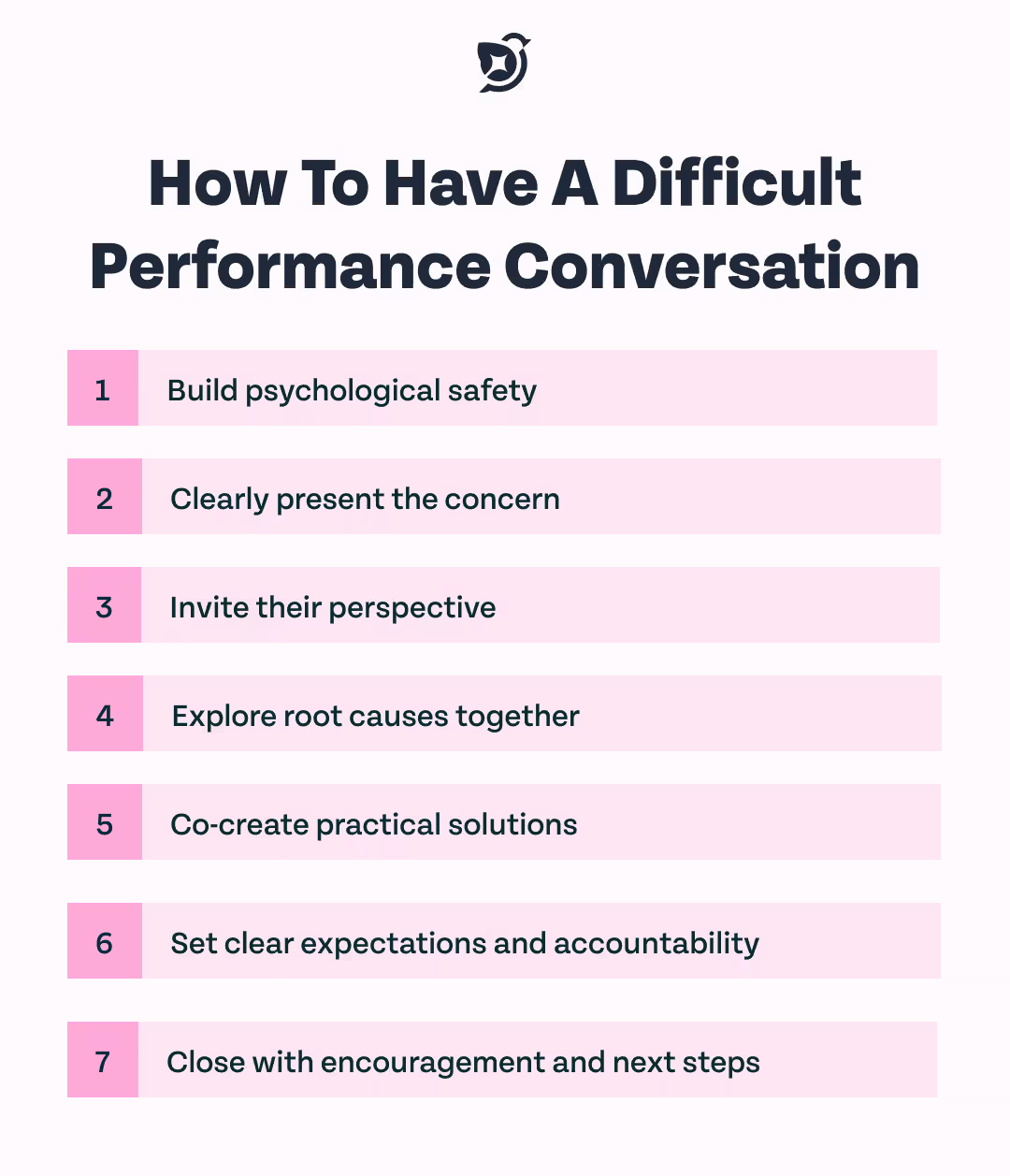
Once you’ve prepared, it’s time to sit down and talk. The framework below gives you a simple step‑by‑step way to guide the conversation so it feels structured, fair, and solution‑focused.
1. Build psychological safety
Start by making it clear that this conversation is about solving a problem together, not judging the person. You might say, “My goal here is to help us figure out what’s getting in the way and how we can fix it.”
Frequent, bite‑sized feedback helps a lot—employees who receive regular check‑ins are far more likely to feel supported than those who only hear feedback once a year. When feedback becomes a normal part of work, not a rare “big talk,” people relax and see it as part of growth.
If you want to intentionally create that sense of safety across your team, guide on how to foster psychological safety at work gives you concrete steps to follow.
2. Present the concern
Next, lay out what you’re seeing in calm, specific terms: what happened, when it happened, and how it affected the team or the work. Use “I” statements like “I’ve noticed the last three reports came in after the deadline, which pushed the project back.” This keeps the focus on your observations rather than blame.
Harvard Business School also encourages addressing three layers—what happened, the feelings involved, and how it connects to identity—so you consider the whole person, not just the behavior. If your expectations weren’t clear or you contributed to the situation, own your part.
3. Invite their perspective
Then, pause and hand the mic to them. Ask open‑ended questions such as, “Can you walk me through what’s been happening from your side?” Listen more than you speak, reflect back what you hear, and check that you’ve understood correctly. The goal is not to “win” an argument but to understand root causes together. Show empathy by acknowledging their emotions—even if you don’t fully agree with their explanation.
4. Explore causes together
Once you’ve both shared your views, start exploring why the issue is happening. Are there obstacles, competing priorities, system gaps, unclear expectations, or personal challenges at play? McKinsey’s work on performance points out that underperformance is often a symptom of deeper systemic or behavioral issues, not just “a difficult employee.” Ask questions like, “Was the timeline realistic?” or “Do you feel you have what you need to meet these expectations?” Stay curious and resist jumping to conclusions.
5. Co‑create solutions
Now shift the focus to “What can we do differently?” Invite them to share ideas first; this builds ownership. Together, consider options like training, mentoring, adjusting workload, clarifying priorities, or changing how you both communicate. Reflective leadership models emphasize moving from awareness to action—so agree on specific steps, who will do what, and by when. Before you move on, summarise the plan out loud to make sure you’re on the same page.
6. Set expectations and accountability
Translate your conversation into clear, measurable expectations. What exactly should improve? By when? How will you both know it’s working? Resources from the University of Minnesota recommend making next steps explicit and confirming the support available so the employee has a fair chance to succeed. Document the commitments you’ve both made so there is a shared record you can revisit later.
7. Close with encouragement and next steps
End the conversation by reinforcing your belief in their ability to turn things around. Thank them for being open, even if the discussion was uncomfortable. Recap the key actions and agree on when you’ll check in next. Framing improvement as an ongoing, collaborative process—rather than a one‑time verdict—helps people stay engaged and hopeful.
Handling emotions and identity in tough conversations
Performance conversations aren’t just about tasks and metrics; they touch on how people see themselves. Harvard’s work on difficult conversations suggests every hard talk has three layers: what happened, feelings, and identity. Keeping those layers in mind helps you respond with more empathy and skill.
1. Acknowledge feelings
Instead of treating emotions as “in the way,” treat them as useful information. Someone might feel anxious about job security or embarrassed about falling short. You can say, “It sounds like you’re frustrated, and that makes sense given everything on your plate.” Avoid dismissive lines like “Don’t take it personally” or “Calm down,” which can make people shut down.
2. Separate person from behavior
Make it crystal clear that you’re talking about specific actions or results—not their value as a person. This reduces the emotional threat and makes it easier for them to stay engaged. Phrases like “This is about the quality of the reports, not about you as a person” help draw that line.
3. Address threats to identity
Feedback can shake how people see themselves—especially if they pride themselves on being reliable, competent, or collaborative. To ease this, you can acknowledge your own mistakes or blind spots and share where you’ve had to grow. Harvard’s guidance suggests owning your part (“I may not have been clear about the deadline”) and intentionally reminding them of their strengths so the feedback lands in a balanced way.
4. Provide dignity and support
Being honest doesn’t mean being harsh. Respectful conversations protect a person’s dignity even while tackling serious issues. Balance clear feedback with a genuine belief in their capacity to improve, and only use formal warnings or ultimatums when the situation truly requires it.
Frameworks and models for navigating performance discussions
A few simple frameworks can make these conversations feel less overwhelming and more intentional.
1. The SCOPE model
Roar Training’s SCOPE model breaks the conversation into five steps:
- Situation: Describe what happened in neutral, factual terms (e.g., missed deadlines, specific incidents).
- Context: Explain why it matters—how it impacts clients, teammates, workload, or compliance.
- Options: Brainstorm possible ways to improve, inviting the employee to share ideas.
- Plan: Agree on concrete actions, resources, and timelines.
- Evaluation: Set dates to review progress and adjust as needed.
2. The D‑I‑S method
The D‑I‑S model (Direct, Immediate, Specific) encourages you to address issues quickly and clearly. You describe the behavior plainly, explain its impact on you and others, give concrete examples, discuss solutions, and set a time to follow up and document what you agreed.
Reflective Leadership Model
Harvard’s Reflective Leadership Model—Awareness → Judgment → Action—reminds leaders to pause and think before reacting. Build awareness of your own biases and the broader situation, use judgment to choose the most constructive response, and then take action. This prevents knee‑jerk reactions and supports more thoughtful, humane conversations.
3. SBI/SBI‑II (Situation–Behavior–Impact–Intention–Improvement)
This model extends the classic SBI tool:
- Situation: Describe when and where it happened.
- Behavior: Describe what the person did in observable terms.
- Impact: Explain how it affected others, the work, or you.
- Intention: Ask what they were hoping to achieve or what they were thinking.
- Improvement: Agree on what could be done differently next time.
It keeps the conversation structured, fair, and focused on learning and the future rather than blame.
Pitfalls to avoid
Even well‑intentioned leaders can accidentally make a tough conversation harder than it needs to be. Watch out for these common traps:
- Ambushing the employee: Springing feedback on someone with no warning can feel like a attack. HR guidance strongly recommends “signposting” the conversation so they know the general topic and can prepare.
- One‑way monologues: Doing all the talking makes people feel powerless and unheard. Aim to listen more than you speak.
- Focusing on personality, not behavior: Statements like “You’re careless” usually trigger defensiveness. Describe specific behaviors and their impact instead.
- Avoiding your own accountability: If expectations were unclear or support was missing, say so. Owning your part builds trust and models accountability.
- Delivering feedback without support: Pointing out gaps without offering coaching, resources, or a clear path forward feels punitive. Make sure you pair feedback with real help.
- Not following up: One conversation isn’t enough. The University of Minnesota notes that ongoing check‑ins and coaching are what truly drive sustained performance improvements.
After the conversation: follow‑up and coaching
A productive performance conversation is the beginning of a process, not the end. After you’ve agreed on next steps, set up regular touchpoints to keep things moving.
- Revisit goals and metrics: Talk about what has improved, what hasn’t yet, and whether any goals or timelines need adjusting.
- Celebrate wins: Call out even small improvements it shows you notice the effort and reinforces positive change.
- Provide ongoing support: Keep offering coaching, training, mentoring, or help with prioritization. Remove obstacles where you can and advocate for resources if needed.
- Stay curious and empathetic: Continue asking open‑ended questions and listening. Use these check‑ins to deepen trust, not just to “inspect” progress.
- Document progress: Keep brief notes on what you discussed and decided. This protects both of you and keeps the story consistent over time.
Final Thoughts
Difficult performance conversations might always feel a bit uncomfortable, but they’re also one of the clearest signs that you’re leading, not just managing. When you slow down, prepare with intention, and choose curiosity over blame, you give people a fair chance to grow—and you make your team a place where honesty feels safe. Over time, those small, steady conversations are what quietly transform “tough feedback moments” into a culture of trust, clarity, and shared ownership.
And if you’d like a simple way to put all of this into practice, ThriveSparrow gives you AI‑powered tools for 1:1s, feedback, and engagement, so your performance conversations are easier to prepare for, easier to run, and far more likely to turn into real progress.
Try it free for 14 days — no credit card needed.
.svg)
FAQs
1.How do I start a difficult conversation with an employee without making them defensive?
Let them know what the meeting is about and choose a private, neutral space. Start by appreciating their contributions, then share specific facts about the issue and ask for their perspective. Keep the focus on problem‑solving and support, not blame.
2. What if the employee gets emotional or upset during the conversation?
Pause and acknowledge their feelings instead of pushing ahead. Give them space to talk, and if emotions run high, suggest a short break. Validate how they feel, then gently return to the shared goal of improving the situation.
3. How can I ensure the conversation feels collaborative rather than punitive?
Ask open‑ended questions and invite them to help shape solutions. Make it clear you’re there to support their success with tools like training, coaching, or clearer priorities. Balance feedback on gaps with recognition of strengths.
4. How often should I follow up after a difficult performance conversation?
Plan a follow‑up within a few weeks to review progress and adjust the plan. Then keep regular check‑ins—weekly or bi‑weekly at first so support and coaching become ongoing, not one‑time events.
5. What if the performance doesn’t improve despite multiple conversations?
If performance still doesn’t improve after clear expectations and support, you may need to move to a formal performance improvement plan or other HR‑guided steps. Keep good documentation of conversations and support offered. In some cases, it may signal a deeper systemic issue or that a different role could be a better fit.