.svg)




What is a performance management system?
A performance management system is the process and software your business uses to set goals, give feedback, run reviews, and make people decisions. It connects everyday work to company priorities and makes expectations, progress, and growth clear for everyone.
For small businesses, that usually means: simple goal-setting, regular check-ins and one-on-ones, lightweight reviews, and basic dashboards that show who’s thriving and who needs support.
Why a good performance management system matters
A good performance management system matters because it shapes how people feel at work—and whether they stay, perform, and grow. When goals, feedback, and reviews are consistent, employees understand what’s expected and how to succeed.
For small teams, every hire is critical. A solid system helps you spot misalignment early, support managers with a clear coaching rhythm, and base promotions or pay decisions on real evidence instead of gut feel.
Factors to look for in a performance management system
When choosing a performance management system, focus on what your managers and employees will actually use, not just a long feature list.
Look for:
- Ease of use: Clean UI, clear workflows, quick to learn.
- Continuous performance: Support for goals, check-ins, and one-on-ones—not just annual reviews.
- Goal alignment: Easy way to link individual, team, and company goals.
- Flexible feedback: Self, manager, peer, and upward feedback options.
- Useful insights: Simple reports on performance and trends instead of manual spreadsheets.
- Fit for SMBs: Fair pricing, basic integrations, and the ability to scale as you grow.
I’ve rounded up 17 top tools that small businesses are loving in 2026—each one with a simple breakdown of pricing, top features, and what kind of teams it suits best. And if you want a system that helps you do more with less? I’ll also show you why ThriveSparrow is quietly becoming the go-to platform for fast-moving people teams.
ThriveSparrow is a performance management and employee engagement platform that gives small‑business HR leaders one place to set OKRs, run pulse surveys, deliver coaching and celebrate wins. Unlike bloated enterprise suites, ThriveSparrow’s modules are priced per employee and designed for rapid rollout.
Its AI‑driven dashboards surface sentiment and performance insights so you can align goals, spot issues early and drive accountability. With multilingual support and lightweight workflows, SMBs get enterprise‑grade analytics without complexity.

ThriveSparrow Features
- Goals (OKRs) – create goal cycles, cascade objectives and track alignment with tree views and customizable metrics.
- Performance management – AI‑generated personal development plans, 360° reviews, calibrated bell curves and heatmaps.
- Engagement surveys – pulse and eNPS surveys with AI‑powered sentiment analysis and multilingual templates. You can also explore how ThriveSparrow uses AI insights to turn feedback into action.
- Kudos & rewards – gamified recognition with point‑based rewards, marketplace gifts and real‑time leaderboards.
- Analytics & insights – demographic dashboards, advanced HR insights and action‑plan recommendations to close engagement gaps.
ThriveSparrow Pricing
- Goals (OKRs) plan: $3/employee/month (billed annually) – includes goal cycles, alignment and analytics.
- Performance plan: $5/employee/month – adds AI‑powered reviews, 360° feedback, advanced analytics and development plans.
- Engage plan: $3/employee/month – advanced survey scheduling, sentiment analysis, heatmaps and eNPS analytics.
- Kudos plan: $2/employee/month – automated recognition and rewards marketplace.
Who should use ThriveSparrow?
ThriveSparrow is ideal for SMB HR leaders, people managers and founders who need a single platform to manage goals, feedback, engagement and recognition without breaking the bank. If you’re scaling rapidly, operating across multiple locations or languages, or struggling with spreadsheet‑based reviews, ThriveSparrow provides a modern, AI‑powered performance management system that can be rolled out in days.
Why Teams Love ThriveSparrow
Ready to transform your team’s performance?
Try 14‑day free trial—no credit card required—you can experience its AI‑powered analytics and goal‑management tools firsthand.
Eliminate manual reviews, improve engagement and drive results. Start your free trial now and see how ThriveSparrow helps small businesses turn employee potential into performance.
PerformYard appeals to small and mid‑sized organizations that need the flexibility to run performance management their way. Whether you conduct quarterly check‑ins, project‑based reviews or 360° assessments, PerformYard lets HR teams build bespoke workflows and collect feedback in multiple formats. People Managing People notes that the software provides flexible features and a simple employee experience.
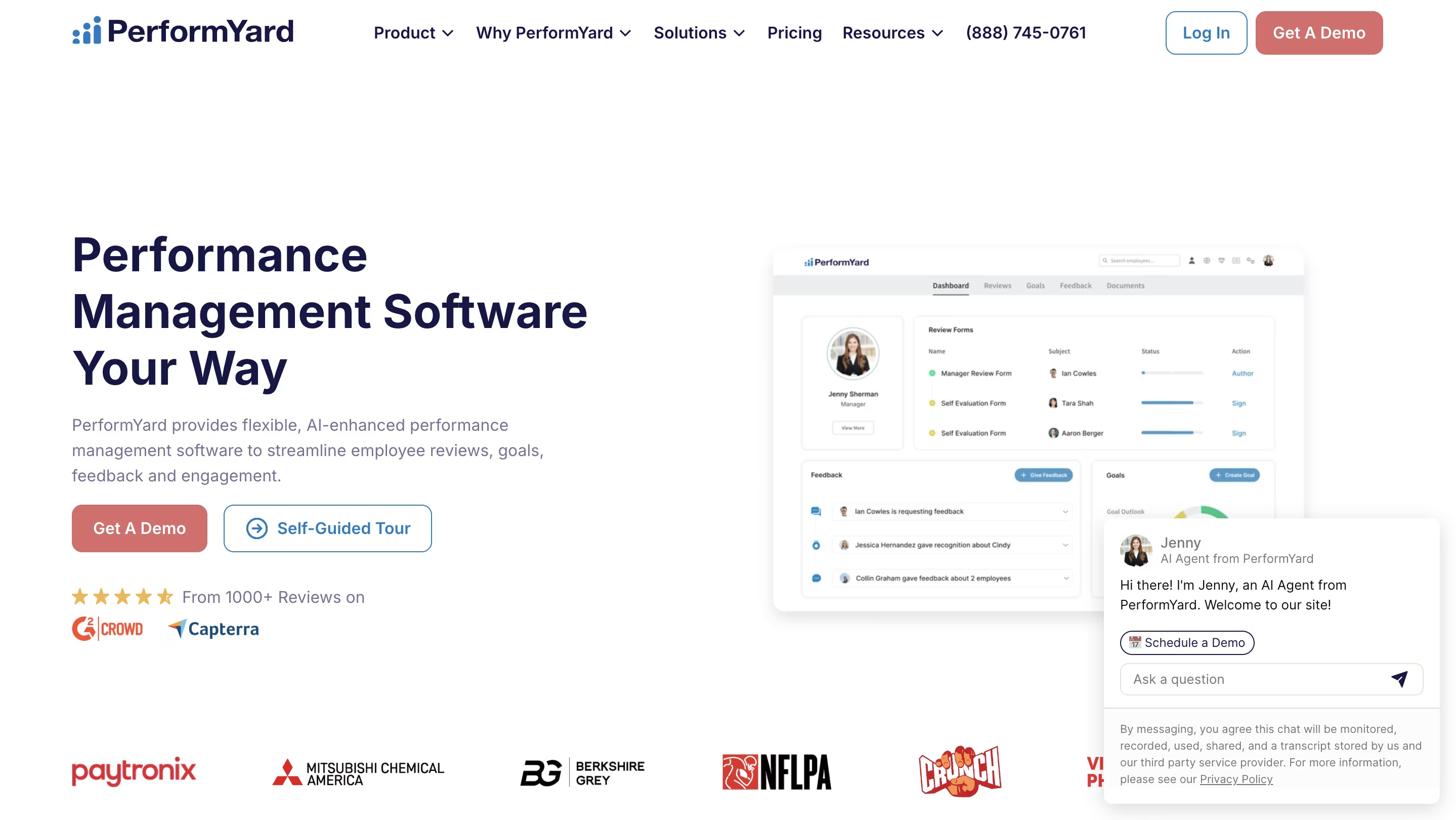
PerformYard Features
- Build custom review cycles (annual, quarterly or project‑based) with automated reminders.
- Performance journals and feedback requests enable ongoing coaching.
- Visual org charts and goals dashboard for alignment.
- Dedicated customer success managers for onboarding and training.
- Integrations with ADP, BambooHR, Gusto, Rippling and more.
PerformYard Pricing
PerformYard offers a free demo and pricing from $5–$10 per user/month depending on features and volume. Custom quotes are available for larger teams.
Who should use this?
PerformYard suits SMBs that require flexible, tailored performance cycles—such as agencies, consultancies or project‑based teams. If you want to blend 360° feedback with ongoing coaching and avoid rigid templates, PerformYard’s customizable performance management system may be a strong fit.
Betterworks focuses on strategic goal alignment and continuous performance management. It helps growing organizations cascade objectives, track progress and keep everyone moving in the same direction. People Managing People praises its user‑friendly interface and robust goal‑setting features.
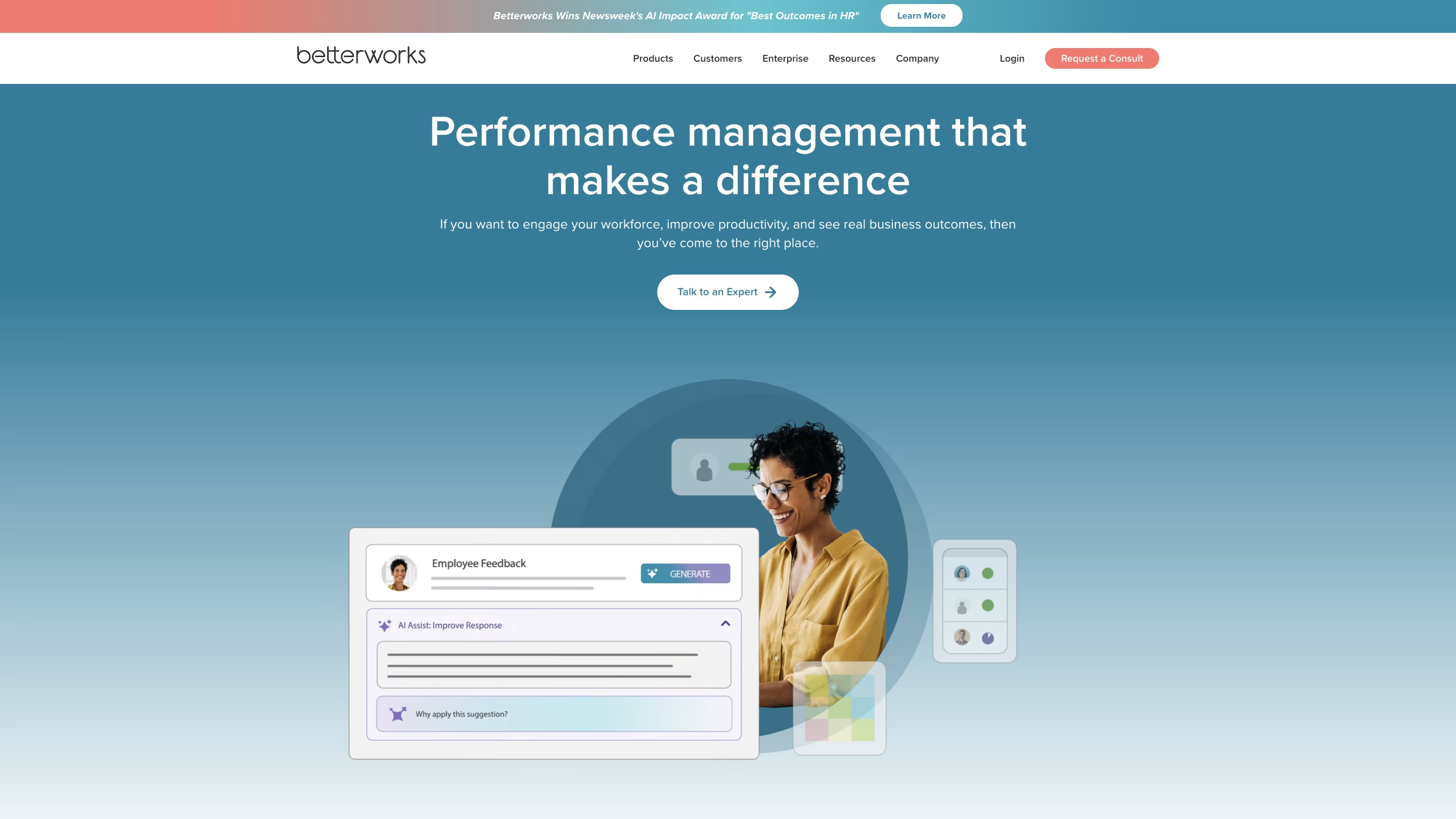
Betterworks Features
- OKR and goal‑setting framework with real‑time progress tracking.
- Continuous feedback and conversation templates to keep coaching consistent.
- Career development and recognition tools to support employee growth.
- Email and live‑chat support, plus online help center.
Betterworks Pricing
Betterworks is sold via custom quotes, with pricing typically geared toward mid‑sized and enterprise clients.
Who should use this?
Betterworks suits medium‑to‑large companies seeking disciplined OKR alignment and frequent check‑ins. Small businesses looking for a lightweight tool may find its pricing and complexity more than they need.
ClearCompany combines applicant tracking, onboarding and performance management into an integrated system. It’s best known for its robust tracking, streamlined onboarding and performance insights. For small businesses scaling their teams, consolidating hiring and performance data reduces data silos and improves decision‑making.
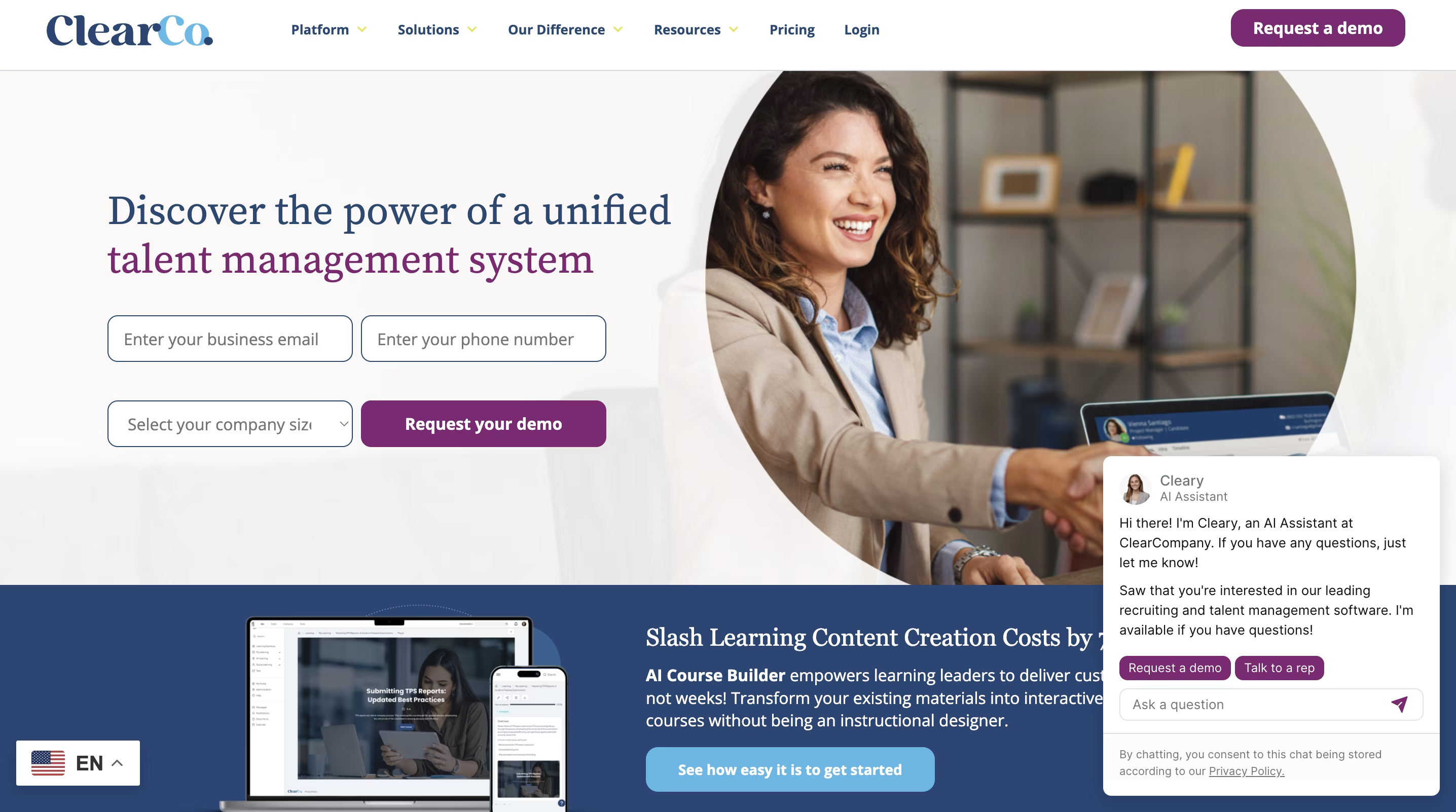
ClearCompany Features
- Applicant tracking system with background checks and intuitive candidate pipelines.
- Structured onboarding workflows to get new hires up to speed.
- Performance management tools that deliver employee evaluations and development plans.
- Integrations with popular HR tools and strong reporting capabilities.
ClearCompany Pricing
ClearCompany’s pricing is quote‑based, and there is no free trial. Prospective buyers should request a demo for a custom quote.
Who should use this?
ClearCompany is ideal for growing SMBs that need a unified hiring and performance platform. Companies that prioritize recruitment and want a single system of record will benefit from its integrated approach.
Lattice is a people‑management platform that helps organizations drive performance and engagement through continuous feedback, OKRs and employee development. It’s particularly strong in weaving together 360° reviews, 1:1s and AI‑powered insights. However, People Managing People warns that some users experience limited customization and integration challenges.

Lattice Features
- Continuous feedback loops, 1:1 templates and 360‑degree reviews.
- Integrated OKR and goal‑setting module with progress dashboards.
- Employee engagement surveys, pulses and eNPS ratings.
- AI‑powered coaching insights to address skill gaps.
- Integrations with HRIS, communication and productivity tools.
Lattice Pricing
Lattice starts at $11 per seat/month with a free demo available. Add‑on modules for engagement or compensation may increase the total cost.
Who should use this?
Lattice works well for startups and mid‑sized companies seeking a polished user experience, continuous feedback and integrated OKRs. If you already have a separate HRIS, ensure integration compatibility.
Leapsome combines performance reviews, competency frameworks, learning content and continuous feedback. Reviewers note that its customizable templates and development‑focused approach help managers track employee growth. It’s designed for mid‑sized organizations that prioritize learning and development.

Leapsome Features
- Customizable review templates and competency frameworks.
- Continuous feedback and praise to foster growth.
- 360° feedback and OKR tracking for aligned development.
- Learning modules and curated learning paths.
Leapsome Pricing
Leapsome pricing starts at $8 per user/month with a 14‑day free trial. Pricing varies based on modules and company size.
Who should use this?
Leapsome is a strong fit for fast‑growing SMBs and mid‑sized companies that emphasise employee development. If you’re looking for a performance management system that also supports learning, Leapsome is worth a closer look.
Culture Amp started as a survey platform and has expanded into performance and employee development. It offers skills coaching, centralized feedback hubs and advanced analytics. Pricing is typically based on a per‑employee subscription, making it more expensive for small teams.
.avif)
Culture Amp Features
- Research‑based engagement and pulse surveys with benchmarking.
- Performance reviews with continuous feedback and 1:1s.
- Skills Coach for personalised growth and development.
- People analytics module for deep insights and dashboarding.
Culture Amp Pricing
Culture Amp uses per‑employee pricing that typically ranges from $9–$14 per month for basic plans, with enterprise tiers costing significantly more. The starting cost for small businesses is around $4,500/year.
Who should use this?
Culture Amp is ideal for medium‑to‑large organizations looking for research‑backed surveys and analytics. Small companies with tight budgets may find more value in affordable platforms like ThriveSparrow.
15Five offers a lightweight performance management and engagement solution built around continuous feedback. It provides weekly check‑ins, 1:1s, OKR tracking and coaching tools at a very accessible price point. People Managing People highlights its detailed reports, user‑friendly interface and ability to align growth.
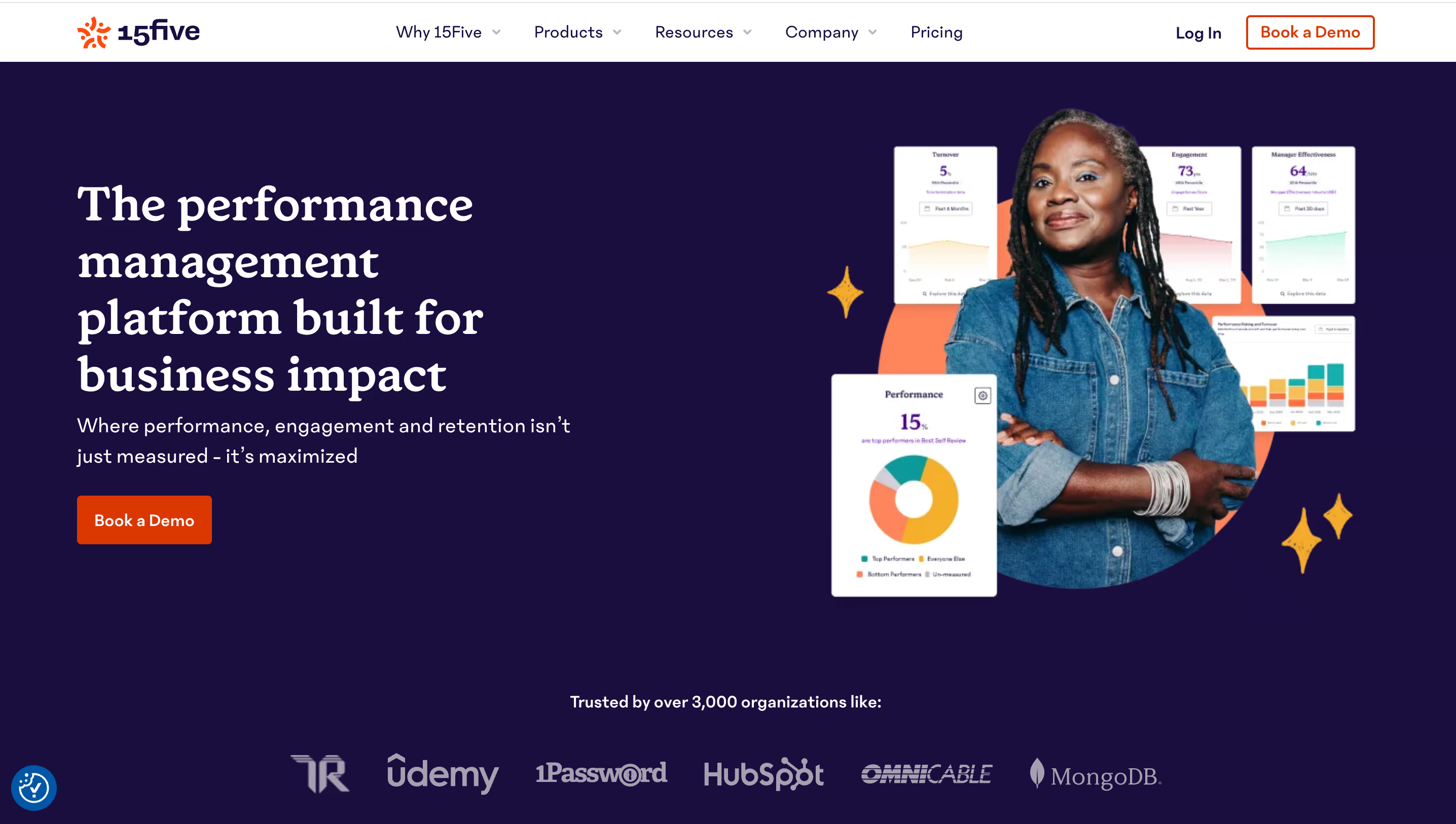
15Five Features
- Weekly check‑ins and pulse surveys for continuous feedback.
- 1:1 meeting agendas and coaching questions.
- OKR goal tracking and alignment tools.
- Best‑Self reviews and growth plans.
15Five Pricing
15Five pricing starts at $4 per user/month with a 14‑day free trial. Higher tiers add coaching and strategic OKR tools.
Who should use this?
15Five is perfect for startups and smaller teams that want to replace annual reviews with continuous feedback. It offers a cost‑effective way to keep managers connected to their teams.
BambooHR is primarily an HR information system (HRIS) that also offers a performance management module. It centralizes employee data, hiring, onboarding and time‑off tracking. For small companies seeking an all‑in‑one HR platform with an optional performance management add‑on, BambooHR can be compelling. However, pricing is not transparent and must be obtained via a sales call.
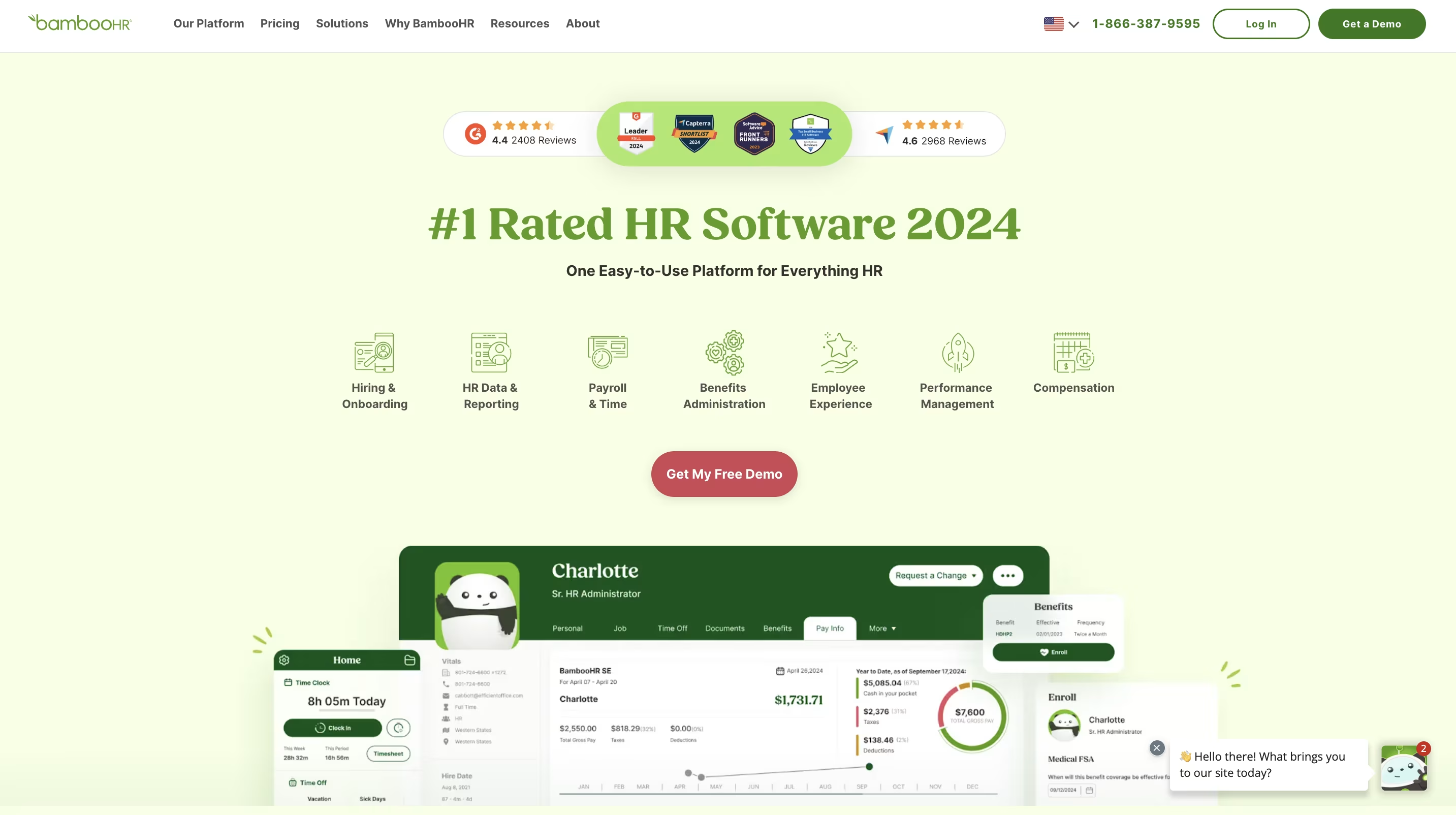
BambooHR Features
- Core HR functions: employee data management, reporting, hiring and onboarding.
- Time‑off and benefits tracking, with mobile access.
- Performance management (in Pro plan) including self‑assessments, peer reviews and goal tracking.
- Employee experience tools such as surveys and community features (in Pro plan).
BambooHR Pricing
BambooHR offers Core and Pro plans. Pricing is per employee per month for companies with more than 25 employees and a flat monthly rate for smaller teams. A 7‑day free trial is available, but there is no free plan.
Who should use this?
BambooHR suits small businesses seeking a simple HRIS with the option to add performance management later. If your primary need is to streamline HR administration with light performance features, BambooHR can work well.
Engagedly marries performance management with employee engagement through gamification. It uses badges, challenges and leaderboards to boost participation while aligning individual goals with company objectives. People Managing People notes that Engagedly’s user‑friendly interface, continuous feedback tools and gamification make it a fun way to motivate teams.
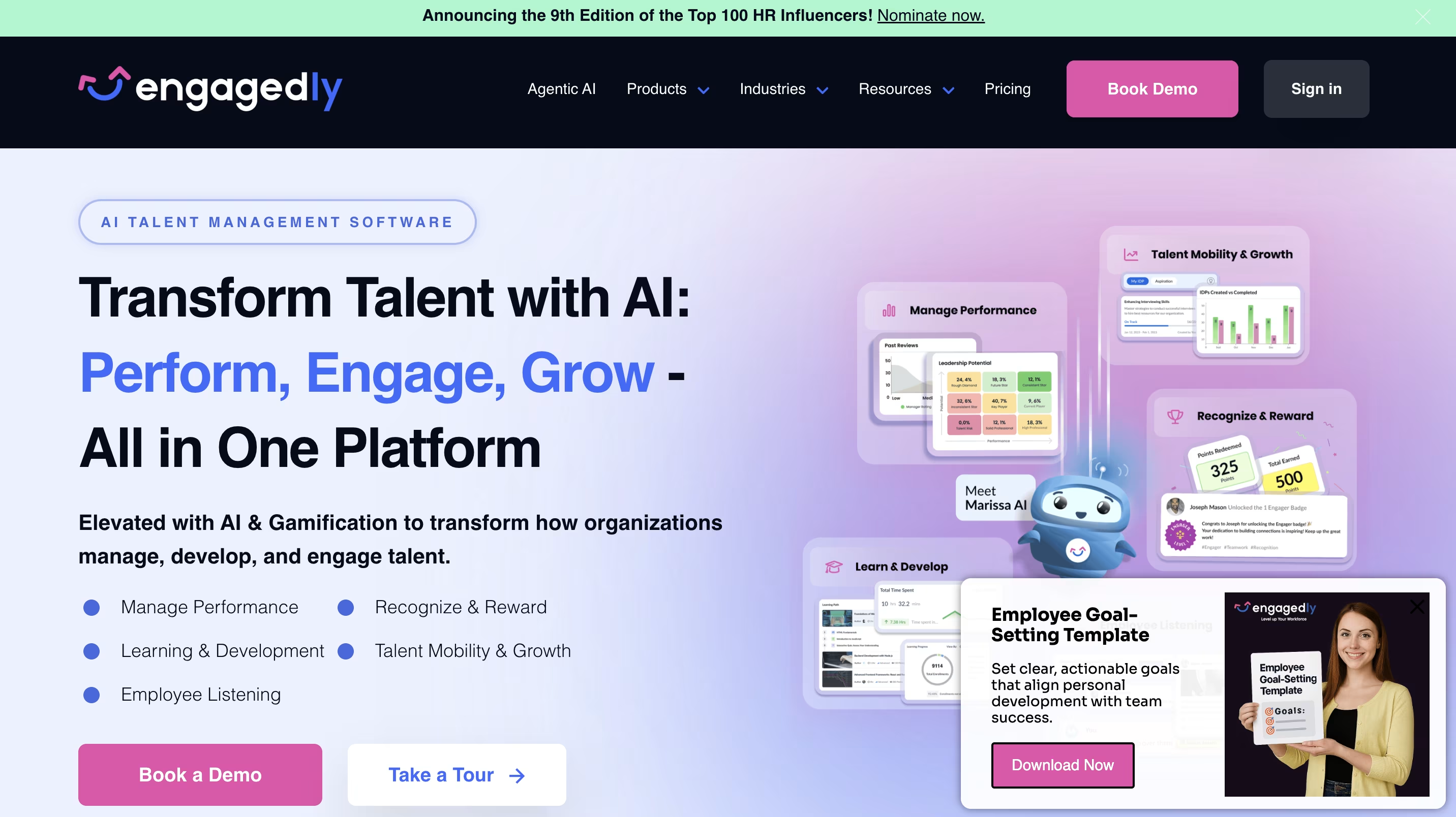
Engagedly Features
- Continuous feedback tools with goal alignment.
- Gamification (badges, points and challenges) to boost engagement.
- Customizable templates and surveys.
- Built‑in learning & development modules, including customised learning paths.
- AI‑powered sentiment analysis and compliance features.
Who should use this?
Engagedly is ideal for small to mid‑sized companies that want to inject fun into performance management and keep employees motivated through gamification. If your team values badges and recognition, Engagedly may be a compelling choice.
How to implement a new performance management system
Rolling out a new performance management system in a small business doesn’t have to be a huge project. The goal is to start simple, get managers using it quickly, and iterate based on real feedback.
Here’s a practical way to implement a new performance management system:
- Clarify your goals and philosophy
Decide what you want your system to do: better goals, more consistent feedback, easier reviews, or clearer promotion decisions. Write this down in plain language and use it to evaluate tools and explain the “why” to your managers.
- Choose a system built for small businesses
Shortlist tools designed for SMBs—not bloated enterprise suites. Look for modular pricing, fast setup, and templates for reviews, one-on-ones, and goals so you don’t have to build everything from scratch.
- Start with one or two core workflows
Rather than turning everything on at once, launch with your most important workflows:- Company and team goals or OKRs
- A basic review cycle (e.g., mid-year)
- Structured one-on-one meetings and feedback requests
This keeps the learning curve low and lets people experience quick wins.
- Train managers on conversations, not just clicks
A performance management system only works if managers know how to run good reviews and check-ins. Offer short training on giving specific feedback, setting clear goals, and using the tool to support—not surveil—employees.
- Communicate clearly with employees
Explain what’s changing, what’s expected of them, and what they can expect in return (clearer goals, more feedback, better visibility into growth). Emphasize that the system is there to support their development, not just to “score” them.
- Review and refine after the first cycle
After your first review cycle or quarter of using the performance management system, gather feedback from managers and employees. What felt easy? What felt heavy? Use that input to adjust templates, cadences, and training.
Approached this way, a performance management system becomes part of the day-to-day rhythm of your small business—not another tool people dread logging into.
FAQs about performance management system
1. What features should small businesses prioritize when choosing a performance management system?
Small businesses should look for performance management tools that simplify the full cycle: goal setting (OKRs), real-time feedback, 360-degree reviews, analytics dashboards, and easy integration with their existing HR or payroll systems. A user-friendly interface and affordable, modular pricing are especially important for lean HR teams. Bonus points go to platforms offering automation, multilingual support, and mobile access, so busy managers and employees can stay aligned wherever they work.
2. How does ThriveSparrow stand out compared to other performance management platforms?
ThriveSparrow is designed specifically for small and midsize businesses, offering AI-powered insights, modular plans, and a rapid, code-free rollout. Unlike complex enterprise suites, it combines goal tracking, surveys, feedback, and recognition in one simple platform—at a price that scales with your team. SMBs love its intuitive dashboards, automated analytics, and ability to turn engagement feedback into actionable performance improvements without a steep learning curve.
3. Can a performance management system really replace traditional annual reviews?
Yes! Modern performance management software enables businesses to move beyond outdated, once-a-year reviews. With tools like continuous feedback, frequent check-ins, pulse surveys, and instant recognition, these platforms help managers coach employees in real time. The result? Faster growth, higher engagement, and a documented trail of performance conversations—all without the paperwork and stress of annual reviews.
4. Will these performance management systems integrate with my current HR software or payroll solution?
Most of the leading performance management systems for SMBs—including ThriveSparrow, PerformYard, and BambooHR—offer integrations with popular HRIS, payroll, and productivity apps. This means you can sync employee data, automate onboarding, and avoid double data entry. Always check your preferred tool’s integration marketplace or ask for a demo to confirm it works with your company’s stack.
5. How much should I expect to invest in a small-business performance management tool?
Most SMB-focused performance management tools start at $3–$15 per user per month, with free trials or demos available. Some platforms, like Zoho People, even offer free plans for very small teams. Keep in mind that more advanced features (such as advanced analytics, learning modules, or integrations) can raise the price, and some tools offer custom quotes based on your company size or needs. Always compare both features and costs to find the best fit for your team and budget.