






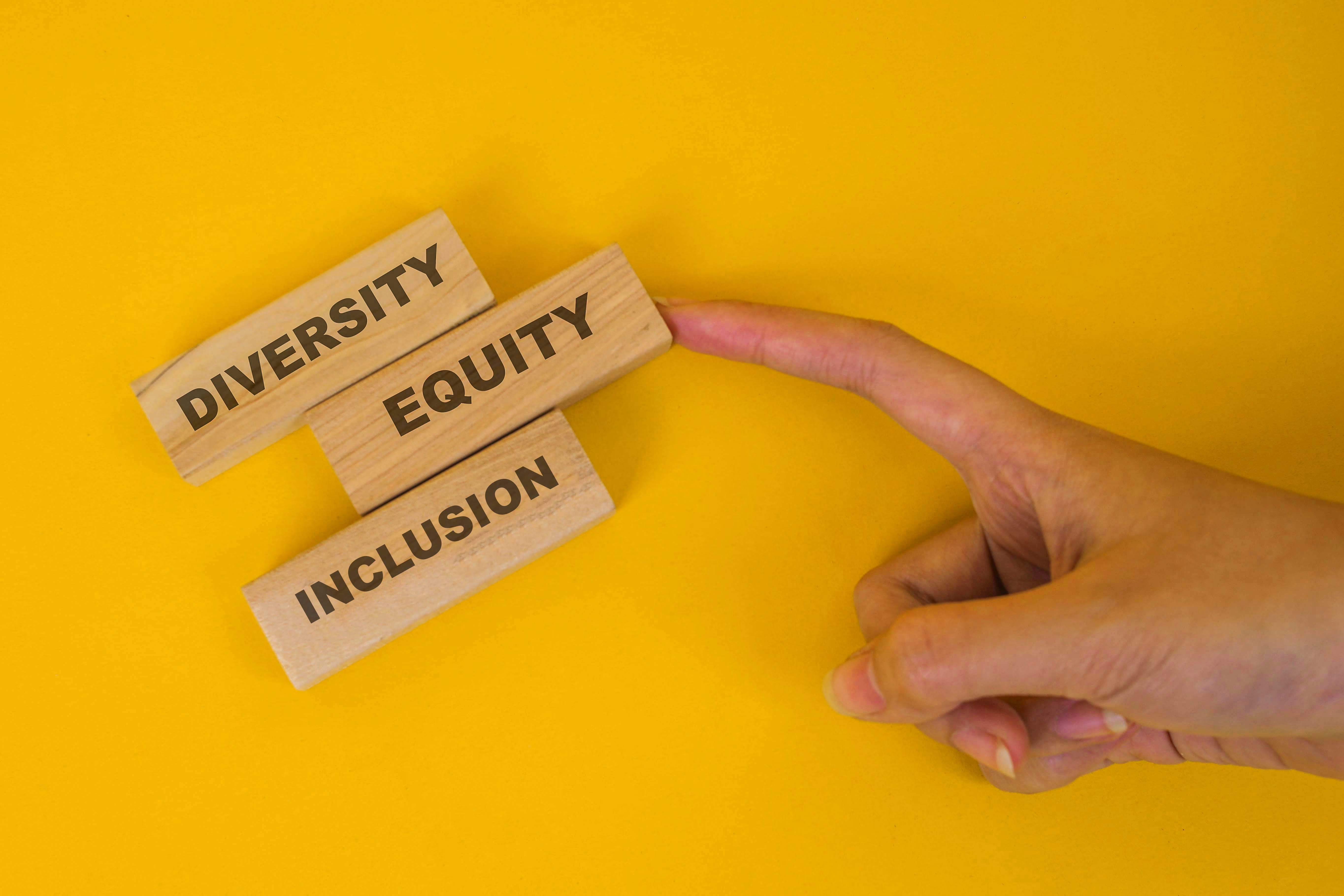



Equity in DEI means giving people what they need to succeed, not treating everyone the same. It recognizes that systemic barriers have created unequal starting points. Some candidates come from families with college degrees and professional networks. Others have faced discrimination and limited access to opportunity. Real equity removes those barriers so everyone can actually advance. In this blog, we break down what equity actually means at work, show you how it differs from equality, and share practical examples of companies doing it right.
What Does Equity Mean?
Equity means giving people what they need to succeed, not giving everyone the same thing. It's about recognizing that people start from different places. Some face barriers that others don't. Real equity removes those barriers so everyone can actually succeed.
In diversity, equity, and inclusion (DEI) work, equity goes beyond just being fair on paper. It means acknowledging that people begin from unequal starting points. Some candidates come from families with college degrees and professional networks. Others have faced discrimination, limited access to education, or exclusion from certain industries.
Equity vs. Equality aren't the same, and most organizations confuse the terms.
This confusion is actually why many diversity initiatives fail. According to McKinsey & Company's research on diversity and inclusion, companies that fail to prioritize equitable advancement see diverse talent leave faster than majority employees.When organizations hire diverse people but don't build equitable systems, those employees hit invisible barriers. They don't advance. They don't feel included. They leave.
Equity:
Giving people what they need to succeed, not giving everyone the same thing. Equity means recognizing that people start from different places. Some candidates come from families with college degrees and professional networks. Others have faced discrimination, limited access to education, or exclusion from certain industries. Real equity means removing the barriers that stop these people from succeeding.
Example:
A company provides interview coaching for underrepresented candidates, uses structured interviews instead of freestyle conversations, creates mentorship programs for emerging talent from underrepresented groups, and conducts pay equity audits to close wage gaps. These actions aren't equal, they're equitable because they remove specific barriers that exist.
Equality:
Giving everyone the same thing, treating everyone identically. Equality means providing identical resources and following identical processes for everyone. It sounds fair and objective on the surface. Everyone gets treated the same way regardless of their background or circumstances. There's no discrimination or favoritism. The rules apply equally to all.
Example:
A company gives everyone the same interview questions, the same training budget, the same health insurance, and the same evaluation criteria. Everyone works the same hours and follows the same dress code. The company is consistent and applies the same rules equally to everyone.
Equity in the Workplace
Equity in the workplace means removing barriers so people can actually succeed based on their capability instead of their background. Most organizations claim to care about diversity but skip the hard work of building equitable systems. Hiring diverse people isn't enough if you don't remove the barriers that stop them from advancing. Equitable workplace practices require looking at every system you have and asking one question: Does this advantage certain groups over others.
Real equity in the workplace shows up in hiring that removes bias and focuses on skills. It shows up in transparent salary bands where people know what roles pay. It shows up in mentorship and sponsorship programs that deliberately connect underrepresented employees with senior leaders. It shows up in flexible work arrangements that help people with caregiving responsibilities participate fully.
When you build equity into your systems, diverse talent stays longer and advances faster. Your company gets access to capability you were filtering out before. This is what transforms diversity from hiring statistics into real inclusion where underrepresented groups actually succeed and contribute their full potential to your organization.
Common Equity Barriers in the Workplace
Real equity removes specific barriers that stop underrepresented employees from succeeding. Here are the five most common barriers companies address:
1. Hiring Bias: Traditional interviews advantage people from certain backgrounds. Structured interviews ask every candidate the same questions in the same way. This removes bias and focuses on actual capability instead of background.
2. Pay Gaps: Many organizations have unexplained wage gaps where certain groups earn less for the same work. According to the U.S. Bureau of Labor Statistics, women earn approximately 84 cents for every dollar earned by men in 2024, with even larger gaps for women of color. Pay equity audits analyze compensation by demographic group and find these gaps. Companies then adjust salaries to correct disparities.
3. Advancement Obstacles: Without mentorship and sponsorship, talented people from underrepresented groups stay invisible to decision-makers. Equitable mentoring programs deliberately connect emerging talent with senior leaders who advocate for their promotion.
4. Access Barriers: When offices aren't wheelchair accessible or software isn't built for different needs, entire groups of people can't participate fully. Equitable access means building accommodation into default systems instead of making people request accommodations.
5. Development Gaps: People from lower-income backgrounds may not afford education or have time to pursue it. Equitable development support includes tuition reimbursement, skills-based training, and transparent career pathways so everyone can advance.
Addressing these five barriers is what separates equitable workplaces from companies that just hire diverse people and hope they succeed.
Equity in Remote and Hybrid Work
Remote work creates new equity challenges that traditional offices don't face. When people work from home, visibility decreases and bias increases. Remote employees get fewer spontaneous mentoring moments. They miss informal conversations that lead to opportunities and promotions.
Building equitable remote practices means being intentional about connection. Rotate meeting times so no group always joins at 3 AM. Use asynchronous communication so people don't need to be online simultaneously. Document decisions so remote employees have the same access to information as office workers. Create mentorship programs that don't rely on hallway conversations.Equitable remote work also means flexibility. Some people care for children or aging parents. Some have medical conditions. Equitable practices give people the flexibility to do their work and manage their lives. This removes barriers that stop certain groups from participating fully.
The bottom line: Remote work requires more intentional equity, not less. Companies that build equitable remote practices keep diverse talent longer and see higher engagement across all groups.
Real-World Workplace Equity Examples
1. Transparent Job Descriptions and Pay Ranges
Post wage ranges upfront instead of hiding salary information.
Candidates know if the role fits their financial needs. They don't waste time applying for a job that pays 30% less than they need. Transparency stops the discrimination that happens when some groups negotiate salary and others don't. When everyone sees the salary range, it removes the power imbalance that historically disadvantaged women and people from underrepresented groups who negotiate less aggressively.
Why it matters:
Transparent pay ranges attract better candidates because people self-select based on fit. It reduces hiring friction and gets qualified people into roles faster. Companies that publish salary ranges see increased applications, faster hiring, and happier new employees who weren't blindsided by low offers.
2. Skills-Based Hiring (Dropping Degree Requirements)
Hire based on what someone can actually do, not their degree.
College costs money, and not everyone can afford it. But capable people without degrees get passed over, limiting your talent pool. Skills-based hiring opens doors to talent companies were missing. A company hiring developers now looks at portfolios and work samples instead of requiring a computer science degree. They find great developers who learned to code through bootcamps, self-teaching, or apprenticeships.
Why it matters:
Skills-based hiring expands your candidate pool by removing arbitrary barriers that filter out qualified people. Companies see faster hiring, better performance from role-ready candidates, and more diverse teams because education access varies by socioeconomic background and geography. You get talent you were unfairly eliminating before.
3. Inclusive and Equitable Incentives
Offer incentives that work for everyone, not just people who fit traditional molds.
Traditional incentives like happy hours with alcohol or formal dress codes exclude people. Monetary bonuses work for everyone. Gift cards work for everyone. Flexible time off works for everyone. Public recognition works for everyone. Professional development funds work for everyone. Volunteer time with causes employees care about works for everyone.
Why it matters:
When incentives include only certain groups, you lose the motivational power for everyone else. Equitable incentives increase engagement across all employees because everyone has access to rewards that actually matter to them. This builds morale and retention across your entire workforce, not just the people who fit traditional office culture.
4. Equitable Access to Resources and Physical Spaces
Every employee should be able to access company facilities and tools.
This means:
- Wheelchair-friendly conference rooms
- Accessible software and digital tools
- Sign language interpreters for meetings
- Materials in multiple languages
- Adjustable workstations
- Quiet rooms for focus or sensory needs
Why it matters:
Excluded employees feel discriminated against and disengage. This directly impacts eNPS (employee Net Promoter Score) and indirectly contributes to burnout and turnover. When you invest in accessible spaces and tools, everyone feels included. Disabled employees, neurodivergent employees, and employees from different linguistic backgrounds can all participate fully. This improves retention and performance across your entire organization.
5. Workforce Education and Tuition Support
Investing in education for underrepresented groups closes skills gaps and supports career growth.
Starbucks example: The company provides tuition coverage for employees through partnerships with universities. Employees complete degrees while working. This is life-changing for people who couldn't otherwise afford college. This sends a clear message: We invest in your future. We believe in you. In turn, it builds trust and drives stronger employee involvement and engagement.
Why it matters:
Tuition support builds loyalty and trust with employees who might otherwise leave for better opportunities. It demonstrates that your company believes in them long-term. Employees who receive education support show higher engagement, longer tenure, and better performance.
6. Targeted Mentoring and Sponsorship Programs
Mentoring programs for underrepresented employees accelerate career advancement and build professional networks. Sponsorship is different (and more powerful). It's when a senior leader actively advocates for someone's promotion. Without sponsorship, talented people from underrepresented groups stay invisible to decision-makers. Structured mentoring programs that target equity gaps are proven to move the needle.
Why it matters:
Mentoring and sponsorship close the invisible advantage that majority groups get through informal networks. When underrepresented employees have access to the same networks and advocates, they advance faster and stay longer. This increases diversity at leadership levels and sends a message that promotion is based on capability, not connections. Your leadership pipeline gets stronger and more diverse.
7. Pay Equity Audits and Transparent Salary Bands
Regular analysis of compensation data by gender, race, and other demographics uncovers systemic disparities.
How this works:
- Pull compensation data across departments
- Analyze by demographic group
- Look for patterns (women paid less? minorities in lower roles?)
- Make adjustments where gaps exist
- Publish salary bands so everyone knows the range
Why it matters:
Pay transparency builds trust. It forces companies to explain disparities and actually fix them instead of hiding the problem. When employees know the salary range for their position, they can negotiate fairly and see if they're being paid equitably. Companies that conduct regular pay equity audits and publish salary bands see higher employee satisfaction, better retention, and reduced legal risk.
8. Inclusive Benefits and Leave Policies
Equitable benefits go beyond healthcare.
Real examples:
- Equal parental leave for all parents (not just mothers)
- Mental health coverage and therapy access
- Fertility benefits
- Caregiver support (time off to care for aging parents, kids, etc.)
- Same-sex partner insurance
- Flexible scheduling
- Paid time off for cultural events or religious observances
Why it matters :
When benefits are inclusive employees feel genuinely supported. This increases retention engagement and loyalty across all demographics. Employees from underrepresented groups often have different life circumstances like caregiving responsibilities religious observances and health needs that traditional benefits ignore. When you address these needs those employees stay longer perform better and become advocates for your company. Benefits become a competitive advantage in recruiting talent.
How to Implement Equity: Actionable Steps
Step 1: Get Real Leadership Commitment
Equity work fails when only HR cares.
What success looks like:
- Executives tie their own performance reviews to DEI goals
- The CEO publicly champions equity
- Budget gets allocated to equity initiatives
- Leaders model inclusive behavior
Tone from the top matters. When leaders don't care, nobody else will.
Step 2: Conduct Equity Audits
Use data. Find the gaps.
Audit areas:
- Recruitment: Are certain groups being hired at lower rates?
- Compensation: Are certain groups paid less for the same work?
- Promotion: Are certain groups advancing at slower rates?
- Training: Do certain groups get less access to development?
- Turnover: Are certain groups leaving at higher rates?
Tools like ThriveSparrow help. They collect anonymous feedback, track engagement, and highlight equity gaps in real time.
Step 3: Set Measurable Goals and Metrics
"We want to be more equitable" is not a goal.
Real goals look like:
- "Increase women in leadership roles from 20% to 30% in 24 months"
- "Close the gender pay gap in the engineering department"
- "Increase retention of underrepresented employees by 15%"
Publish metrics. Update employees on progress. Adjust if needed.
Step 4: Adopt Inclusive Hiring
- Write job descriptions in plain language
- Post roles across multiple platforms
- Remove unnecessary degree requirements
- Train hiring teams on unconscious bias
- Use structured interviews (same questions for everyone)
- Do blind resume reviews (remove names and identifying info)
Skills-based hiring is non-negotiable.
Step 5: Implement Pay Transparency
- Publish salary bands
- Conduct regular pay equity audits
- Adjust compensation where gaps exist
- Document your process
Transparency stops hidden discrimination.
Step 6: Provide Equitable Training and Development
- Offer mentorship for underrepresented employees
- Create sponsorship programs
- Fund education and tuition reimbursement
- Make leadership pathways clear
- Ensure diverse people advance to senior roles
Development investment is equity investment.
Step 7: Create Accessible Work Environments
- Make offices wheelchair accessible
- Provide adaptive equipment
- Caption videos
- Offer quiet spaces
- Allow flexible schedules
- Support remote work options
Physical and digital accessibility is non-negotiable.
Step 8: Build Feedback Mechanisms
- Use pulse surveys (anonymous)
- Create listening circles
- Hold one-on-one conversations
- Act on feedback quickly
- Share what you learned
Employees need to see that feedback leads to change.
Step 9: Monitor and Adjust
Equity work never ends. Continuously:
- Review policies for unintended consequences
- Measure outcomes against goals
- Adjust strategies as the workforce changes
- Stay current on what works
Build equity work into your regular rhythm.
5 Common Misconceptions About Equity
1. Equity and Equality Are the Same Thing
This is the most common confusion, and it stops organizations from making real progress. Equality gives everyone the same resources. Equity gives people what they need to succeed. These are fundamentally different approaches. A mentorship program isn't equal treatment. It's equitable treatment because it helps close gaps that exist.
2. Equity Lowers Standards
This misunderstanding stops a lot of organizations from investing in equity initiatives. Equity doesn't reduce requirements or lower expectations. Instead it removes barriers that prevent qualified people from meeting high standards. A structured interview process doesn't lower standards. It actually measures ability more accurately than an informal conversation that advantages some candidates over others. Accessibility accommodations don't lower standards. They let qualified people demonstrate their full capability.
3. Equity Work Is Done Once Diversity Goals Are Met
Some organizations treat equity as a project with a finish line. This misses the reality entirely. Equity is ongoing work. New differences emerge. Systemic biases persist even when they're not obvious. Markets change, requiring continuous evaluation and adjustment. An organization that reaches a diversity goal but stops investing in equity will see that diverse talent leave and representation decline.
4. Only HR Needs to Worry About Equity
This is a critical mistake. Equity can't succeed as an HR project alone. Leaders set policy and allocate resources. Managers decide who gets opportunities, feedback, and advancement. Employees create the actual culture that determines whether people feel included. When equity is only an HR initiative, it doesn't have the organizational weight to change systemic barriers.
5. Equity Is Expensive and Slows Business Down
Actually the opposite is true. Companies with equitable practices outperform peers financially. Research from the Boston Consulting Group found that companies with above average diversity in management have 19 percent higher innovation revenue and generate 45 percent of revenue from new products compared to companies with below average diversity. These results come from equity. They come from actually letting diverse talent contribute fully rather than having them hit invisible ceilings.
The Bottom Line
Equity sits at the heart of DEI because it recognizes a basic truth: people's experiences and opportunities are shaped by systemic factors beyond their control.Unlike equality, which treats everyone the same regardless of starting point, equity provides tailored support so everyone can thrive.
When organizations embrace equitable practices in hiring, pay, development, feedback, and benefits, they don't just address a moral imperative. They unlock innovation, boost engagement, improve financial results, and build workplaces where people actually want to work.Equity isn't perfect. It's messy, ongoing work. But the companies doing it are winning—on culture, innovation, and the bottom line.
Start small. Use data. Measure progress. Adjust. That's how you build a genuinely equitable workplace.
FAQs
1. What's the Simplest Way to Explain Equity in DEI?
Equity means giving people what they need to succeed based on their individual circumstances, not treating everyone identically. Unlike equality, which provides the same resources to everyone, equity recognizes that people face different barriers. Some candidates come from families with professional networks. Others have faced discrimination or limited access to education. Real equity removes those barriers through mentorship programs, transparent salary bands, and accessible workplaces. This creates fair outcomes for all groups.
2. How Does Equity Differ from Equality?
Equality offers identical resources to everyone and treats everyone the same. Equity tailors resources to individual needs and aims for fair outcomes by removing barriers. Equality sounds fair on paper but often perpetuates inequality when people start from different places. Equity recognizes those starting points and provides what people actually need to succeed. The difference matters because equality alone doesn't close gaps that systemic barriers create.
3. Why Is Equity Important in the Workplace?
Equity drives innovation, profitability, and engagement. Companies with diverse management teams generate 19 percent more innovation revenue and produce higher cash flow per employee. Inclusive workplaces also see lower turnover and better engagement across all demographic groups. Beyond business metrics, equity reduces pay gaps and discrimination, creating workplaces where underrepresented employees actually feel included and stay longer.
4. How Can Organizations Measure Equity?
Measure equity by analyzing demographic data across recruitment (hiring rates by group), compensation (pay equity audits by group), promotion (advancement rates by group), turnover (retention rates by group), and engagement (survey results by group). Track representation by level and progression rates. Use anonymous surveys so people feel safe being honest. Tools like ThriveSparrow help gather this feedback and show equity gaps in real time. Without this data, you're making guesses instead of informed decisions.
5. What Are Easy-to-Start Equity Initiatives?
Start small with initiatives that don't require massive budgets. Write inclusive job descriptions in plain language. Remove unnecessary degree requirements and focus on skills-based hiring instead. Publish salary ranges so people know if roles fit their needs. Provide accessible accommodations as default systems instead of making people request them. Create mentorship programs that deliberately connect underrepresented employees with senior leaders. Launch anonymous feedback channels so employees can be honest about their experience. Review progress regularly and adjust based on what you learn.
6. How Do You Measure Equity in the Workplace?
Measure equity through data across five areas: recruitment (hiring rates by demographic group), compensation (pay equity audits to find wage gaps), advancement (promotion rates by group), retention (turnover rates by group), and engagement (survey results by group). Without disaggregated data by demographic group, you're guessing. What you measure is what you improve. This is why equitable workplace practices start with transparent, honest measurement.
7. What's the Timeline for Building an Equitable Workplace?
Equity isn't a one-time project—it's ongoing work. In the first 3 to 6 months, audit your systems and identify gaps in hiring, pay, and advancement. Months 6 to 12, launch initial equity initiatives like transparent job descriptions and pay equity audits. Between 12 and 24 months, you see measurable progress in retention and engagement. Companies that commit 2+ years see the biggest transformation in equitable outcomes, innovation, and culture shift.
8. Is Equity Possible for Small Companies?
Yes. Small company equity doesn't require big budgets or complex software. Transparent hiring (removing degree requirements), published salary ranges (free), informal mentorship programs, and flexible schedules all cost little or nothing. Small companies actually have an advantage: less bureaucracy means you can implement equitable workplace practices faster than large enterprises. Start with one area, measure progress, and expand. You'll see results faster than larger organizations.
9. What's the ROI of Building Equitable Workplace Practices?
Companies with equitable practices generate 19 percent more innovation revenue and 2.3 times more cash flow per employee than less diverse peers. They also see lower turnover, higher engagement, and reduced legal risk from pay gaps and discrimination. The investment in equity pays back quickly through better talent retention, performance, and innovation. It's not just the right thing to do—it's how companies win financially.
10. Why Do Equity Initiatives Fail?
Equity initiatives fail when only HR owns the work instead of getting full leadership and manager commitment. They fail when companies skip foundational work like conducting pay equity audits and setting clear equity goals. They also fail when treated as one-time projects instead of ongoing work. Success requires leadership that champions equity, clear metrics tied to outcomes, regular adjustment based on data, and accountability at all levels.