












Your team is quietly checking out (and you might not even notice). Something's broken in the modern workplace, and it's not what you think. It's not the hybrid work debate. It's not Gen Z's work ethic. It's not even the endless Slack notifications. It's simpler than that: people don't know if they're doing a good job.
Think about your own team for a second. When's the last time someone got real, meaningful feedback? Not a performance review filled with corporate jargon, but an actual conversation about what they're great at and where they could grow? If you're like most companies, it's been a while. And that silence? It's killing engagement.
Here's the reality: only 31% of U.S. employees felt engaged in 2024, with 17% actively disengaged. But here's what's wild: when someone receives meaningful feedback in the last week, 80% report being fully engaged. That's not a marginal improvementthat's a complete transformation. Yet 32% of workers are still waiting more than three months to get feedback.
The math doesn't math. We know what works. We're just not doing it. This guide is about changing that. You'll learn why feedback is the secret weapon for employee engagement, how to build a culture where feedback flows naturally, and how to make it all feel effortless instead of like another thing on your overwhelmed plate.
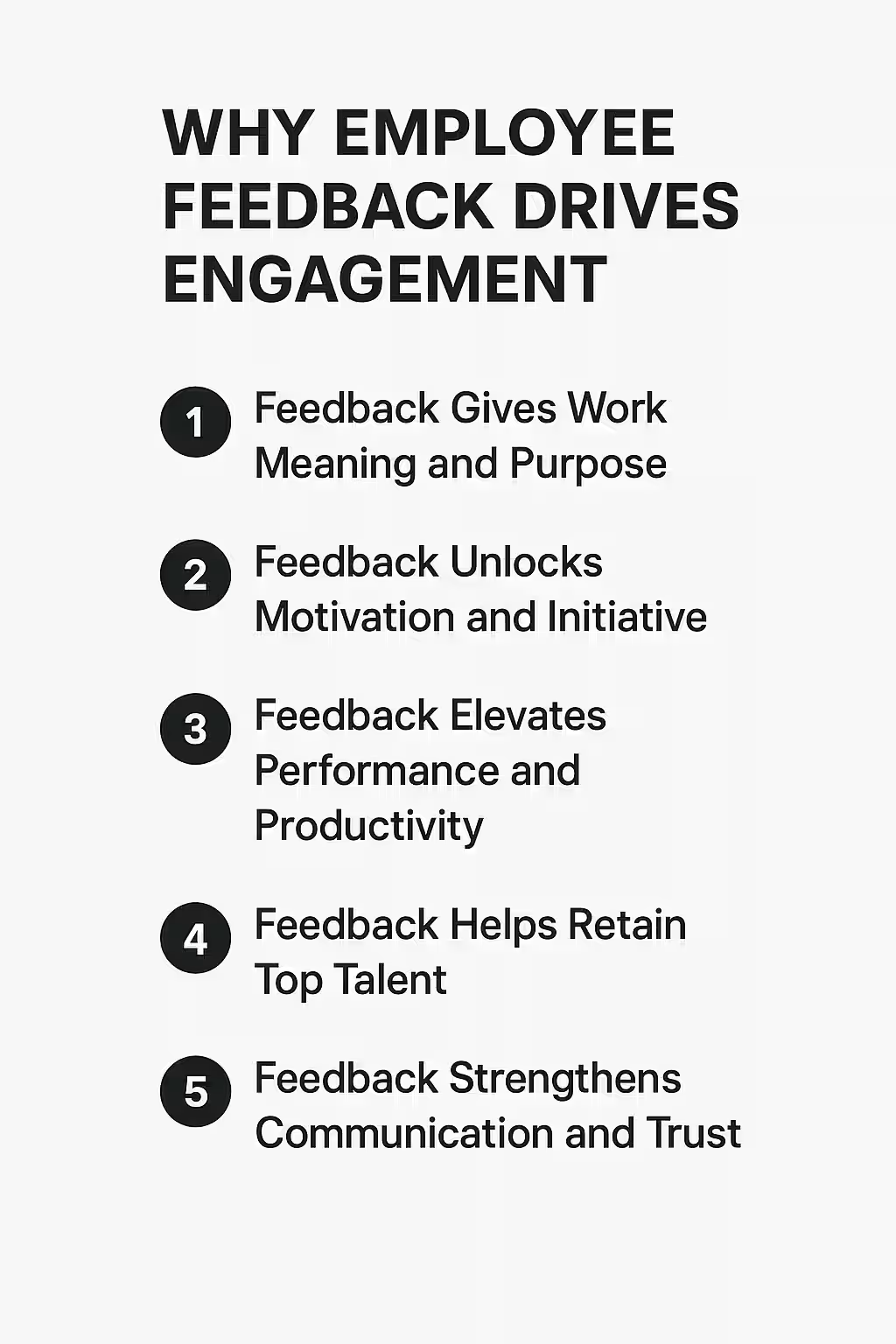
Why employee feedback drives engagement
1. It creates meaning and purpose
You know that feeling when you've been working on something for weeks, pouring your energy into it, and then... silence? No acknowledgment. No "hey, this was great." No "here's how this helped the team." That silence is soul-crushing. And it's what most employees experience every single day.
When managers provide strengths-based feedback—when they actually notice and name what someone does well—everything shifts. People stop wondering if their work matters. They know it does because someone they respect told them so. And here's the kicker: teams receiving meaningful feedback experience 4x more engagement than simply tweaking office attendance. You can't force engagement through attendance policies. But you can earn it through genuine recognition.
2. It boosts employee motivation and initiative
Have you noticed how some people on your team just... take initiative? They see a problem and fix it without being asked. They pitch ideas. They go the extra mile. And others? They wait to be told exactly what to do.
One major differentiator is feedback. When people get regular input on their work, something unlocks. They stop playing it safe. They start taking ownership. The numbers tell the story: 85% of employees take more initiative when they receive workplace feedback. It's like giving someone a roadmap instead of making them wander in the dark hoping they're headed the right way.
3. It improves performance and productivity
Imagine driving a car where the speedometer only updates once a year. You might be going 30. You might be going 90. Who knows? You'll find out at your annual review. That's how most companies operate. And it's absurd.
Teams that get strengths-focused feedback report 12.5% higher productivity and 8.9% more profitability. Continuous feedback helps employees align their efforts with company goals now, not six months from now when the opportunity has already sailed past. It's the difference between course-correcting in real time and discovering you've been off track for half a year.
4. It reduces employee turnover
Here's an uncomfortable truth: 66% of employees would likely leave if they didn't feel appreciated. Not for more money. Not for better benefits. Just because no one seems to notice or care about what they do.
Regular recognition and constructive input create loyalty that ping-pong tables and free snacks never will. In fact, Gallup tracked 14.9% lower turnover among employees who received strengths-based feedback. When you consistently show people they matter through feedback, they stay. It's really that simple.
5. It enhances communication and trust
Without feedback, something insidious happens: people stop sharing ideas. They keep their heads down. They don't challenge bad decisions because... why would they? No one's listening anyway.
But when feedback flows freely, psychological safety blooms. People start taking risks. They admit mistakes. They innovate.
Building a feedback culture that actually works
Feedback matters, but the real challenge is making it a natural part of how your team works, even when everyone is busy. You don't need a massive cultural overhaul, you need a few smart shifts.
1. Make feedback timely and frequent
The biggest mistake is treating feedback like a formal event: waiting for the perfect moment, preparing elaborate talking points, and saving everything for annual reviews. What actually works is real-time, in-the-moment feedback.
Someone nails a presentation? Tell them right then. Notice someone struggling with something? A quick five-minute conversation today beats a comprehensive review three months from now. According to Gallup, employees who get daily input are 3.6x more likely to feel motivated to excel.
2. Balance positive and constructive feedback
Most employees aren't asking for constant praise. In fact, 83% appreciate feedback whether it's positive or negative. They don't want fake cheerleading. They want to know what they're doing well and where they can improve. Vague, generic comments are worse than nothing. "Great job" means nothing. "The way you handled that difficult client by staying calm and asking clarifying questions—that was impressive" means everything.
3. Empower peer-to-peer feedback
Managers are not the only ones with valuable perspectives. Colleagues often see details about someone's work that leaders never do. Yet peer feedback doesn't happen naturally in most cultures because it feels awkward or risky.
62% of workers wish their peers gave them more input. Your job is to make it normal and safe. Create systems that encourage it. Employee recognition programs can formalize peer recognition so it becomes part of how your team operates instead of an exception.
4. Use pulse surveys and regular check-ins
Only 1 in 5 employees receive weekly feedback, which means 80% go long stretches with minimal guidance. Short pulse surveys and regular one-on-ones are your safety net. They catch small issues before they become big ones and celebrate momentum while it's still fresh.
5. Train managers to coach, not just evaluate
This is the unlock. When managers shift from "I evaluate your performance" to "I help you grow," everything changes. Leaders who provide daily, strengths-based feedback see teams with up to 18% higher engagement and 12% greater productivity.
Coaching means asking questions, listening without rehearsing your response, and helping people connect the dots themselves instead of just telling them what to do. If managers struggle with what to ask or how to structure those conversations, giving them a shared 1-on-1 template with prompts turns feedback from something they “wing” into a reliable coaching habit.
The impact of feedback on engagement and performance
1. Higher employee engagement
When employees receive strengths-based, regular feedback, they’re significantly more likely to feel energized, committed, and aligned with their goals than those who hear from their manager only a few times a year. Teams that build feedback into their weekly rhythm see engagement rise far more reliably than teams that rely on office presence, perks, or attendance policies alone.
2. Greater initiative and collaboration
Teams with consistent feedback behave differently. People start acting like owners, not renters. They take initiative, collaborate more freely, and stop waiting for instructions. Because they understand how they're doing and where they're headed, they're more willing to tackle problems proactively.
3. Improved retention and loyalty
When people feel appreciated through regular feedback, they stick around; when they don’t, most would leave if a better offer appeared. Regular feedback and recognition help employees feel seen and valued, which is a powerful antidote to turnover.
4. Better communication across work modes
Whether remote, hybrid, or in-office, continuous feedback creates clarity about expectations and growth. Regular performance conversations give employees a steady sense of direction and support, so they know how to improve no matter where they’re working.
5. Increased profitability and reduced turnover
Companies with regular communication rhythms enjoy 23% higher profitability and 43% less employee turnover. Feedback-rich communication doesn't just feel good; it directly affects the bottom line.
Making feedback easy with the right tools
You already know feedback matters, but it can feel like one more thing on an overloaded plate. The key is not more effort—it’s easier systems. Feedback needs to be simple enough that managers can do it consistently.
At ThriveSparrow, employee engagement and feedback go hand in hand. The platform lets you send quick pulse surveys, facilitate 360-degree feedback, and recognize achievements in real time—all in one place.
By centralizing performance feedback, engagement surveys, and recognition programs, ThriveSparrow helps you build a feedback-driven culture with less friction. It makes staying consistent easier instead of requiring superhuman effort from already-busy managers.
Feedback matters, but it shouldn't feel like extra work. ThriveSparrow puts pulse surveys, 360° feedback, and recognition all in one place, making it ridiculously easy for managers to stay consistent.
Try it free for 14 days — no credit card required.
.svg)
Frequently asked questions
1. What is the connection between employee feedback and engagement?
When employees regularly hear how they’re doing and why their work matters, they feel seen, aligned, and more motivated. Consistent, meaningful feedback turns vague effort into clear progress, which is a core driver of engagement.
2. How often should managers give feedback to keep employees engaged?
Short, frequent touchpoints (weekly or even lighter, ongoing feedback) work far better than saving everything for quarterly or annual reviews. The goal is to make feedback a normal part of work, not a rare, high-pressure event.
3. How can feedback improve employee performance and productivity?
Good feedback shows people exactly what to keep doing and what to adjust, so their effort lines up with team and company goals. That clarity reduces wasted work and helps employees course-correct quickly instead of drifting off track for months.
4. What are best practices for giving constructive feedback without hurting morale?
Focus on specific behaviors, not personality, and tie your feedback to impact and improvement (“here’s how this affects the result, here’s how to make it stronger”). Balance it with recognition of strengths so people feel supported, not attacked.
5. What tools can help automate or streamline employee feedback and engagement?
Teams often use platforms that combine pulse surveys, 1-on-1 templates, and 360° feedback so they don’t have to build everything manually. These tools handle reminders and data collection, freeing managers to focus on real conversations instead of admin.