









Unconscious bias training has a strange reputation. Some companies treat it like a checkbox. Some employees roll their eyes at it. And some HR teams genuinely want it to change how people hire, promote, manage, and collaborate.
The truth is somewhere in the middle. Research from Harvard Business Review suggests unconscious bias training works better when it focuses on behavior change instead of awareness alone. Unconscious bias training can work, but not when it is treated as a one-hour awareness session. It works when people learn how bias shows up, practice better decisions, and when HR teams support that training with feedback, data, and accountability.
In this guide, we'll break down what unconscious bias training means, what works in 2026, what to avoid, and how to make it part of a real workplace culture strategy.
Quick answer: Does unconscious bias training work?
Key Takeaways
- Unconscious bias training works best when it changes behavior, not just awareness.
- Managers need separate training because they influence hiring, reviews, promotions, and recognition.
- One-time workshops usually fail when they are not tied to systems and accountability.
- HR teams should measure training impact using employee feedback and inclusion metrics.
- Tools like ThriveSparrow help HR teams track whether employees actually feel heard, respected, and treated fairly after training.
What is unconscious bias training?
Unconscious bias training is workplace training that helps employees recognize automatic assumptions that may affect how they judge, hire, promote, review, or interact with others.
The goal is not to make people "bias-free." That is unrealistic. The goal is to help people notice bias before it turns into unfair decisions.
Think of it like this: your brain processes thousands of decisions daily. To save energy, it creates shortcuts based on past experiences, patterns, and cultural conditioning. These shortcuts are called biases, and they happen automatically, without conscious awareness.
Most unconscious bias training programs focus on three things:
- Helping people identify their own biases
- Explaining how those biases affect workplace decisions
- Teaching practical skills to reduce bias in hiring, reviews, promotions, and daily interactions
The challenge is that awareness alone rarely changes behavior. Knowing you have bias does not stop you from acting on it. That is why effective bias training programs go beyond definitions and include real workplace scenarios, decision-making practice, and ongoing measurement.
Once employees understand what unconscious bias training is, they can start spotting how bias affects everyday decisions like hiring, feedback, reviews, and promotions.
Why unconscious bias matters in the workplace
Unconscious bias shows up everywhere in the employee experience. It affects who gets hired, who gets promoted, who receives meaningful feedback, and who feels included in everyday conversations.
SHRM also points out that unconscious bias can shape hiring, promotions, leadership decisions, employee relationships, and workplace culture.
Here are the places where workplace bias most commonly appears:
1. Hiring shortlists: A recruiter unconsciously favors candidates from certain schools or companies.
2. Interviews: An interviewer connects more with candidates who remind them of themselves.
3. Performance reviews: A manager remembers recent work more than consistent effort throughout the year.
4. Promotions: Leadership selects someone who "looks like a leader" based on outdated stereotypes.
5. Feedback conversations: A manager describes one employee as "confident" and another as "aggressive" for similar behavior.
6. Manager decisions: A leader assumes younger employees want growth opportunities and older employees want stability.
7. Meeting participation: Louder voices dominate while quieter team members are overlooked.
8. Recognition: Visible work gets celebrated while behind-the-scenes contributions go unnoticed.
9. Leadership opportunities: Stretch assignments go to employees who socialize more with executives.
The hardest part for HR teams is that bias rarely appears as one obvious incident. It usually shows up as patterns over time. One department may consistently have lower promotion rates. One manager may receive repeated feedback about fairness. One group of employees may feel less recognized than others. Without feedback systems and measurement, these patterns are easy to miss.
For HR teams, HR teams often use employee engagement software to identify patterns in fairness, recognition, feedback, and inclusion across departments.That is why addressing unconscious bias in the workplace requires more than training. It requires systems, measurement, and accountability.
Types of unconscious bias to cover in workplace training
When building unconscious bias training for employees and managers, it helps to cover the most common types of bias that affect workplace decisions.
Understanding these common biases in the workplace helps employees spot them before they turn into unfair decisions. Training should include examples of unconscious bias that feel real and relevant to your specific workplace.
Does unconscious bias training work?
Yes, unconscious bias training can work, but only when it is practical, repeated, and connected to workplace decisions. It usually fails when it is treated as a one-time compliance activity.
Research and workplace experts generally agree on one thing: awareness alone is not enough. Training works better when it helps employees manage bias, practice better decision-making, and track progress over time. The difference comes down to how the training is designed and implemented.
Awareness-based training vs behavior-based training
When unconscious bias training works
Unconscious bias training is effective when it:
1. Focuses on real workplace decisions. Instead of abstract definitions, the training walks through actual scenarios like resume reviews, interview questions, performance ratings, and promotion discussions.
2. Teaches specific behaviors. Participants learn what to do differently, not just what to avoid. For example, using a standardized interview scorecard or reviewing full-year performance data before writing reviews.
3. Gives managers tools. Managers get checklists, scripts, and decision frameworks they can use immediately in hiring, feedback, and promotion conversations.
4. Uses scenarios and practice. Employees work through case studies, role-play difficult conversations, and identify bias in sample performance reviews or meeting transcripts.
5. Is repeated over time. One session creates awareness. Ongoing training, manager coaching, and quarterly refreshers build habits.
6. Is connected to systems. Training is paired with structured interviews, clear promotion criteria, anonymous feedback channels, and regular measurement of employee sentiment.
7. Tracks progress through feedback. HR teams measure whether employees feel decisions are fairer after training, using surveys, pulse checks, and sentiment analysis.
When unconscious bias training fails
Unconscious bias training typically fails when it:
1. Is mandatory but shallow. Employees complete a 30-minute video module, answer a few quiz questions, and never think about it again.
2. Blames employees. The training makes people feel guilty for having bias instead of offering constructive ways to manage it.
3. Only explains definitions. The session defines affinity bias, confirmation bias, and halo effect without showing how they appear in daily work.
4. Uses guilt instead of behavior change. The message feels accusatory rather than practical, which triggers defensiveness and resistance.
5. Is not connected to systems. Training happens, but hiring, reviews, and promotions continue using the same unstructured processes.
6. Has no follow-up. There is no manager coaching, no reinforcement, and no accountability for applying what was learned.
7. Is not measured. HR tracks completion rates but never checks whether employee experience improved after the training.
The bottom line: unconscious bias training is not useless, but it is also not magic. It works when it is part of a broader strategy that includes structured decisions, manager accountability, and ongoing feedback.
What effective unconscious bias training should include in 2026
Whether you are building unconscious bias training for employees, unconscious bias training for managers, or a larger workplace bias training program, the goal should be behavior change instead of simple awareness. The best unconscious bias training programs in 2026 go beyond awareness. They teach specific skills, connect to real workplace moments, and give managers actionable tools.
As hybrid work, AI-assisted hiring, and remote collaboration increase, unconscious bias can become even harder to notice without structured systems and employee feedback.
Here is what should be included:
1. Clear examples of unconscious bias
Employees need to see how bias actually shows up in their work. Generic definitions do not stick. Specific unconscious bias examples do.
Include examples like:
- A manager assumes a younger employee is more adaptable to change and an older employee prefers routine.
- A hiring panel prefers candidates from familiar universities or well-known companies.
- A leader gives stretch projects to employees who speak up more in meetings, missing talented but quieter team members.
- A reviewer describes one employee as "confident" and another as "aggressive" for similar behavior.
- A remote employee is seen as less committed than someone who works in the office.
- A manager gives more detailed feedback to employees who share their communication style.
- A team leader assumes a parent will not want to travel for work without asking.
These examples of unconscious bias help people recognize bias in action, not just in theory. Real workplace scenarios make training more memorable and actionable.
2. Bias moments in daily work
Training should walk through the specific moments where bias affects decisions:
Interviews: Do you ask the same questions to every candidate? Do you rate answers consistently?
Meetings: Who speaks first? Who gets interrupted? Whose ideas get credited?
Reviews: Are you remembering the full year or just recent months? Are you comparing this person to clear criteria or to another employee?
Promotions: What evidence are you using? Would you make the same decision if this person had a different background?
Feedback: Are you being specific or vague? Would you use the same language for someone of a different gender or age?
Recognition: Are you celebrating visible work or also noticing contributions behind the scenes?
Team assignments: Are you assigning work based on assumptions about someone's interests or actual conversations about their goals?
3. Practical scripts and decision checks
Employees need tools they can use immediately. Give them decision-making prompts like:
Before making a people decision, ask yourself:
- What evidence am I using?
- Would I make the same decision if this person had a different background?
- Did I compare this person against clear criteria?
- Am I relying on personality or performance?
- Have I sought input from others before deciding?
These simple checks interrupt automatic thinking and create space for more fair decisions.
4. Manager-specific training
Managers need separate, focused training because they control hiring, reviews, promotions, and recognition. A general employee session is not enough.
Manager training should cover:
1. Fair performance reviews: How to review a full performance cycle, not just recent months. How to separate personality from results. How to compare employees against role expectations, not against each other. Performance review software helps managers follow structured review processes instead of relying on memory, assumptions, or recency bias.
2. Balanced feedback: How to give specific, actionable feedback. How to avoid gendered or age-based language. How to recognize contributions from all team members, not just the loudest.
3. Inclusive one-on-ones: How to create space for quieter employees to share ideas. How to ask open-ended questions. How to avoid assumptions about what someone wants in their career.
4. Equitable recognition: How to track who is getting recognized and who is not. How to celebrate behind-the-scenes work, not just visible wins. An employee recognition platform can help HR teams identify whether recognition is being distributed fairly across teams and departments.
5. Structured promotion decisions: How to use clear promotion criteria. How to document why someone was promoted. How to explain decisions transparently.
6. Team-level psychological safety: How to notice if certain voices dominate meetings. How to invite input from everyone. How to respond when someone raises a concern about fairness.
Managers who complete bias training but do not change their behavior undermine the entire program.
5. Employee feedback and measurement
Training becomes more useful when HR teams can see whether employees actually feel heard, respected, and treated fairly after the program.
Engagement surveys help HR teams understand whether employees feel heard, respected, and treated fairly after unconscious bias training. Pulse surveys are useful for checking whether inclusion and fairness scores improve over time, while eNPS surveys can show whether employees feel more positive about the workplace after bias-reduction initiatives.
With ThriveSparrow, HR teams can run engagement surveys, pulse surveys, eNPS surveys, and anonymous feedback checks to understand whether bias-related initiatives are improving employee sentiment. Features like heatmaps, text insights, and action plans help HR teams understand whether employees actually feel workplace decisions are becoming fairer over time.
Without measurement, HR teams are guessing whether the training worked.
Who should take unconscious bias training?
Unconscious bias training works best when it reaches everyone who makes people decisions, not just frontline employees.
All employees should receive foundational training to help them recognize bias in daily interactions, meetings, collaboration, and peer feedback.
Managers need deeper, more focused training because they control hiring decisions, performance reviews, promotions, recognition, feedback conversations, and team assignments. Manager training should include practical decision frameworks and accountability measures.
HR teams should understand how to design effective training, measure its impact, and connect it to broader systems like structured interviews, fair promotion criteria, and employee feedback channels.
Hiring panels should complete training before participating in candidate interviews or resume reviews. This helps reduce affinity bias, confirmation bias, and halo effects during the hiring process.
Leadership teams set the tone for workplace culture. When executives complete training and visibly apply what they learned, it signals that fairness and inclusion are real priorities, not just talking points. Employees pay attention to whether leadership actually changes behavior after the training. If executives ignore feedback or continue making inconsistent decisions, the training quickly loses credibility.
People involved in performance reviews and promotions need specialized training on how to evaluate employees fairly, avoid recency bias, separate personality from performance, and use clear criteria instead of gut feelings.
The most effective programs train different groups with relevant scenarios. A hiring manager needs different examples than a peer giving feedback or an executive making promotion decisions.
What to avoid in unconscious bias training
Even well-intentioned training can fail if it includes these common mistakes.
1. Avoid one-time checkbox training
A single unconscious bias workshop may create awareness, but it rarely changes workplace behavior by itself.
Bias is habitual. It takes repeated practice to notice it and interrupt it. One training session in January does not prevent biased decisions in July.
Instead, build unconscious bias awareness training into ongoing manager enablement, new hire onboarding, and quarterly leadership development.
2. Avoid making the training feel like blame
People resist training when it feels accusatory. Employees usually disengage when training feels performative or disconnected from real workplace problems.
Frame it better. The message should be: everyone has bias, and everyone can build better decision habits.
Bias is not a moral failing. It is a natural function of how brains process information. The goal is not to shame people for having bias. The goal is to help them manage it.
3. Avoid training without manager accountability
Training employees but not managers is weak because managers control hiring, reviews, promotions, and recognition.
If managers complete the training but continue making unstructured decisions, nothing changes. Manager accountability means:
- Requiring managers to use standardized interview scorecards
- Reviewing promotion decisions for fairness patterns
- Collecting employee feedback on manager fairness
- Holding managers responsible when feedback reveals bias concerns
Without accountability, training is just theater.
4. Avoid vague examples
Bad example: "Be inclusive."
Good example: "Use the same interview scorecard for every candidate."
Bad example: "Recognize everyone fairly."
Good example: "Track who you recognized this quarter and check for patterns."
Bad example: "Avoid assumptions."
Good example: "Before assuming someone does not want a stretch project, ask them."
Specificity matters. Vague advice does not change behavior.
5. Avoid training without feedback loops
If employees still feel ignored, excluded, or unfairly evaluated after training, HR needs to know that quickly. Anonymous employee feedback gives employees a safer way to share whether they still experience unfair treatment after training.
Anonymous surveys and pulse checks can help reveal whether the training is landing or just sitting in an LMS completion report.
Common signs of unconscious bias in the workplace
Before implementing training, it helps to recognize where bias might already be affecting your workplace.
Watch for these patterns:
1. The same type of employees are consistently promoted. If promotions favor one demographic group, background, or communication style, bias may be shaping leadership decisions.
2. Feedback language differs across employees. One employee is "assertive" while another is "aggressive" for similar behavior. One is "detail-oriented" while another is "nitpicky."
3. Certain employees dominate meetings. The same voices speak first, interrupt others, or get their ideas implemented while quieter team members are overlooked.
4. Remote employees receive less recognition. Employees working from home get fewer shoutouts, promotions, or stretch assignments than office-based employees.
5. Employees hesitate to speak openly. Team members avoid sharing concerns, asking questions, or offering different perspectives because they worry about how they will be perceived.
6. One department reports lower inclusion scores. Anonymous survey results show that one team consistently feels less heard, less valued, or less fairly treated than others.
7. Managers rely heavily on "culture fit." Hiring and promotion decisions favor people who "fit in" rather than people who bring different perspectives or skills.
8. Promotions feel unclear or inconsistent. Employees cannot articulate why someone was promoted, and the criteria seem to change depending on the person or situation.
Spotting these signs early helps HR teams target unconscious bias training where it will have the most impact.
How to reduce unconscious bias in the workplace
Reducing unconscious bias requires more than training. It requires changing how decisions are made.
Here are ten practical steps for how to reduce bias in the workplace:
1. Use structured interviews. Every candidate answers the same questions. Every answer is rated using the same scorecard. This reduces the influence of personal impressions and gut feelings.
2. Define performance criteria before reviews. Decide what success looks like before evaluating someone. This prevents recency bias and halo effects from distorting ratings.
3. Standardize promotion decisions. Create clear promotion criteria. Document why someone was promoted. Review promotion patterns to check for fairness across departments and demographics.
4. Train managers separately. Managers need focused training on fair hiring, feedback, reviews, and recognition. General employee training is not enough.
5. Collect anonymous employee feedback. Give employees safe ways to share concerns about fairness, inclusion, and bias without fear of retaliation.
6. Review recognition and promotion patterns. Look at who is getting promoted, recognized, and given stretch assignments. Check for patterns by department, team, or manager.
7. Use pulse surveys after training. Measure whether employees feel decisions are fairer after the training. Track changes in inclusion scores, manager fairness ratings, and psychological safety.
8. Create action plans by team or department. If one department shows lower inclusion scores, create a targeted action plan with that team's manager.
9. Give employees safe ways to raise concerns. Offer anonymous feedback channels, skip-level meetings, and clear escalation paths when someone experiences bias.
10. Revisit training every quarter, not once a year. Bias awareness fades without reinforcement. Include bias topics in quarterly manager coaching, leadership development, and team retrospectives.
These steps work because they change systems, not just mindsets. This is how to overcome unconscious bias in the workplace in a way that actually sticks.
Unconscious bias training examples for the workplace
Here are common workplace situations where bias appears, along with better practices to reduce it.
This table gives HR teams quick talking points to use in training sessions and helps address the most common examples of unconscious bias in the workplace.
Unconscious bias training checklist for HR teams
Use this checklist when building or improving your unconscious bias training program:
Before training
- Define which workplace decisions the training should improve
- Run baseline inclusion surveys
- Identify bias hotspots by department or team
During training
- Use real workplace scenarios during sessions
- Train managers separately from employees
- Give employees decision-check frameworks
- Standardize interviews and review processes
After training
- Measure sentiment after training using pulse surveys
- Review recognition and promotion patterns quarterly
- Create action plans for teams with lower inclusion scores
- Repeat training regularly instead of once a year
This checklist helps HR teams move from awareness to action and ensures that bias training in the workplace creates real behavior change.
How HR can measure whether unconscious bias training is working
Completion rates do not prove training worked. HR teams need to measure whether employee experience improves after the training.
Track these metrics:
1. Engagement scores: Are employees more engaged after training? Are scores improving in teams where bias was a concern?
2. eNPS movement: Are employees more likely to recommend the company as a place to work?
3. Inclusion survey results: Do employees feel more included, heard, and respected?
4. Anonymous comments: What are employees saying in open-text feedback? Are they reporting fewer bias concerns?
5. Manager-level feedback patterns: Are managers getting better ratings for fairness, transparency, and inclusion?
6. Performance review fairness: Are rating distributions consistent across demographics and departments?
7. Promotion and recognition patterns: Are promotions and recognition distributed fairly? Are any groups consistently overlooked?
8. Participation in feedback channels: Are employees using anonymous feedback tools more often after training?
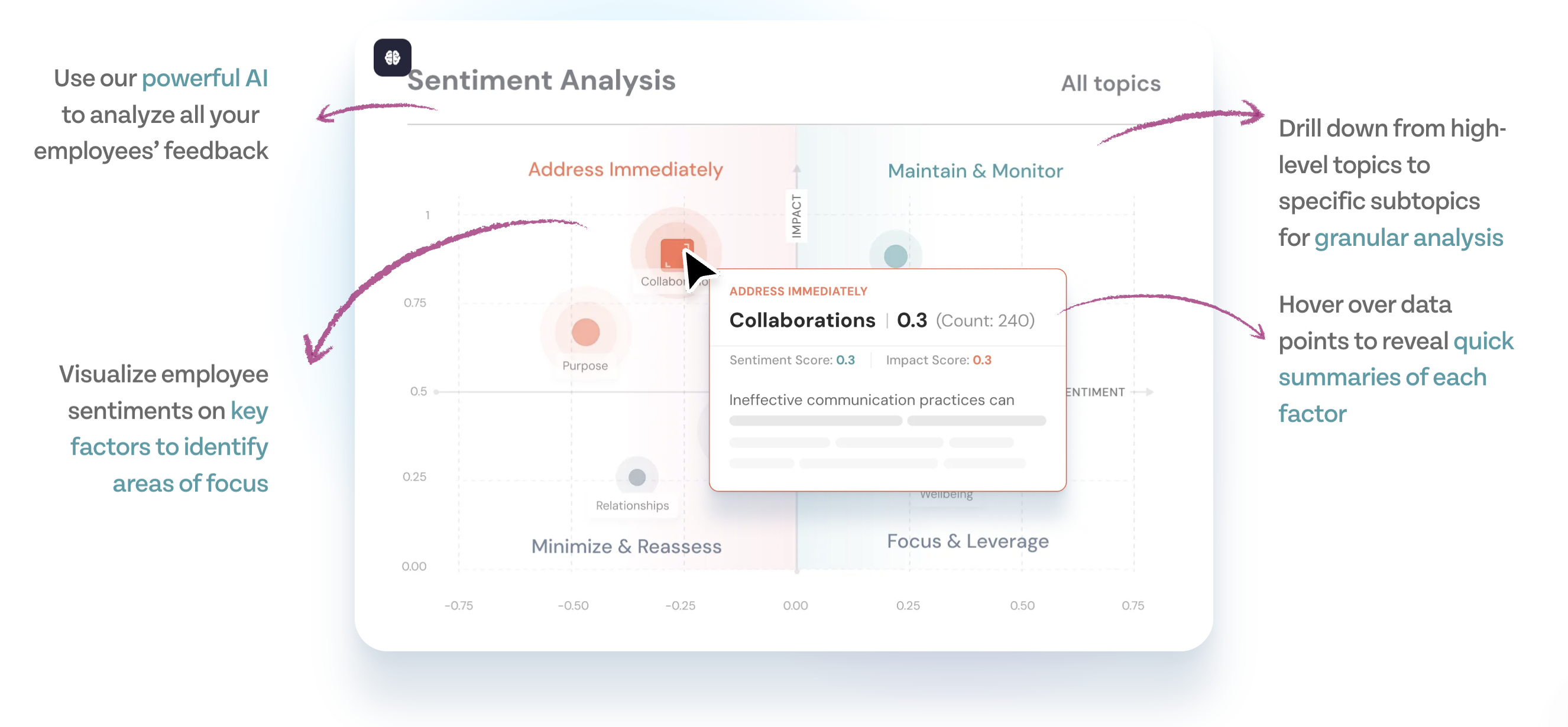
ThriveSparrow helps HR teams close this gap by collecting employee feedback before and after unconscious bias training. You can run anonymous pulse surveys, compare engagement across departments, use heatmaps to spot team-level differences, and turn feedback into action plans. Instead of guessing whether training worked, HR teams can see where employees feel progress and where bias may still be affecting the workplace experience.
Measurement turns training from an event into a strategy.
See if your unconscious bias training is actually working. Discover whether your training is creating real culture change with ThriveSparrow. Collect anonymous feedback, uncover team-level sentiment patterns, and turn insights into action plans that actually improve workplace experience.
Start your 14-day free trial. Try ThriveSparrow today!
.svg)
A simple unconscious bias training framework for 2026
Here is a six-step framework you can follow:
Step 1: Diagnose
Run an anonymous survey before training.
Ask employees:
- Do you feel decisions are made fairly in your department?
- Do you feel heard by your manager?
- Do you believe promotions are transparent?
- Do you feel comfortable speaking up when something feels unfair?
This gives you a baseline.
Step 2: Train, Run training with real scenarios. Focus on practical skills, not just awareness. Include manager-specific sessions.
Step 3: Apply, Give managers checklists for interviews, reviews, promotions, and feedback. Make these tools easy to use and visibly supported by leadership.
Step 4: Measure, Use surveys and sentiment analysis to see whether employees feel progress. Compare results to your baseline from Step 1.
Step 5: Act, Create department-specific action plans. If one team shows lower inclusion scores, work with that manager to address it.
Step 6: Repeat, Revisit training every quarter. Include bias topics in manager coaching, leadership development, and team check-ins.
This framework makes unconscious bias training part of a continuous improvement cycle, not a one-time event.
Final Thoughts
Unconscious bias training is not useless. But it is also not magic.
It works when employees learn practical decision habits, managers are held accountable, and HR teams measure whether the workplace actually feels fairer after the training. In 2026, the best organizations will not treat unconscious bias training as a checkbox. They will connect it to feedback, performance, recognition, and culture data.
That is where tools like ThriveSparrow can help. By combining anonymous surveys, pulse checks, AI-powered text insights, heatmaps, and action plans, HR teams can move from awareness to real workplace change.
Most organizations never actually measure whether unconscious bias training improves workplace culture. ThriveSparrow helps HR teams track employee sentiment, uncover fairness concerns, and turn feedback into action plans before problems become patterns.
Frequently Asked Questions
1. What is unconscious bias training?
Unconscious bias training is workplace training that helps employees recognize automatic assumptions that may affect how they judge, hire, promote, review, or interact with others. The goal is not to eliminate bias completely, but to help people notice it before it turns into unfair decisions.
2. Does unconscious bias training work?
Yes, unconscious bias training can work when it is practical, repeated, and tied to workplace systems. Training works when it teaches specific behaviors, includes manager accountability, and is measured through employee feedback. It fails when it is treated as a one-time awareness session with no follow-up or connection to real decisions.
3. What are examples of unconscious bias in the workplace?
Common examples include favoring candidates from familiar schools during hiring, giving more recognition to employees who socialize with leadership, assuming younger employees want fast career growth, describing similar behavior differently based on gender, and overlooking contributions from quieter team members in meetings.
4. How can HR reduce unconscious bias in the workplace?
HR can reduce bias by using structured interviews, defining performance criteria before reviews, standardizing promotion decisions, training managers separately, collecting anonymous feedback, reviewing recognition patterns, running pulse surveys, creating action plans by department, and revisiting training quarterly.
5. What should unconscious bias training include?
Effective training should include real workplace examples, bias moments in daily decisions like hiring and reviews, practical scripts and decision checks, manager-specific training on fair feedback and promotions, and measurement tools to track whether employee experience improves after training.
6. How often should unconscious bias training happen?
Unconscious bias training should not be a one-time event. Ideally, it should be refreshed quarterly or included in ongoing manager enablement cycles, leadership development programs, and new hire onboarding. Bias awareness fades without reinforcement.
7. What is the difference between unconscious bias and implicit bias?
The terms are often used interchangeably. Both refer to automatic associations and assumptions that affect judgment and behavior without conscious awareness. Implicit bias is more commonly used in psychology and research settings, while unconscious bias is more common in workplace training contexts.
8. Why does unconscious bias training fail?
Training fails when it is too generic, too theoretical, too blame-heavy, or not connected to real workplace systems. It also fails when there is no manager accountability, no follow-up measurement, and no integration with hiring, performance reviews, promotions, or feedback processes.