













If you have a peer review to complete in the next two days, scroll to the section you need. The examples are organized by role and situation — coworkers, managers, direct reports, and 360 feedback — with positive and constructive variants for each.
If you are an HR leader running the review cycle itself, the section on how to run peer reviews that actually work is specifically for you. It covers where most processes silently fail — and what to do instead.
What is a peer review
A peer review is a structured process where colleagues evaluate each other's work performance, skills, and behavior. Unlike traditional top-down reviews from managers, peer reviews involve feedback from coworkers who work closely with the individual — providing a more balanced and comprehensive view of strengths and areas for improvement.
Peer reviews are used during performance appraisals, team projects, and professional development programs. They help foster open communication, accountability, and a culture of continuous feedback — especially in team-based environments where collaboration and shared outcomes matter.
It is worth noting that peer reviews work differently depending on context. In academic settings, a peer review example for an essay focuses on argument structure, evidence quality, and writing clarity. In a workplace, the same process shifts toward collaboration, output quality, and professional conduct.
Peer Review Examples Across Different Roles
Peer review comments vary depending on the role of the recipient. Here are examples of feedback tailored to coworkers, managers, and direct reports:
1. For Coworkers
When reviewing your peers, focus on areas such as teamwork, collaboration, and initiative. Constructive feedback can highlight strengths and areas for improvement that relate to how they work with others.
Example Comments:
- Teamwork: "John consistently demonstrates a collaborative spirit, always willing to support teammates when needed."
- Collaboration: "I appreciate how Sarah actively seeks input from others and brings fresh perspectives to team discussions."
- Initiative: "Carl often takes the lead on projects without being asked, showing his drive and commitment to team success."
Here are a few sample peer review comments that employees can use while rating their peers:
2. For Managers/Leadership
Providing feedback to managers requires a focus on leadership qualities, such as delegation, vision, and communication. Feedback here should support their efforts in leading and guiding the team.
Example Comments:
- Delegation: "You’ve been great at identifying the strengths of each team member and assigning tasks accordingly."
- Leadership Vision: "Your long-term strategies have been clear, and you’ve communicated them in a way that aligns the team’s efforts with the company’s goals."
- Communication Skills: "You always ensure that the team is informed about key updates, and you’re open to listening to our concerns."
Here are a few co-worker feedback examples that employees can use while rating their managers:
→ Try ThriveSparrow free for 14 days No credit card required · Setup in under 10 minutes
.svg)
3. For Direct Reports
When reviewing direct reports, the focus should be on their performance consistency, adaptability, and growth mindset. Offering actionable advice can guide their professional development.
Example Comments:
- Adaptability: "You’ve shown great flexibility when working on tasks outside your usual scope and handled the changes with ease."
- Performance Consistency: "Your work remains reliable and of high quality, even during stressful periods."
- Growth Mindset: "I’ve noticed how open you are to feedback and how you actively seek ways to improve your skills and knowledge."
Here are a few peer performance evaluation phrases that employees can use while rating their direct reports:
Peer Review Examples by Role and Industry
Different industries have very different expectations when it comes to peer feedback. A comment that works well in a corporate setting may fall flat or even feel inappropriate in a clinical or academic environment. Below are role-specific examples to help you write feedback that actually fits the context.
1. Nursing Peer Review Examples
Peer reviews in nursing go beyond task completion. They assess clinical judgment, patient communication, adherence to protocols, and how a nurse supports colleagues under pressure. Here are a few registered nurse peer review feedback examples:
- "Sarah consistently demonstrates sound clinical judgment when managing high-acuity patients, prioritizing safety without compromising care quality."
- "John communicates clearly with both patients and the care team, ensuring handoffs are accurate and nothing falls through the cracks."
- "Carl supports junior nurses during complex procedures, sharing knowledge in a way that builds team confidence."
- "Sarah follows infection control protocols without exception, setting a strong standard for the rest of the unit."
- "John remains composed in high-pressure situations, which directly supports patient outcomes and team stability."
2. Software Engineer Peer Review Examples
In engineering teams, peer reviews often cover both technical contribution and collaboration. Code quality, documentation habits, knowledge sharing, and how someone handles feedback on their code are all fair areas to assess.
- "Sarah writes clean, well-documented code that makes it easy for the rest of the team to build on her work."
- "John is thorough in his pull request reviews, catching edge cases that others often miss."
- "Carl communicates blockers early, which helps the team adjust timelines before they become a problem."
- "Sarah takes ownership of bugs in her code and fixes them quickly without needing to be prompted."
- "John actively participates in architecture discussions and brings well-reasoned perspectives to technical decisions."
Software engineer peer reviews work best when they are tied to specific examples — a particular sprint, a code review, or a production issue. Generic praise or criticism does not help engineers grow.
360 Feedback Examples
A 360-degree review goes beyond peer feedback alone. It brings together input from managers, direct reports, peers, and sometimes even clients, to give employees a complete picture of how their work and behavior land across the organization.
Here are 360 feedback examples organized by direction:
From peers:
- "John communicates clearly across teams and is always willing to step in when a colleague is overloaded."
- "Sarah brings a collaborative mindset to every project, making it easy to work alongside her even on tight timelines."
From direct reports (upward feedback):
- "Carl creates an environment where we feel comfortable raising concerns. He follows through on what he says he will do."
- "Sarah gives clear direction, but there are times when more frequent check-ins would help the team stay aligned."
From managers (downward feedback):
- "John takes ownership of his work and rarely needs to be followed up with. He is someone the team relies on."
- "Sarah has strong technical skills and is growing in her ability to manage stakeholder communication."
The main difference between a peer review and a 360 review is scope. A peer review is lateral — colleague to colleague. A 360 review is multi-directional. For 360 feedback examples organized specifically for that format, that guide goes deeper. The 360 feedback for managers guide covers upward feedback specifically.
Positive Peer Review Feedback Examples
Positive peer feedback is essential for reinforcing behaviors that contribute to the success of the team and organization. Below are examples that showcase how accomplishments, teamwork, and proactiveness can be highlighted in a peer review:
- “Carl consistently delivers high-quality work on time and exceeds expectations in problem-solving situations. His ability to take initiative in resolving team conflicts is commendable.”
- “Sarah is a great collaborator. She always listens carefully during brainstorming sessions and brings creative ideas that help the team move forward.”
- “John goes above and beyond to help the team achieve its goals. His proactive approach in taking on additional responsibilities shows dedication and leadership potential.”
- “Carl consistently steps up to assist team members struggling with deadlines. His willingness to offer help without being asked fosters a positive and supportive team environment.”
- “Sarah’s ability to adapt to sudden changes in project scope has helped the team stay on track, even when faced with tight deadlines. Her flexibility is a key strength.”
- “John regularly shares his expertise with junior team members, ensuring everyone has the knowledge needed to perform at their best. His mentorship is highly valued by the team.”
- “Carl’s work ethic and attention to detail ensure that all deliverables meet or exceed expectations. His commitment to excellence has been instrumental in the team's success.”
- “Sarah communicates effectively with all team members, ensuring that everyone is aligned on the project’s goals. Her clear communication has helped us avoid misunderstandings.”
- “John is always looking for ways to improve team processes, whether through new tools or more efficient workflows. His proactive approach drives positive change within the team.”
- “Carl regularly identifies potential roadblocks early on and takes action to mitigate them. His foresight and problem-solving skills prevent issues from escalating.”
Constructive Peer Review Feedback Examples
Constructive feedback should be framed carefully, focusing on areas of improvement while ensuring that it motivates rather than demotivates. Below are examples on how to deliver tactful feedback related to conflict resolution, communication, and team participation:
- “Sarah has great potential in conflict resolution, but she could benefit from actively listening to all parties involved before offering solutions. Developing this skill will help foster better team harmony.”
- “Carl’s work is often high quality, but he occasionally struggles to meet deadlines. Improving time management or seeking assistance earlier could help ensure tasks are completed on time.”
- “John has strong communication skills, but sometimes his feedback can come across as blunt. Being more mindful of tone when providing criticism will help foster a more collaborative environment.”
- “Sarah could be more proactive in team discussions. While her ideas are valuable, contributing them more frequently would help ensure that her voice is heard during key decision-making moments.”
- “Carl occasionally hesitates to ask for help when he needs it, which can lead to delays. Encouraging more open communication when faced with challenges could improve his overall productivity.”
- “John is a great team player, but there have been instances where he hasn't fully embraced the opinions of others. Acknowledging diverse viewpoints will help the team collaborate more effectively.”
- “Sarah has shown growth in her role, but there are times when her communication could be clearer, particularly when providing updates on project progress. More transparency will help keep the team aligned.”
- “Carl’s adaptability is generally strong, but he occasionally struggles when faced with multiple high-priority tasks. Learning to prioritize more effectively will help him manage workload pressures better.”
- “John sometimes prefers to work independently, which can isolate him from the rest of the team. Engaging more actively in team collaboration will improve overall team dynamics.”
- “Sarah excels in many areas, but when tensions arise, she can become defensive. Developing emotional intelligence and staying calm under pressure will improve her conflict resolution skills.”
These are also sometimes referred to as negative peer feedback examples, though "constructive" is the more accurate label. The goal is never to criticize for its own sake, it is to give the person something they can act on.
Peer Review Strengths and Weaknesses Examples
Organizing feedback under a strengths and weaknesses structure makes it easier for the reviewer to stay balanced and for the recipient to process what they are reading.
Strengths:
- "Carl's biggest strength is his reliability. The team always knows that when he commits to something, it will get done."
- "Sarah's communication style is a real asset — she keeps everyone in the loop without over-communicating."
- "John has strong analytical thinking. He brings data into discussions where others rely on gut instinct."
Areas of improvement (weaknesses):
- "Carl could work on delegating more. He tends to hold onto tasks when sharing the load would move things faster."
- "Sarah sometimes avoids difficult conversations. Getting more comfortable with direct feedback would strengthen her relationships with peers."
- "John can be slow to adapt when priorities shift. Building more flexibility into his workflow would help him handle change more smoothly."
Framing weaknesses as peer review areas of improvement keeps the feedback forward-looking. It also signals to the recipient that you are invested in their growth, not just pointing out what is wrong.
Peer Review Questions to Ask
Having the right peer review questions makes a significant difference in the quality of feedback you collect. Vague or overly broad questions lead to shallow responses. Specific, well-framed questions give reviewers a clear direction and give recipients more useful input.
Here are good peer review questions to include in your next review cycle:
On collaboration and teamwork:
- "Does this person actively contribute to team discussions and decisions?"
- "How well does this person support colleagues when they are under pressure?"
- "Does this person communicate clearly and keep relevant people informed?"
On performance and delivery:
- "Does this person consistently deliver work that meets the expected standard?"
- "How effectively does this person manage their time and meet deadlines?"
- "Does this person take ownership of their mistakes and work to fix them?"
On growth and development:
- "Is this person open to feedback and do they act on it?"
- "Has this person improved in any notable way over the past review period?"
- "What is one area where this person could grow further?"
These peer to peer feedback questions work equally well in a structured peer review survey or in a more informal check-in format. The key is consistency — use the same questions across reviewers so responses are comparable.
Why peer reviews matter
1. Provides a holistic evaluation
Peer reviews provide a well-rounded assessment of an employee's performance by gathering input from various colleagues who work closely with them. This reduces the bias or one-dimensional perspective that might come from a single manager. By pooling feedback from diverse sources, you get a fuller picture of an employee's strengths, challenges, and areas for growth.
2. Enhances team dynamics
By encouraging peers to give each other feedback, companies foster a more open, communicative work environment. When teammates provide constructive feedback, they are more likely to communicate effectively and collaborate better. Peer reviews promote mutual respect and transparency, helping team members align on goals and expectations. Peer reviews also help surface team-wide issues that might otherwise go unnoticed, improving overall team functionality.
3. Empowers employees
Peer reviews empower employees by giving them a voice in the performance evaluation process. Rather than waiting for a manager to assess their contributions, employees get direct insights from their colleagues, allowing them to understand how they're perceived and where they can make improvements. This increased autonomy fosters personal accountability and encourages employees to take ownership of their professional development.
4. Promotes fairness
With input from multiple sources, peer reviews help eliminate any one-sidedness in evaluations. This increases fairness, as feedback is balanced across different interactions and work situations. It's particularly helpful in larger teams where managers may not have daily visibility into every employee's performance. Fairness and transparency in reviews can lead to higher employee satisfaction and retention.
5. Drives continuous improvement
Peer reviews help shift the focus of feedback from mere judgment to development. Regular peer feedback creates a culture where employees see feedback as a tool for growth rather than criticism. Over time, this culture promotes a mindset of continuous improvement, helping individuals and teams refine their skills, enhance their performance, and contribute to organizational success.
How to Implement Peer Reviews in Your Workplace
Implementing peer reviews in a workplace requires careful planning, communication, and a culture of trust. According to the Betterworks 2026 State of Performance Enablement Report, 90% of HR leaders say AI has fundamentally redefined what high performance means — yet only 42% of organizations have updated their review criteria to reflect that change. Here's how to effectively introduce and integrate peer reviews into your organization:
1. Establish Competencies
Before rolling out peer reviews, establish what competencies you'd like to measure. Is it to improve team dynamics, increase accountability, or provide more well-rounded feedback? By setting competencies to measure beforehand, subjects in peer reviews will know what their strengths, and areas they'd need to improve.
2. Train Employees on Giving Feedback
Not everyone is comfortable or skilled in providing feedback, which is why offering training sessions is essential. Teach employees how to give constructive, respectful, and actionable feedback, emphasizing that the goal is to help each other grow, not to criticize. Spread awareness on the different types of bias to avoid while giving feedback.
Read more: Types of Performance Review Bias and How to Avoid It?
3. Create a Safe Environment
For peer reviews to succeed, employees must feel safe and confident that the feedback they give and receive will be used constructively. Reassure your team that peer reviews are not about personal judgment but about professional development.
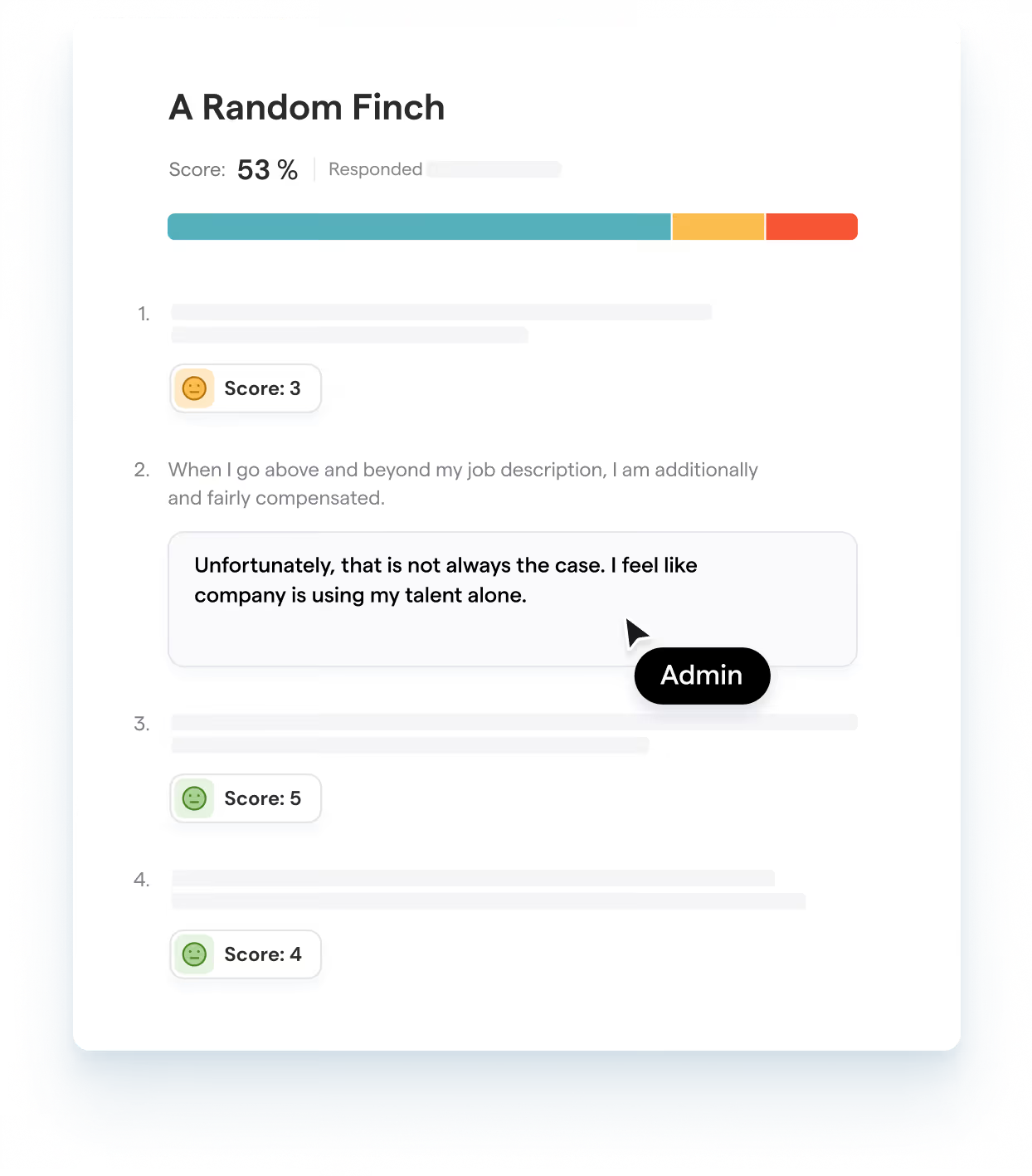
Anonymity can also be a useful option in some cases to encourage more honest and open feedback without fear of retaliation.
You can relay a message to all participants of the review process guaranteeing anonymity.
“All peer reviews will be kept confidential, and the results will be used to support personal development, not as a basis for punitive actions.”
4. Use a Structured Format
A structured review process makes it easier for employees to provide feedback that is focused and actionable. A good peer review format example would include clearly defined sections — one for strengths, one for areas of improvement, and one for open-ended observations.Templates with prompts or guided questions can ensure that feedback stays on track and covers the most important aspects of performance. These templates might ask about strengths, areas for improvement, and specific examples of behavior, ensuring feedback is comprehensive yet concise.
Using a peer review form example that includes rating scales alongside open text fields gives reviewers a structure to follow without limiting what they can say. A 1–5 rating scale for competencies like communication or collaboration, paired with a comment box for context, tends to produce the most balanced and usable feedback.
Tip: Include specific categories, such as communication, collaboration, and problem-solving, so reviewers know what to focus on and aren’t overwhelmed.
Here's an example of an annual performance review template with different categories to help reviewers get a bit of context while providing their ratings.
Start your 14-day free trial of the entire platform and see if ThriveSparrow is a good fit for your business.
Explore more such survey templates to make your performance review structured and organized.
5. Monitor and Evaluate the Process
After implementation, it's important to monitor how well the peer review system is working. Gather feedback from employees to assess whether the process feels fair and useful. Adjust the process as needed to ensure it remains valuable for everyone involved.
Example:
“We’d love to hear your thoughts on how the peer review process is going. What’s working? What could be improved for next time?”
By taking these steps, you can implement peer reviews that not only enhance individual performance but also strengthen team relationships and collaboration. A well-executed peer review process contributes to a culture of continuous learning and mutual support.
Best Practices for Writing Peer Reviews
Writing an effective peer review is both an art and a responsibility. When done well, it can strengthen relationships, motivate personal development, and drive collective growth. Here are some best practices to ensure your peer reviews are both impactful and constructive:
1. Be Specific and Actionable
Vague feedback like “you’re doing a good job” or “you need to improve” doesn't help the recipient. Instead, highlight specific examples of their behavior or performance. If a colleague managed a project well, mention what aspects stood out, such as their attention to detail or problem-solving skills. For areas of improvement, offer clear, actionable steps, like suggesting better communication during meetings.
Example:
Instead of: “You need to communicate better.”
Say: “During team meetings, it would be helpful if you could share updates more frequently to keep everyone on the same page.”
2. Balance Positives and Constructive Feedback
While it’s essential to point out areas for improvement, make sure to highlight the positives as well. A balanced review reinforces what the person is doing well while gently guiding them toward areas where they could grow. Starting with something positive sets a constructive tone for the rest of the review.
Example:
“I’ve noticed how well you manage deadlines, and your project reports are always clear and detailed. One area you might want to focus on is delegating tasks more efficiently, especially during tight deadlines.”
3. Focus on Behaviors, Not Personalities
When writing a peer review, always focus on specific actions or behaviors rather than making judgments about the person’s character. Reviews should address work-related performance and impact, not personal traits. This keeps feedback objective and prevents the recipient from feeling personally attacked.
Example:
Instead of: “You’re too disorganized.”
Say: “There have been a few occasions where deadlines were missed, which seemed to be due to task mismanagement. Perhaps creating a project tracker could help with staying on top of tasks.”
4. Offer Solutions, Not Just Criticism
Constructive feedback isn’t just about pointing out problems; it’s about helping the recipient find solutions. Suggesting potential strategies or resources for improvement shows that you’re invested in their success and growth, making your feedback more collaborative and supportive.
Example:
“I’ve noticed that you're sometimes overloaded with tasks. Maybe we can brainstorm ways to distribute the workload more evenly, or consider time-management tools like Trello to help streamline tasks.”
5. Be Timely
Feedback is most effective when it’s given close to the event or performance in question. If you wait too long, the details might get fuzzy, and the feedback may feel less relevant. Timely reviews ensure that the recipient can immediately apply suggestions or corrections to current projects.
Example:
“Last week’s presentation was well-organized, but there was some confusion during the Q&A. It might be helpful to prepare responses for likely questions next time.”
Incorporating these best practices ensures that your peer reviews are helpful, respectful, and geared toward fostering positive change. By being specific, balanced, and solution-oriented, you contribute to a feedback culture that promotes growth and collaboration.
Common Pitfalls to Avoid in Peer Reviews
While peer reviews can be a powerful tool for employee development, certain common pitfalls can undermine their effectiveness. It’s essential to be aware of these to ensure feedback is fair, constructive, and valuable.
1. Avoid Vague or Overly Critical Feedback
Vague feedback, such as “John is a good worker,” fails to provide actionable insights. It neither highlights specific strengths nor points out areas of improvement. Similarly, overly critical or harsh feedback can demotivate the recipient and damage relationships.
Peer reviews should be clear, balanced, and solution-oriented, emphasizing both strengths and areas for growth.
2. Bias in Reviews Based on Personal Relationships
Biases can emerge in peer reviews, especially when personal relationships come into play. Whether it’s favoritism or harsh criticism due to personal conflicts, biases can distort the accuracy of the feedback.
It’s critical to train team members to recognize and avoid these biases, encouraging them to focus on professional conduct and performance instead of personal relationships.
This is especially worth watching in peer evaluation for group work, where social dynamics can easily influence scores. If two people are close friends, a reviewer may unconsciously inflate their rating. If there has been tension, the opposite can happen. Building anonymity into the process and training reviewers on bias are both effective ways to keep peer assessment scores fair and consistent.
How Peer Reviews Drive Performance Improvement
Peer reviews play a pivotal role in fostering personal development and enhancing organizational performance. By providing insights from different perspectives, peer reviews allow employees to gain a holistic understanding of their strengths and areas of improvement. They promote a culture of continuous learning, teamwork, and accountability.
Giving feedback to peers regularly — not just during formal review cycles — is what makes the biggest difference. When feedback is only delivered once a year, it feels high-stakes and often triggers defensiveness. When it becomes a normal part of how a team operates through continuous feedback, people get better at both giving and receiving it. Peer to peer feedback in the workplace works best when it is ongoing, low-pressure, and tied to real situations.
Encouraging peer reviews as part of a broader performance management process ensures that feedback is timely, constructive, and aligned with both individual and organizational goals — making them a catalyst for performance improvement at every level of the organization.
ThriveSparrow's Performance module automatically generates AI-powered Personal Development Plans from 360 assessment results — so HR does not have to manually translate feedback into individual plans across hundreds of employees after every cycle.
Using a peer review template
Having a consistent format across your review cycle matters more than most teams realize. When every reviewer uses the same structure, responses are comparable. When each reviewer uses their own format, you end up with qualitatively different inputs that are almost impossible to synthesize into anything useful.
A good peer review format includes:
- A rating scale (1–5) for key competencies: communication, collaboration, delivery, and growth mindset
- Open text fields for each competency — not just a number, but what the number reflects in observed behavior
- A section for specific examples — the behavior-level observations that make feedback credible and defensible
- A forward-looking question: "What should this person focus on developing in the next review period?"
Stop rewriting the same feedback in five different ways. Use this instead.
For full 360 cycles, the annual performance review template, mid-year performance review, self evaluation examples, and performance review examples phrases are also available.
Your peer review process is only as good as what happens after the feedback is collected.
ThriveSparrow automates the hard parts: running assessments, comparing self-ratings against peer ratings, generating AI development plans, and tracking progress over time — so your next review cycle produces real development, not just a report.
Learning Equation: 50% reduction in 360 admin time. EnAble India: 14 weeks → 5–6 weeks. Dyninno: 70% reduction in manual work across 5,000 employees in 20 countries.
Rated 4.5/5 on G2. Trusted by 500+ HR teams. No credit card required. Setup in minutes→ Start your free ThriveSparrow trial
Frequently asked questions
1. What is the difference between a peer review and a 360-degree review?
A peer review is lateral — colleagues evaluate each other. A 360 is multi-directional — it includes input from managers, direct reports, peers, and sometimes clients or cross-functional partners. Peer review is one component of a 360, not a synonym for it.
2. How do you write constructive peer feedback without damaging the working relationship?
Focus on observable behaviors, not personality. "Sometimes sends updates too late for the team to adjust" is a behavior. "Disorganized" is a character judgment. The first is actionable and does not feel like a personal attack. Write feedback you would be comfortable saying in person.
3. Should peer reviews be anonymous?
It depends on the direction of feedback. Lateral peer feedback can often be attributed without issue. Upward feedback — direct report to manager — should almost always be anonymous, or you will get socially safe responses rather than accurate ones.
4. How many peer reviewers should one employee have?
Three to five is the standard range. Fewer than three and one strong opinion can skew the picture. More than five creates significant work for reviewers without proportional gain in data quality.
5. How often should peer reviews happen?
For formal cycles: annually or semi-annually is standard. For the feedback that actually changes behavior: continuously. The continuous feedback guide covers how to build that rhythm between formal cycles.
6. What if someone gives inflated feedback to everyone?
This is a calibration problem. Calibration sessions — where reviewers align on what "meets expectations" looks like before the cycle opens — reduce grade inflation significantly. Full guidance on performance review bias covers this in detail.
7. Can peer feedback be used for compensation decisions?
It can be, but with caution. Peer feedback is most reliable as a development input. Weight it alongside manager assessment and objective performance data — not as a standalone input.