












Reviewed and last updated by the ThriveSparrow team in August 2026, based on current vendor pricing pages, G2 reviews, and hands-on evaluation of each platform's core features.
Employee engagement software helps HR and people teams measure employee sentiment, collect feedback, identify engagement drivers, recognize employees, and turn insights into action. If you're not sure where to start, our guide on how to measure employee engagement covers the fundamentals before you shop for a tool.
It gives managers a way to act on that data before it shows up as attrition. Most platforms combine an employee engagement survey tool with feedback collection, recognition, and reporting. The exact mix varies by vendor — some tools focus almost entirely on surveys, while others call themselves a full employee engagement platform because they also handle performance, goals, or internal communication.
Below, we compare 20 employee engagement software providers across pricing, features, integrations, and real user ratings — more platforms than any other comparison guide in this category. Every listing includes honest pros and cons, including our own product, so you can shortlist the right tool without sitting through 20 sales calls.
Short on time? Here are our top three picks:
Prefer to watch instead of read? Here's a 5-minute rundown of five standout picks from this list — covering what each does best and who they're built for.
Best Employee Engagement Software at a Glance
Use this comparison to narrow your shortlist before reading the full breakdowns below.
"Limited" means the feature exists in a lighter form or as a secondary function — not a dedicated, fully built-out capability. "No" means the platform doesn't offer that feature at all.
What Is Employee Engagement Software?
Employee engagement software is a platform that measures how connected, motivated, and satisfied your employees feel, and helps you act on that information before it turns into resignations. It combines surveys, feedback collection, recognition, and analytics so HR teams and managers can see what's working and where they need to step in.
Some platforms specialize in one piece of that, like running surveys, while others bundle several functions into a broader system some vendors market as a full "platform." The label matters less than the specific features, which is exactly what the next section covers.
Features to Look for in Employee Engagement Software
Choosing the right platform isn't just about running surveys. It's about finding a tool that helps you understand your people and act on what you learn. Here's what actually separates a good platform from a mediocre one.
1. Engagement and pulse surveys:
Look for a platform that supports both longer annual or biannual engagement surveys and shorter, recurring pulse surveys sent weekly or monthly. Pulse surveys catch sentiment shifts early because they take employees just two to three minutes to complete, which keeps response rates higher over time.
2. Anonymous employee feedback:
Honest feedback depends on employees trusting their responses can't be traced back to them. Look for tools that support fully anonymous responses, not just "confidential" ones where an admin could technically identify a respondent through demographic filters. Some platforms, including Lattice, offer a stronger anonymity setting that hides results when a demographic group is too small to protect individual identities.
3. eNPS:
eNPS is a single-question metric asking how likely employees are to recommend your company as a place to work. Most platforms on this list track eNPS as a headline metric, but the best eNPS software also breaks the score down by team, tenure, and department rather than reporting one company-wide number.
Want to see where you currently stand? Try our free eNPS calculator.
4. Engagement analytics:
Raw survey scores don't tell you much on their own. Prioritize platforms with visual dashboards, sentiment analysis, and heatmaps that convert responses into driver-level analysis, showing you which factors, such as management, workload, or recognition, are actually moving engagement up or down.
5. Action planning:
Collecting feedback without following up on it erodes trust faster than not asking at all. Look for AI-assisted action-planning tools that turn survey findings into assigned follow-up tasks for managers, so the feedback loop doesn't stop at a dashboard.
6. Employee recognition:
Choose a platform that lets employees celebrate each other through peer recognition, badges, or value-based shoutouts. Frequent, visible appreciation tends to support morale more than an annual review cycle alone.
7. Manager tools:
Managers are the first line of engagement. Equip them with real-time dashboards and team-level reports so they can track sentiment and adjust their approach before small issues grow.
8. AI-powered insights:
A growing number of vendors now market themselves as an AI employee engagement platform. In practice, this usually means one of two things: AI-generated summaries of open-text feedback, or predictive models that flag flight risk before someone resigns. Lattice, Peakon, and Engagedly all use AI this way; treat it as a feature to evaluate, not a category on its own.
9. Integrations, security, and compliance:
Employees are more likely to respond where they already work, so confirm the platform integrates with Slack, Microsoft Teams, and HRIS (HR information system) platforms like Workday, BambooHR, or Rippling. For larger organizations, also check for SSO (single sign-on) support. Since this data includes sensitive employee feedback, it's also worth asking each vendor directly for their SOC 2 report and GDPR compliance status before signing — most enterprise-ready platforms will have both, but the smaller or newer vendors on this list may not, and it's rarely advertised prominently on their pricing pages.
10. Mobile and frontline access:
For organizations with deskless or frontline employees, mobile access is a requirement, not a nice-to-have. QR-code surveys and multilingual support make participation possible for everyone, not just desk-based staff.
11. Scalability and admin controls:
As your organization grows, your platform should grow with it. Role-based access and customizable segments make it possible to manage feedback across departments and geographies without losing oversight.
How We Evaluated These 20 Employee Engagement Platforms
We scored every platform using five weighted criteria:
- Core feature depth: Pulse surveys, eNPS tracking, recognition and rewards, manager 1:1 tools, and whether analytics go beyond a single engagement score into driver-level insight.
- Ease of rollout and daily use: Time to launch a first survey, mobile app quality, and usability for deskless or frontline employees, not just desk-based staff.
- Verified user sentiment: We cross-checked G2, Capterra, and TrustRadius ratings, weighting reviews from the last 12 months more heavily than older ones.
- Integrations and IT footprint: Native connections to Slack, Microsoft Teams, and HRIS platforms such as Workday, BambooHR, Rippling, and HiBob, plus SSO/SCIM support for larger organizations.
- Price-to-value: Publicly listed pricing where available, and what's actually included at the entry paid tier versus what's gated behind "Contact Sales."
Full disclosure: ThriveSparrow is our product. We scored and listed it using the same five criteria as every other platform here, including its cons.
20 Best Employee Engagement Software Platforms
1. ThriveSparrow
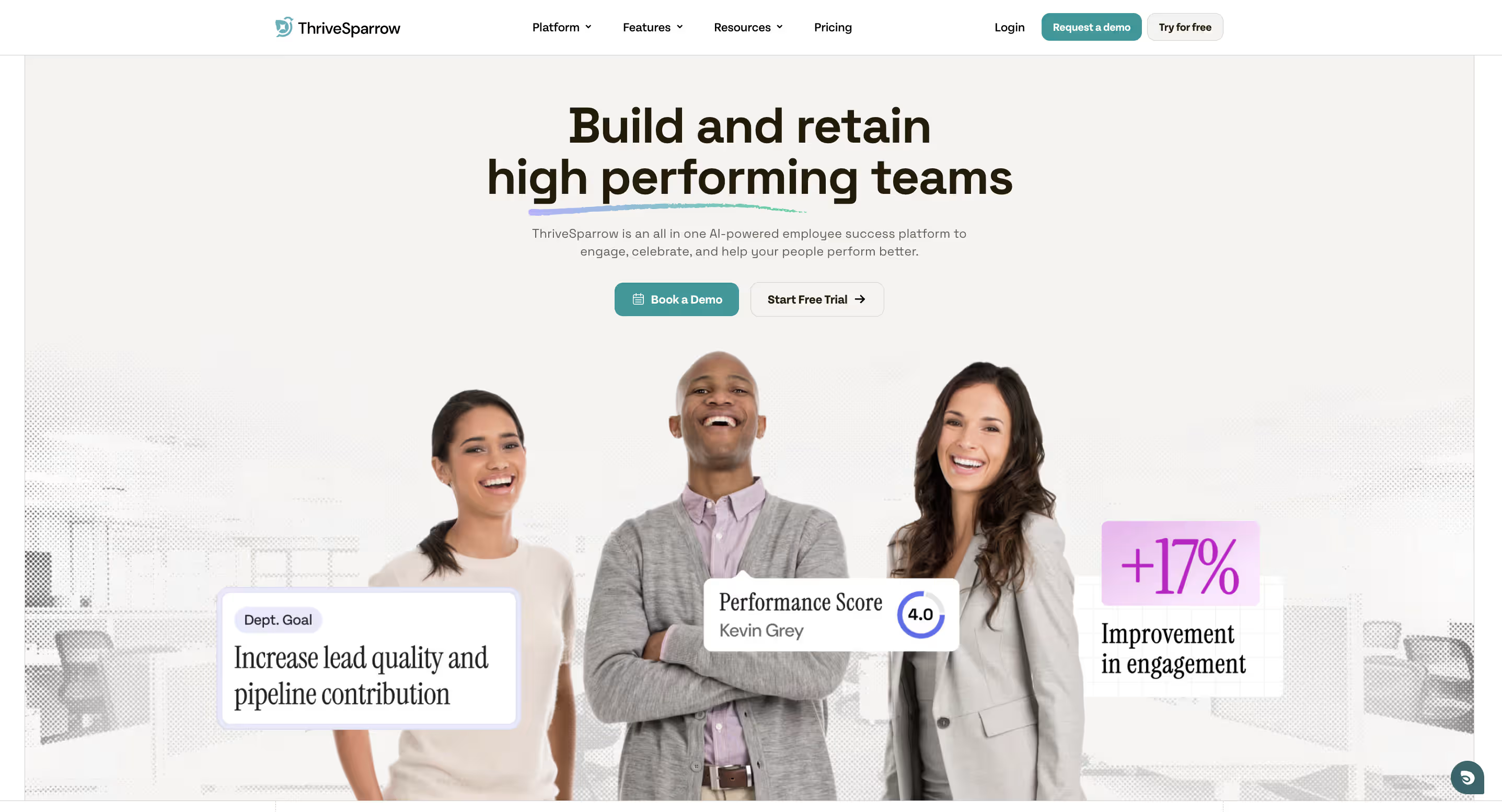
ThriveSparrow, an AI-powered employee success platform combining engagement, recognition, and performance management in one system. It uses sentiment analysis and heatmaps to help HR teams spot which departments need support.
Best for: Small to mid-sized teams wanting engagement, recognition, and goal tracking in one modular tool.
Pricing: Modular, per employee per month, billed annually, no minimum commitment — buy individual modules or bundle them.
- Kudos (recognition): $2/employee/month
- Engage (pulse surveys, eNPS): $3/employee/month
- Goals (OKRs): $3/employee/month
- Performance (360° reviews): $5/employee/month
Free trial: 14 days, no credit card required.
Best company size: 50–500 employees.
Survey capabilities: eNPS and pulse surveys in over 100 languages, distributed via email, SMS, or QR code for frontline access.
Feedback: AI-driven sentiment analysis on open-ended responses.
Recognition: Customizable Kudos cards and a points system, shareable in Slack and Teams.
Analytics: Heatmaps showing engagement patterns across departments, tenure, and location, plus comparison against internal and industry benchmarks.
AI: Sentiment analysis and AI-assisted action plans.
Integrations: Slack, Microsoft Teams, Google Workspace.
G2 rating: 4.3/5 (15 reviews)
Pros
- Clean interface that makes it easy for employees and admins to run surveys and view results.
- Clear analytics for spotting engagement gaps and team sentiment trends.
- Responsive customer support, with users citing fast turnaround on feature requests.
Cons
- Advanced customization is limited once you move past standard surveys and dashboards.
- Analytics are less deep than heavyweight enterprise platforms like Culture Amp.
- Mobile experience and offline access lag behind the desktop app.
Verdict: A strong fit for retail, hospitality, and smaller tech companies that want engagement, recognition, and goals without buying three separate tools.
Not a fit if: you need enterprise-grade analytics depth or a fully polished mobile experience right now.
See your own team's engagement heatmap within 14 days — start free, no credit card required.
.svg)
2. WorkTango
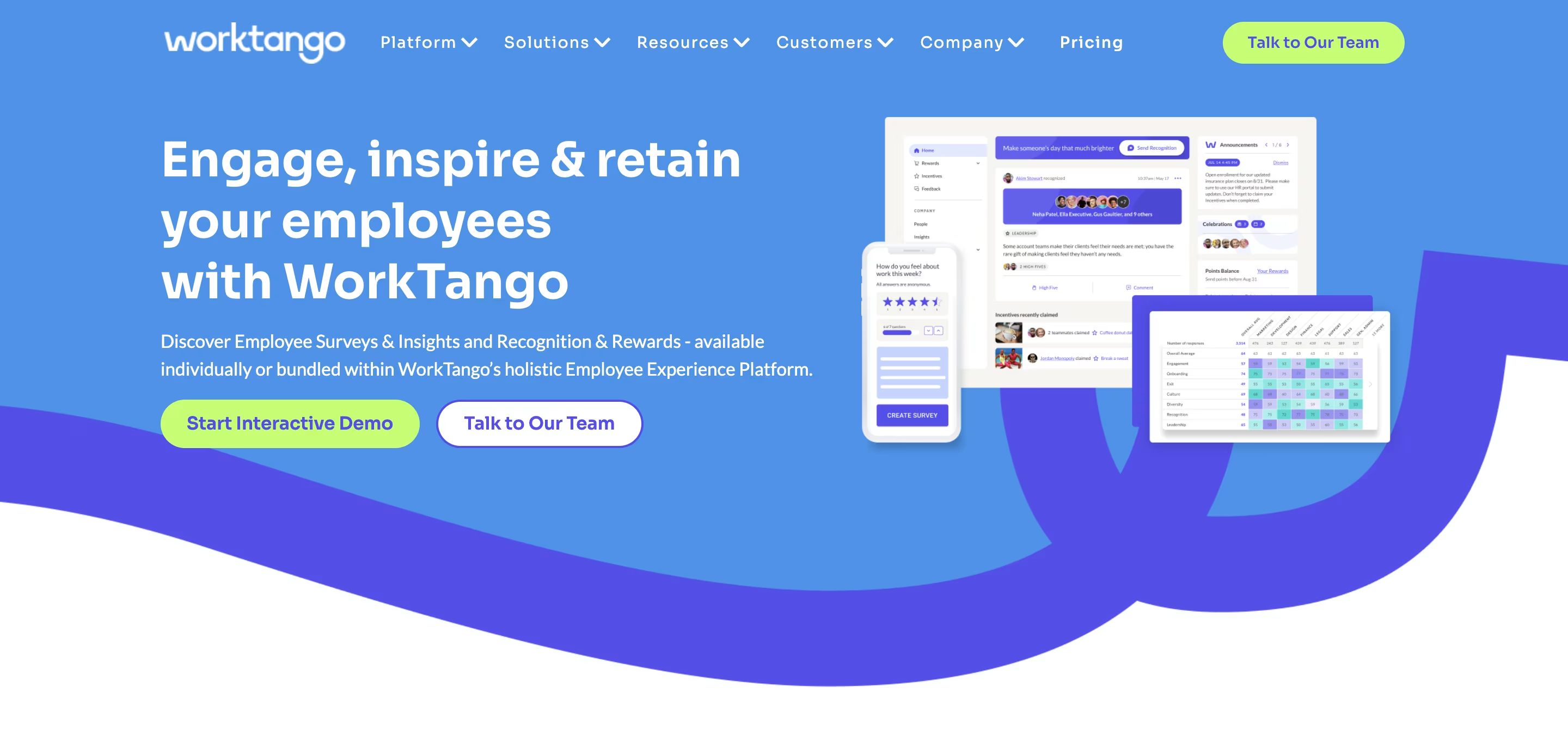
WorkTango pairs employee recognition with survey-based feedback collection, aiming to make recognition programs more evidence-based rather than a standalone perk.
Best for: Larger organizations combining engagement measurement with a serious recognition program.
Starting price: Custom pricing.
Free trial: Contact sales.
Best company size: Mid-size to enterprise.
Survey capabilities: Unlimited surveys across the employee lifecycle, with onboarding, engagement, and offboarding templates.
Feedback: NLP (natural language processing)-based comment analysis surfacing themes across open responses.
Recognition: Peer-to-peer recognition with a zero-markup rewards marketplace of over 10 million options.
Analytics: Sentiment clouds and heatmap dashboards.
AI: Comment-analysis NLP.
Integrations: 40+ HRIS platforms, plus Slack and Microsoft Teams.
G2 rating: 4.7/5 (1,327+ reviews)
Pros
- NLP-based comment analysis surfaces themes across large volumes of open responses without manual coding.
- Strong recognition marketplace with real redemption options.
- Consistently positive feedback on customer support.
Cons
- Pricing isn't published, so expect a sales cycle before you see numbers.
- The admin interface has a learning curve for first-time survey admins, per several reviewers.
- Rewards catalog quality varies by region for international teams.
Verdict: According to WorkTango's own Alarm.com case study, managers achieved an 85.7% platform engagement rate in 2023 after rolling out WorkTango's recognition tools — a useful data point for larger organizations weighing whether a recognition push actually drives manager participation.
Not a fit if: you need to see pricing before agreeing to a sales conversation.
3. Culture Amp
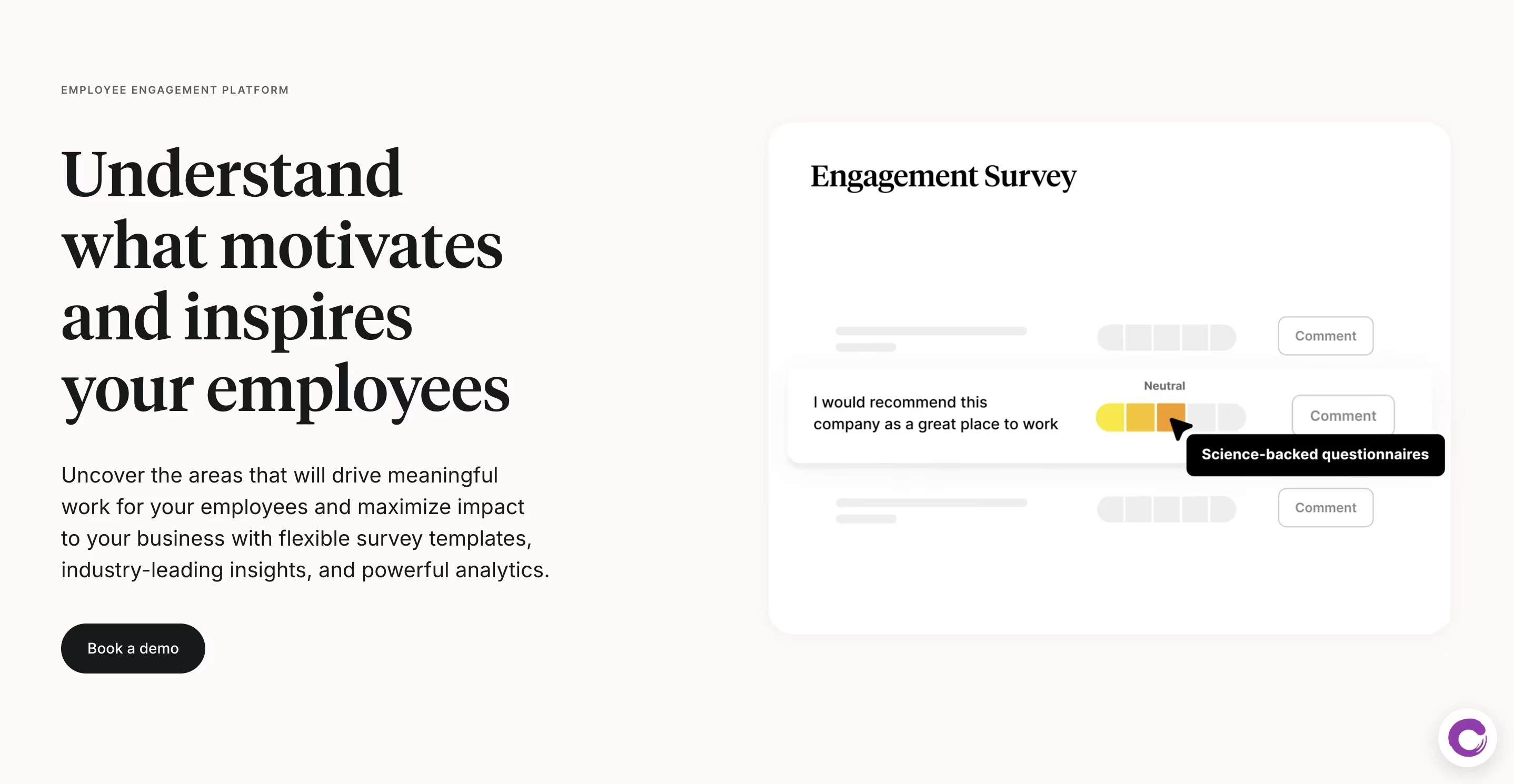
Culture Amp is a people-science platform used by more than 6,500 companies, built around organizational psychology and survey research.
Best for: Mid-to-large organizations wanting deep survey science behind engagement data.
Starting price: Enterprise (1,000+ employees) $43,700–$74,700/year; Standard $109–$115/user; Develop $28–$29/user.
Free trial: Contact sales.
Best company size: Mid-market to enterprise.
Survey capabilities: 40+ science-backed survey templates built by data scientists and organizational psychologists.
Feedback: Continuous feedback tools alongside structured surveys.
Recognition: Limited — "Shoutouts" feature, not a full rewards catalog.
Analytics: Connects sentiment data with business metrics for driver-level insight.
AI: Limited, mostly analytics-driven rather than generative.
Integrations: HRIS integrations, SSO encryption.
G2 rating: 4.5/5
Pros
- One of the highest G2 ratings on this list, with consistently strong usability reviews.
- Genuinely integrates learning and development with engagement data.
- Manageable admin complexity for mid-market HR teams despite the feature depth.
Cons
- No published self-serve pricing.
- Smaller integration ecosystem than category giants like Workday.
- Benchmarking against large industry datasets is less mature than some enterprise-only competitors.
Verdict: Culture Amp states its customers are more likely to hit financial targets and more effective at managing organizational change than non-customers — best suited to teams that want survey rigor over speed of setup, though that specific claim comes from Culture Amp's own marketing rather than an independent study. If you're weighing it directly against us, see ThriveSparrow vs. Culture Amp.
Not a fit if: you want to try the product before talking to sales.
4. Motivosity
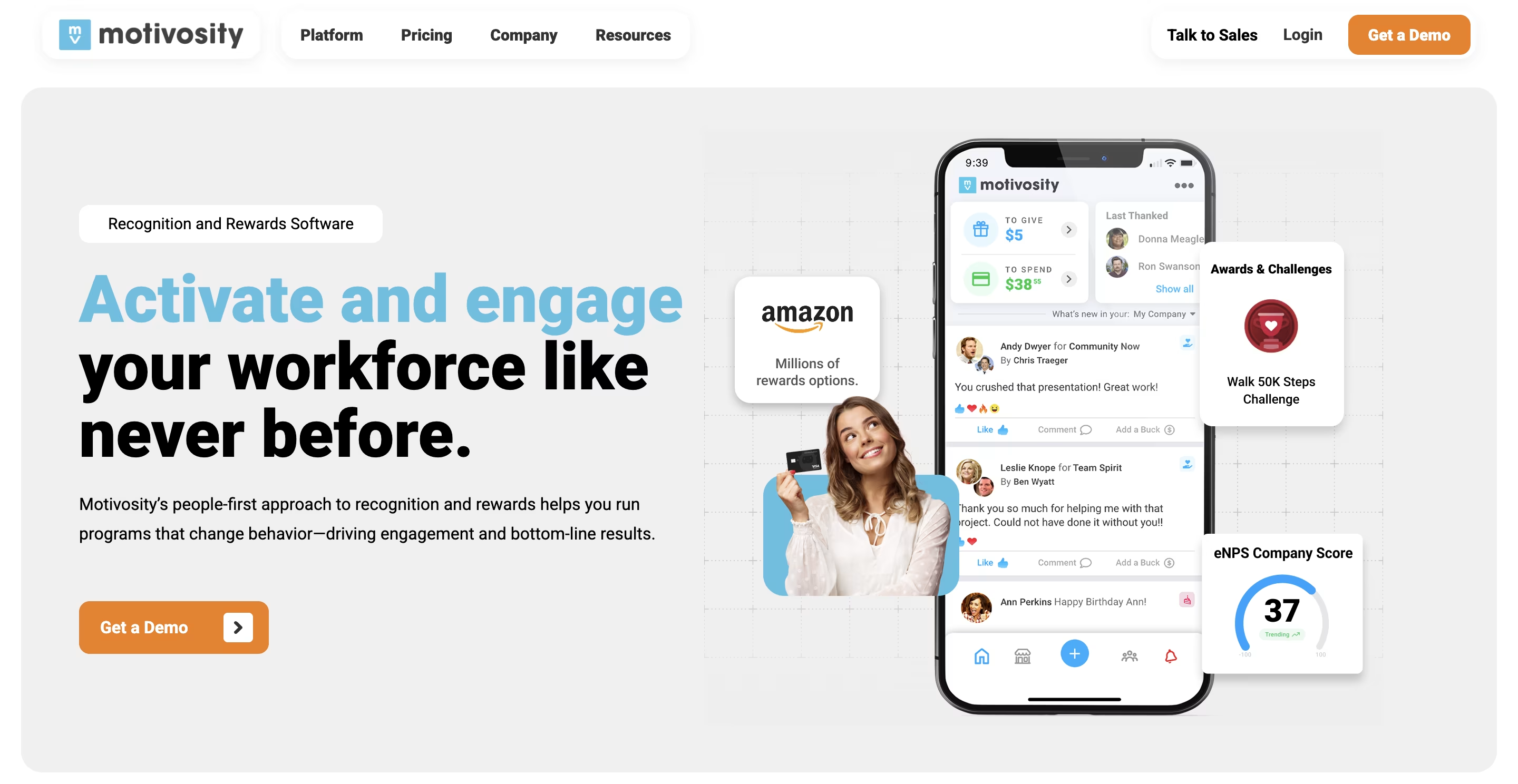
Motivosity centers engagement around peer recognition, using appreciation and community-building rather than formal surveys as its primary lever.
Best for: Remote, hybrid, or multi-location teams under 250 employees.
Starting price: $3,000 minimum annual spend; individual modules from $1/person/month.
Free trial: Contact sales.
Best company size: Small to mid-size (under 250).
Survey capabilities: Limited — not a primary feature.
Feedback: Limited, mostly recognition-adjacent commentary.
Recognition: Peer-to-peer recognition with optional monetary rewards, milestone celebrations.
Analytics: Limited compared to survey-first platforms.
AI: None disclosed.
Integrations: Slack, Microsoft Teams, various HRIS systems.
Pros
- Peer recognition drives daily habitual usage rather than quarterly-only engagement.
- Manager module ties recognition directly into 1:1 conversations.
- Simple, well-reviewed mobile experience.
Cons
- Analytics and benchmarking are thinner than Culture Amp or WorkTango.
- Rewards budget is a separate ongoing cost on top of the software fee.
- Larger enterprises may find customization limited compared to full HR suites.
Verdict: The right pick if recognition, not surveys, is your primary engagement lever.
Not a fit if: survey depth and driver-level analytics are what you actually need.
5. Lattice
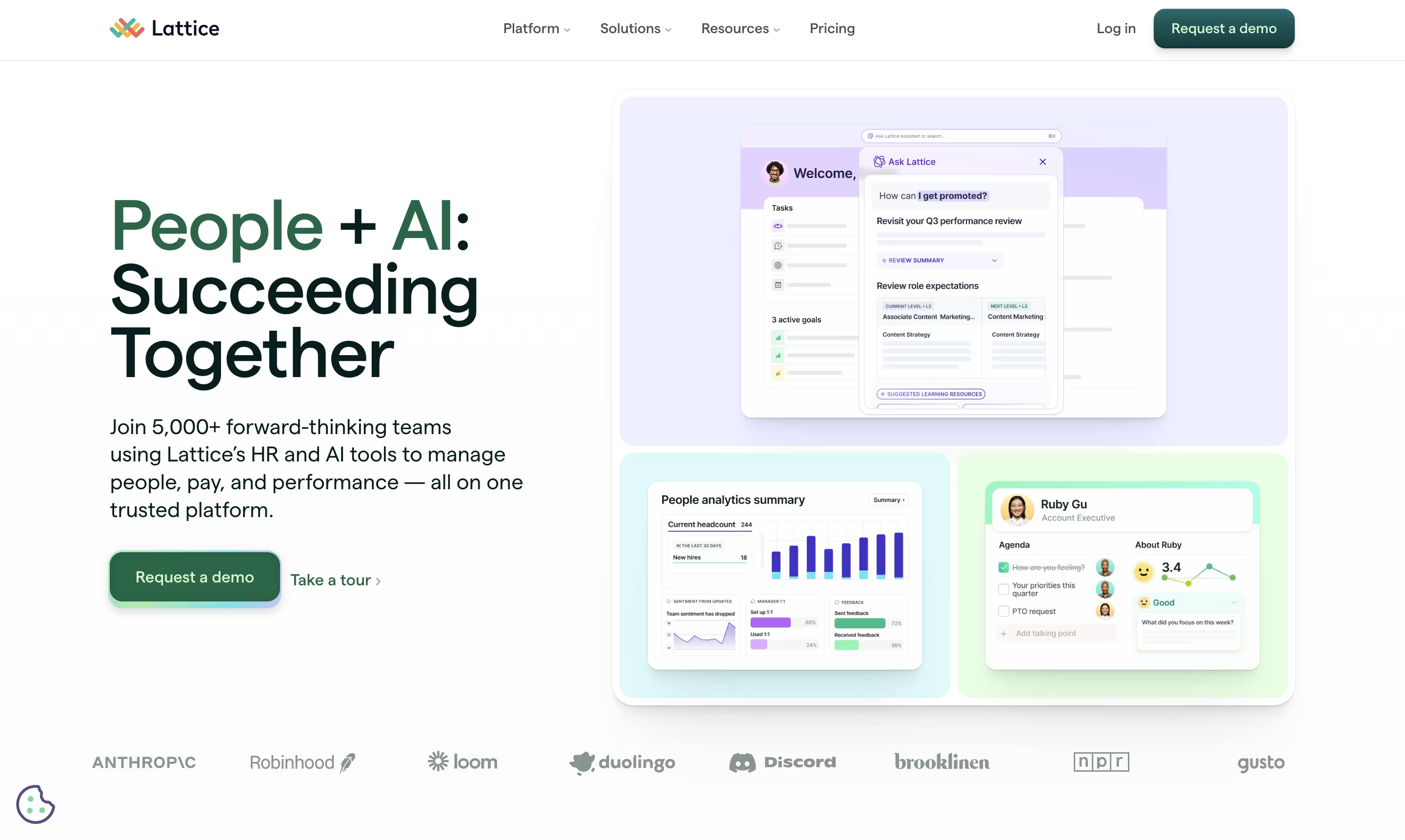
Lattice combines performance management, engagement, and career development in one system, used by more than 5,000 companies.
Best for: Mid-sized to large organizations unifying performance and engagement data.
Starting price: $4,000 annual minimum; Performance $8/user/month; other modules $6,000–$10,000/year each.
Free trial: Contact sales.
Best company size: Mid-size to large.
Survey capabilities: Pulse surveys, eNPS, onboarding/offboarding surveys with a "Strong Anonymity" setting.
Feedback: Continuous feedback tied to performance workflows.
Recognition: Limited, secondary to performance and engagement modules.
Analytics: Heatmaps, sentiment tracking, AI-assisted driver insights.
AI: AI-assisted driver insights, a genuine differentiator versus survey-only tools.
Integrations: Broad HRIS ecosystem.
G2 rating: 4.7/5 (4,000+ reviews)
Pros
- Combines engagement with performance and goals, reducing tool sprawl.
- Strong brand recognition and integration depth.
- AI-assisted driver insights are a genuine differentiator versus survey-only tools.
Cons
- Pricing scales up quickly as you add modules separately.
- The feature surface area can overwhelm smaller HR teams.
- Getting full value requires org-wide adoption across both performance and engagement workflows.
Verdict: If Lattice's pricing or module structure doesn't fit your team, our Lattice alternatives guide compares lighter options, or see ThriveSparrow vs. Lattice for a direct feature comparison.
Not a fit if: you're a small HR team that would find the module breadth overwhelming rather than useful.
6. 15Five
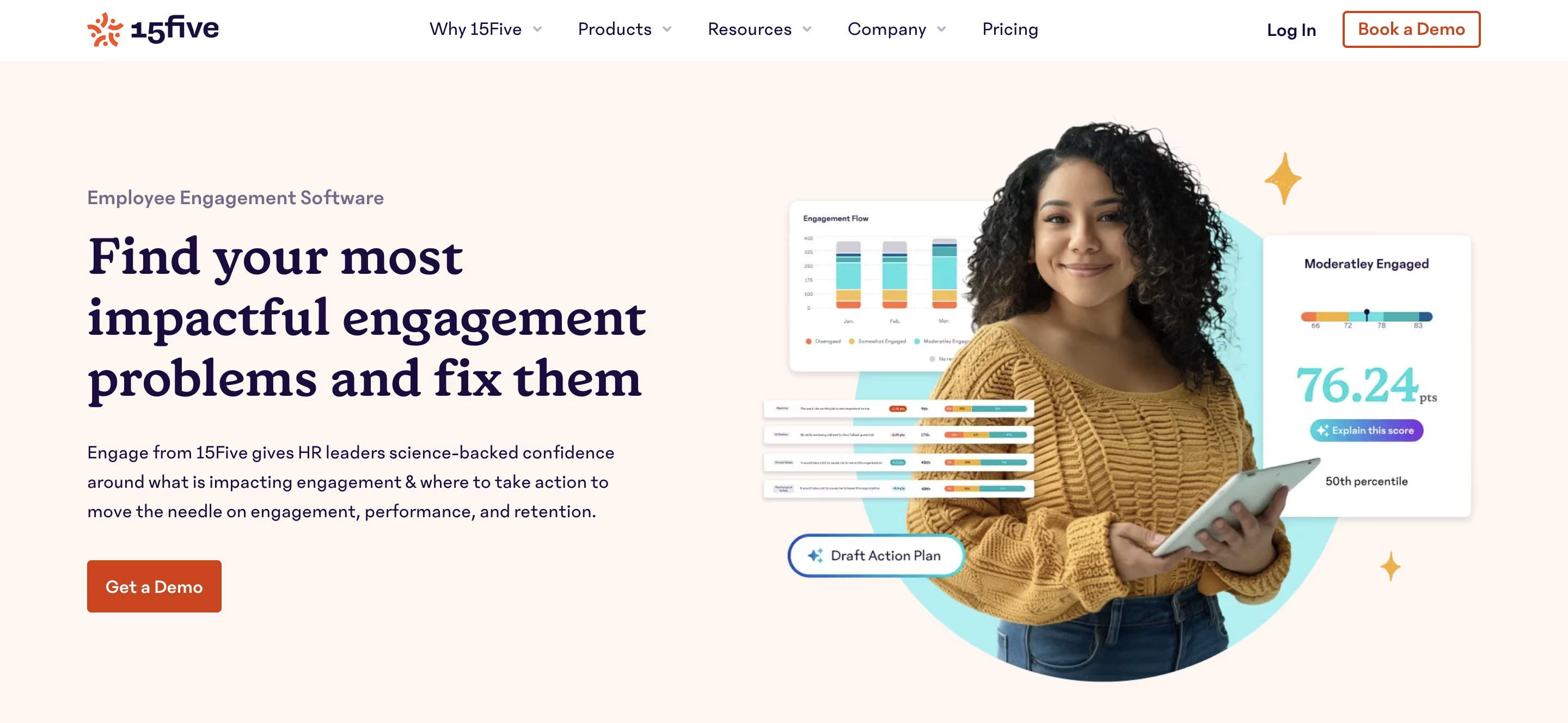
15Five is built around the manager-employee relationship, using weekly check-ins and short surveys instead of long annual review cycles.
Best for: Organizations shifting from annual reviews to continuous, manager-led conversations.
Starting price: Engage $4/user/month; Perform $10/user/month; Total Platform $16/user/month.
Free trial: Available.
Best company size: Small to mid-size.
Survey capabilities: Psychometrically validated engagement surveys, roughly 6 minutes to complete.
Feedback: Weekly check-ins replacing traditional status updates.
Recognition: Limited — "High Fives" peer recognition feature.
Analytics: AI-powered Predictive Impact Model flagging high-impact improvements.
AI: Predictive Impact Model.
Integrations: Standard HRIS and collaboration tools.
Pros
- Manager-friendly 1:1 and check-in tools alongside engagement surveys.
- Transparent, published pricing with no forced sales call.
- Strong SMB customer-support reputation.
Cons
- Benchmarking and analytics depth is lighter than Culture Amp or WorkTango.
- Recognition features are more basic than dedicated recognition platforms.
- Survey customization is more limited at lower pricing tiers, per some users.
Verdict: Best for teams that want manager accountability built into the tool itself, not just survey data. If 15Five's pricing tiers don't line up with your needs, see our 15Five alternatives roundup.
Not a fit if: deep benchmarking or a strong recognition program is your top priority.
7. Reward Gateway

Reward Gateway unifies recognition, communications, discounts, and analytics into one platform, used by more than 1,900 companies.
Best for: Organizations spread across multiple locations wanting recognition, benefits, and culture under one brand.
Starting price: From £6/employee/month annually, or £8/month monthly.
Free trial: Contact sales.
Best company size: Mid-size to enterprise.
Survey capabilities: Limited — surveys exist but recognition and discounts are the core product.
Feedback: Limited.
Recognition: Customized eCards, milestone celebrations, discounts at 900+ retailers.
Analytics: Live analytics with demographic segmentation.
AI: None disclosed.
Integrations: Standard HRIS and communication tools.
Pros
- Bundles engagement with a genuinely large discounts and benefits marketplace.
- Strong enterprise deployment track record.
- Recognition and wellbeing content included natively rather than as an add-on.
Cons
- No self-serve tier; pricing requires a sales conversation.
- Breadth across discounts, recognition, surveys, and wellbeing can mean less depth in any single area.
- Implementation timelines tend to run longer given the platform's scope.
Verdict: Best suited to organizations that want employee discounts and recognition bundled with basic engagement tracking, not deep survey analytics.
Not a fit if: you want a self-serve trial rather than a sales-led evaluation.
8. Engagedly
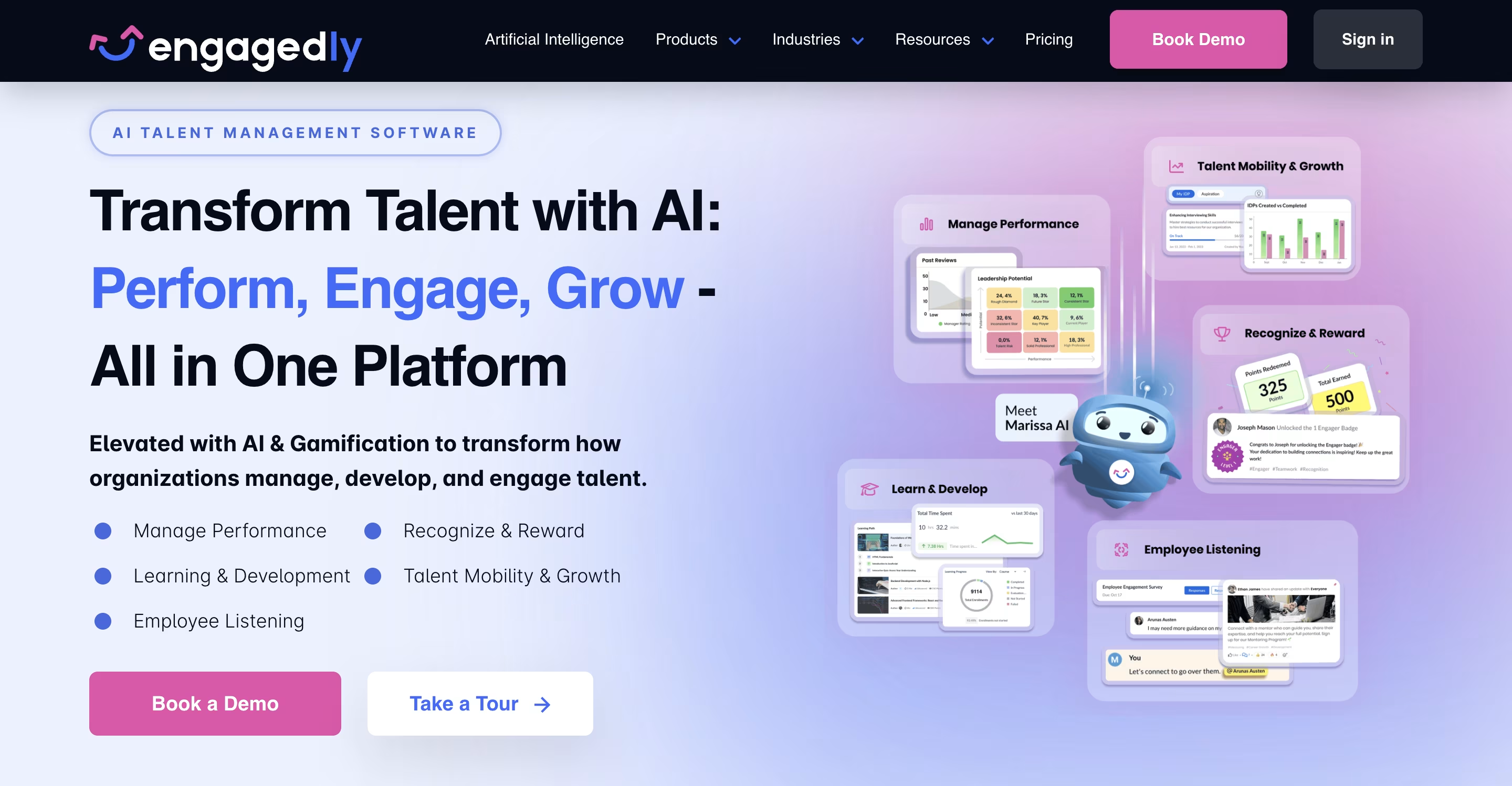
Engagedly is an AI-assisted talent management platform spanning performance, learning, engagement, and recognition across five modules.
Best for: Mid-sized companies in tech or finance wanting succession planning without Lattice-level pricing.
Starting price: Engage & Listen and Recognize & Reward $2/user/month each; Learn & Grow $4/user/month; Manage Performance $8/user/month.
Free trial: Contact sales.
Best company size: Mid-size.
Survey capabilities: Engagement surveys and continuous pulse checks.
Feedback: AI-powered sentiment analysis on feedback.
Recognition: Gamified recognition with AI-suggested badges.
Analytics: Live analytics tied to performance data.
AI: AI-assisted 360° feedback, badge recommendations, and skill tracking.
Integrations: Standard HRIS ecosystem.
Pros
- Broad feature set at a lower price point than Lattice or Culture Amp.
- Continuous feedback and 360-review tools are well regarded.
- Reasonable implementation speed for mid-market teams.
Cons
- G2 rating trails several competitors, with some reviews citing a dated interface.
- Support responsiveness is inconsistent, per some reviewer feedback.
- Deep analytics and benchmarking are less developed than specialist platforms.
Verdict: A reasonable middle ground between price and feature breadth for mid-market talent teams.
Not a fit if: interface polish and top-tier analytics matter more to you than price.
9. Workleap Officevibe
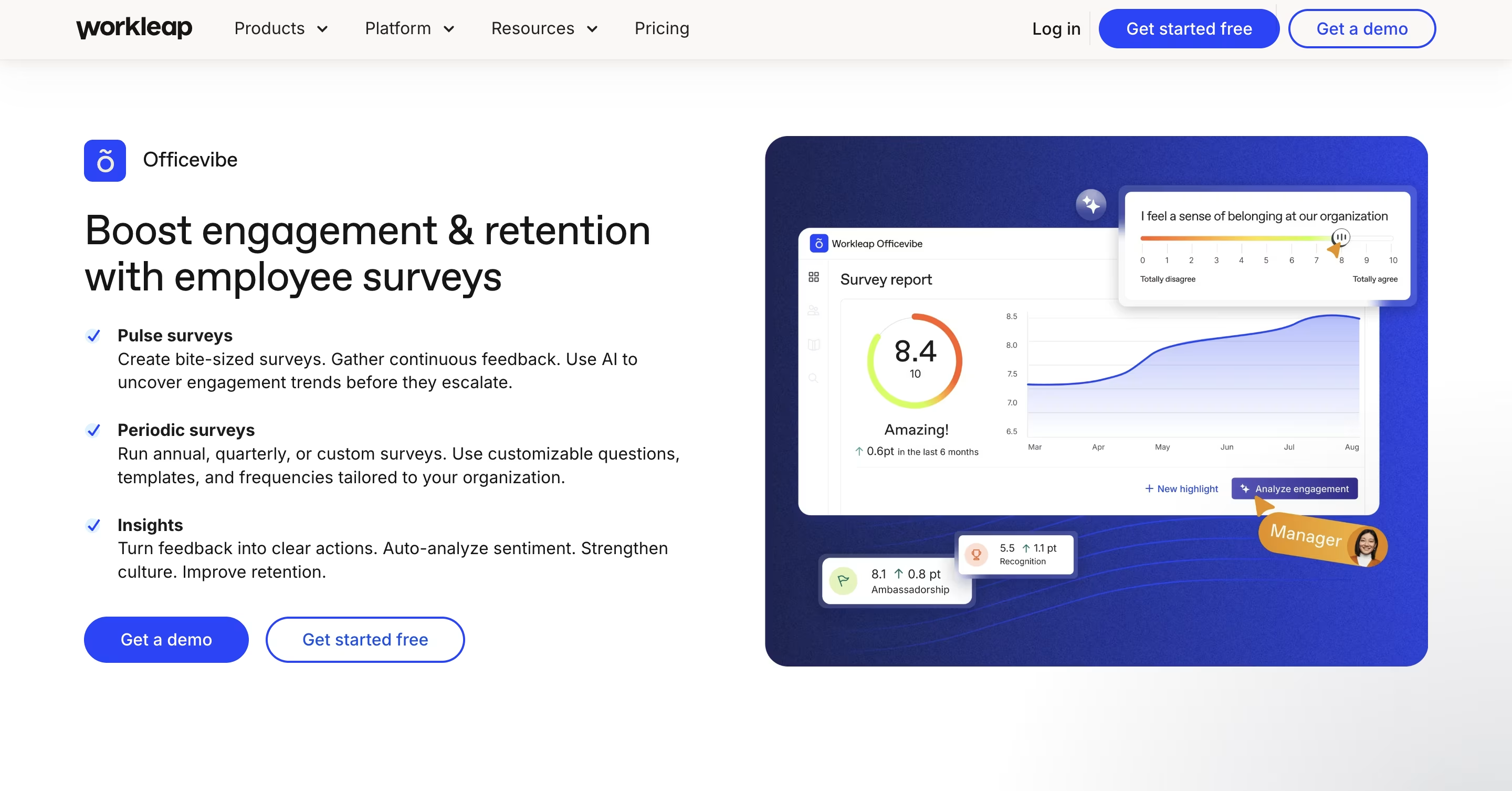
Officevibe focuses on short, frequent pulse surveys and manager tools rather than a full performance suite.
Best for: Small to mid-sized remote or hybrid teams wanting a lightweight, low-admin pulse survey tool.
Starting price: Free tier available; Essential $5/user/month; Pro $8/user/month.
Free trial: Free plan.
Best company size: Small to mid-size.
Survey capabilities: Pulse surveys covering 10 engagement drivers through 122 science-backed questions.
Feedback: Anonymous feedback channels.
Recognition: Limited — "Good Vibes" recognition cards.
Analytics: Dashboard reports spotting trends.
AI: None disclosed.
Integrations: Slack, Microsoft Teams, various HRIS tools.
Pros
- Genuinely simple setup with short, frequent pulse surveys and minimal admin overhead.
- Anonymous-by-default framing encourages higher response rates on sensitive topics.
- Affordable, transparent pricing for smaller teams.
Cons
- Recognition and goal-tracking features are lighter than full-suite competitors.
- Benchmarking data is less extensive than Culture Amp's.
- Some users want more survey question customization at lower tiers.
Verdict: One of the best pulse survey software options for small teams that don't need a full engagement suite. See our Officevibe alternatives guide if you need more recognition depth.
Not a fit if: you need a mature recognition and rewards program built in.
10. Peakon (by Workday)
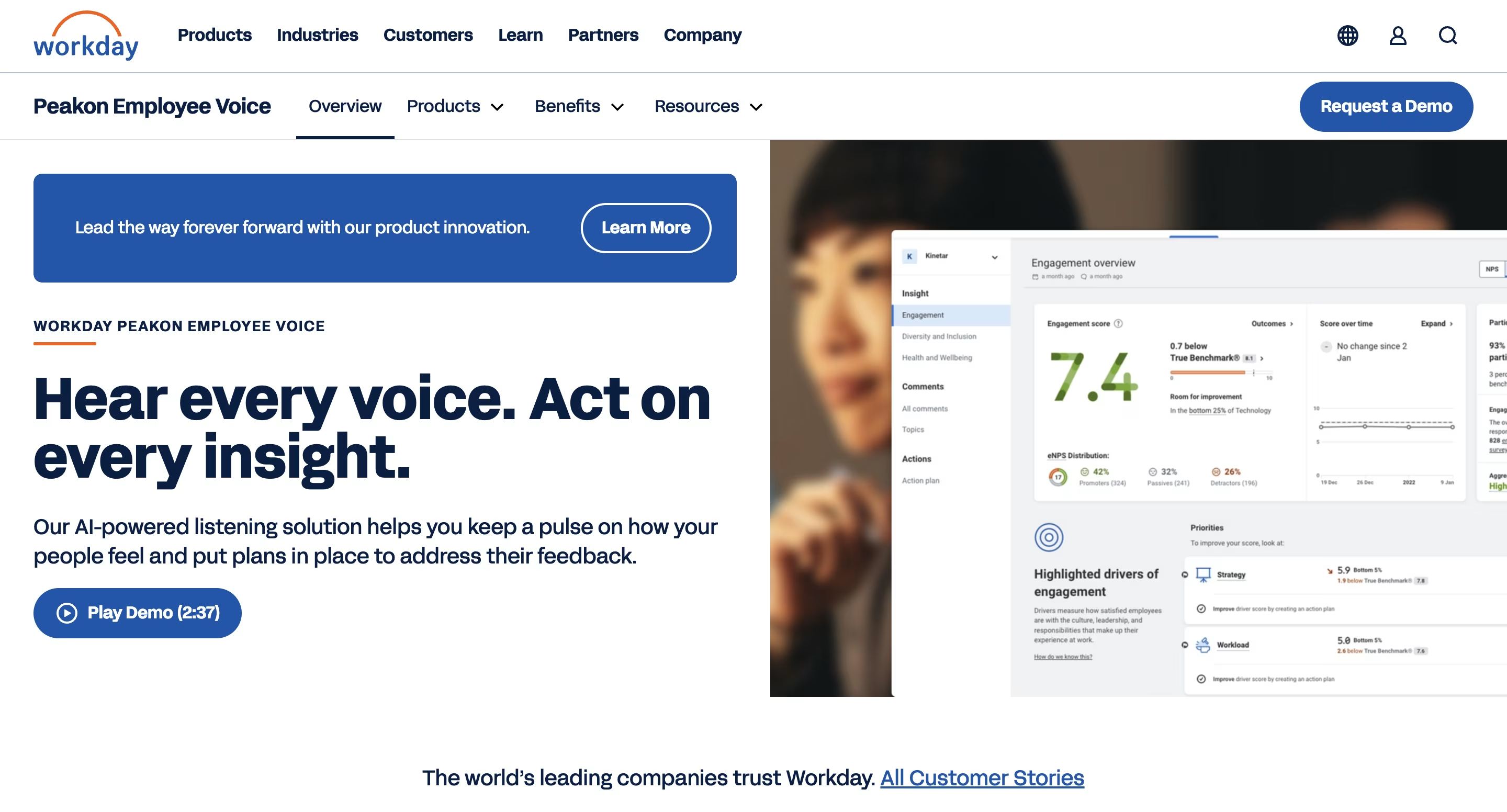
Peakon is an enterprise continuous-listening platform built around predictive analytics.
Best for: Medium to large multinational organizations, particularly those already on Workday.
Starting price: Roughly $20,000/year.
Free trial: Contact sales.
Best company size: Enterprise.
Survey capabilities: Confidential surveys in 65 languages, continuous listening via email, SMS, Slack, Teams, and kiosk options.
Feedback: AI-generated summaries surfacing themes from open-text feedback.
Recognition: None.
Analytics: "True Benchmark" technology adjusting for demographic differences.
AI: Predictive attrition modeling, generative AI summaries — drawing on more than 1 billion aggregated employee responses and 200 million written comments across 160 countries, per Workday's own reporting.
Integrations: Native Workday integration.
Pros
- Sophisticated driver-analysis engine that's been a category benchmark since before the Workday acquisition.
- Native Workday integration is a major advantage for existing Workday customers.
- Strong continuous-listening cadence versus annual-only survey tools.
Cons
- Enterprise-oriented pricing puts it out of reach for smaller teams.
- Value is significantly higher only for organizations already using Workday.
- Implementation requires more HRIS and analytics expertise than lightweight tools.
- No recognition features — pair with a dedicated recognition tool if that's a priority.
Verdict: The strongest fit for large, multinational, Workday-native organizations that need predictive listening at scale.
Not a fit if: you're not already on Workday, or you need built-in recognition tools too.
11. Leapsome
Leapsome combines performance, engagement, and learning into one people-enablement platform.
Best for: Hybrid and remote teams wanting structured feedback, OKRs (Objectives and Key Results), and engagement in one system.
Starting price: From $8/user/month with modular add-ons.
Free trial: Available.
Best company size: Mid-size.
Survey capabilities: Pulse and engagement surveys with AI-driven sentiment analysis and heatmaps.
Feedback: Continuous peer and manager feedback.
Recognition: Limited, secondary to performance and learning modules.
Analytics: Heatmaps and sentiment dashboards.
AI: AI-driven sentiment analysis.
Integrations: Standard HRIS ecosystem.
Pros
- One of the highest G2 ratings on this list, with consistently strong usability reviews.
- Genuinely integrates learning and development with engagement data.
- Manageable admin complexity despite feature breadth.
Cons
- No published self-serve pricing.
- Smaller integration ecosystem than category giants.
- Benchmarking is less mature than Culture Amp's.
Verdict: A strong choice for teams that want manager development and engagement tracking under one roof. See ThriveSparrow vs. Leapsome if you're comparing the two directly.
Not a fit if: you want to see pricing without a sales conversation.
12. Workvivo
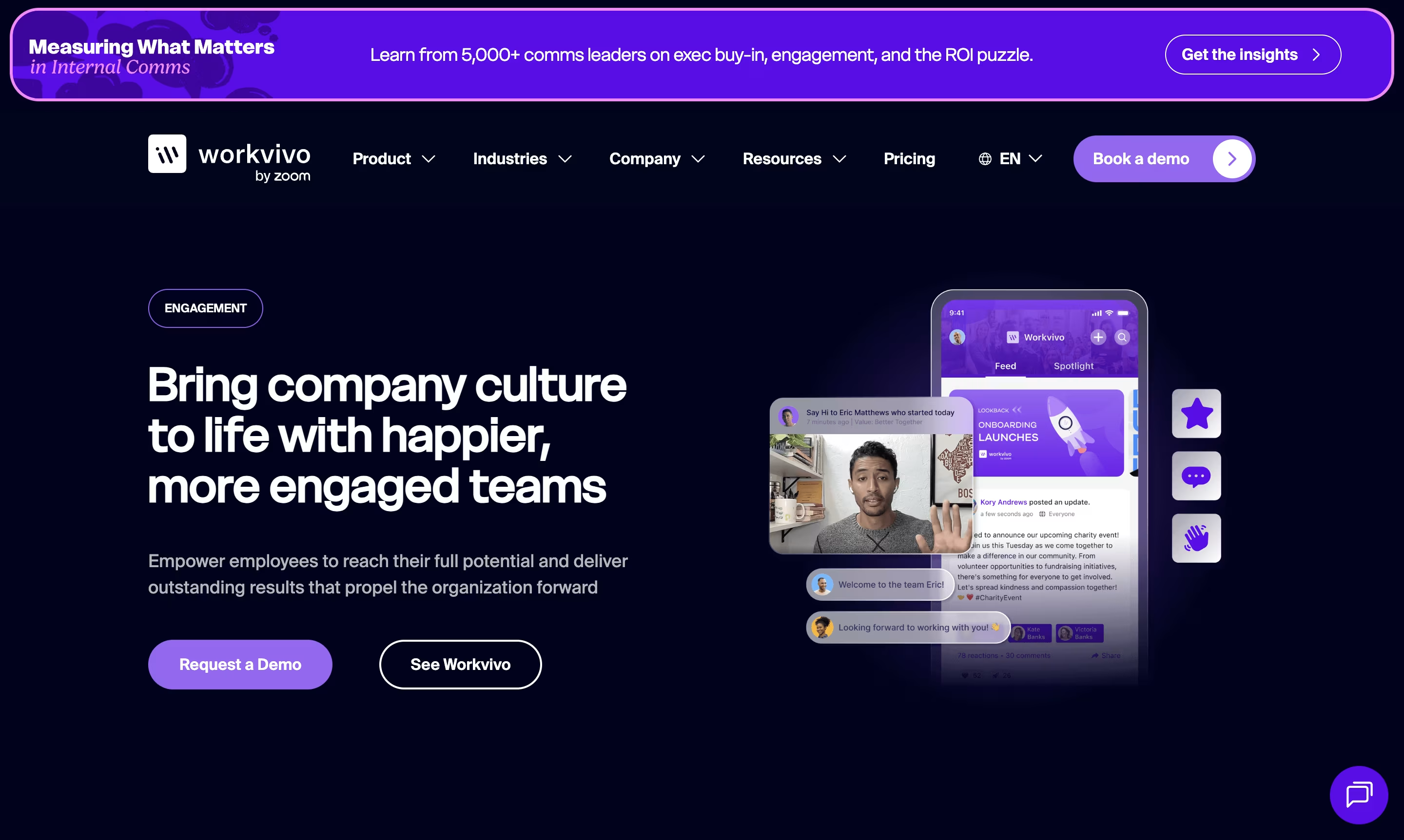
Workvivo, now part of Zoom, treats internal communication as the engine of engagement rather than surveys.
Best for: Remote or hybrid organizations replacing an outdated intranet with something more social.
Starting price: Starts around $20,000/year.
Free trial: Contact sales.
Best company size: Mid-to-large.
Survey capabilities: Limited — communication-first, not survey-first.
Feedback: Limited, mostly informal via the social feed.
Recognition: Badge-based recognition visible across the organization.
Analytics: Activity rates and sentiment by department.
AI: None disclosed.
Integrations: Zoom, Slack, Microsoft Teams.
Pros
- Feels like an internal social network, driving higher daily active usage than survey-only tools.
- Strong reputation for reaching frontline and deskless workers through its mobile app.
- Zoom's backing has accelerated integration depth and enterprise credibility.
Cons
- Enterprise-oriented pricing with no self-serve tier.
- Survey and analytics depth is secondary to its communication strength.
- Can feel redundant if your organization already has a strong intranet or heavy Slack/Teams usage.
Verdict: Pair with a dedicated survey tool if you need deeper driver analysis than the built-in analytics provide. See our Workvivo alternatives if the pricing doesn't fit.
Not a fit if: survey-based measurement, not internal communication, is your main goal.
13. Achievers
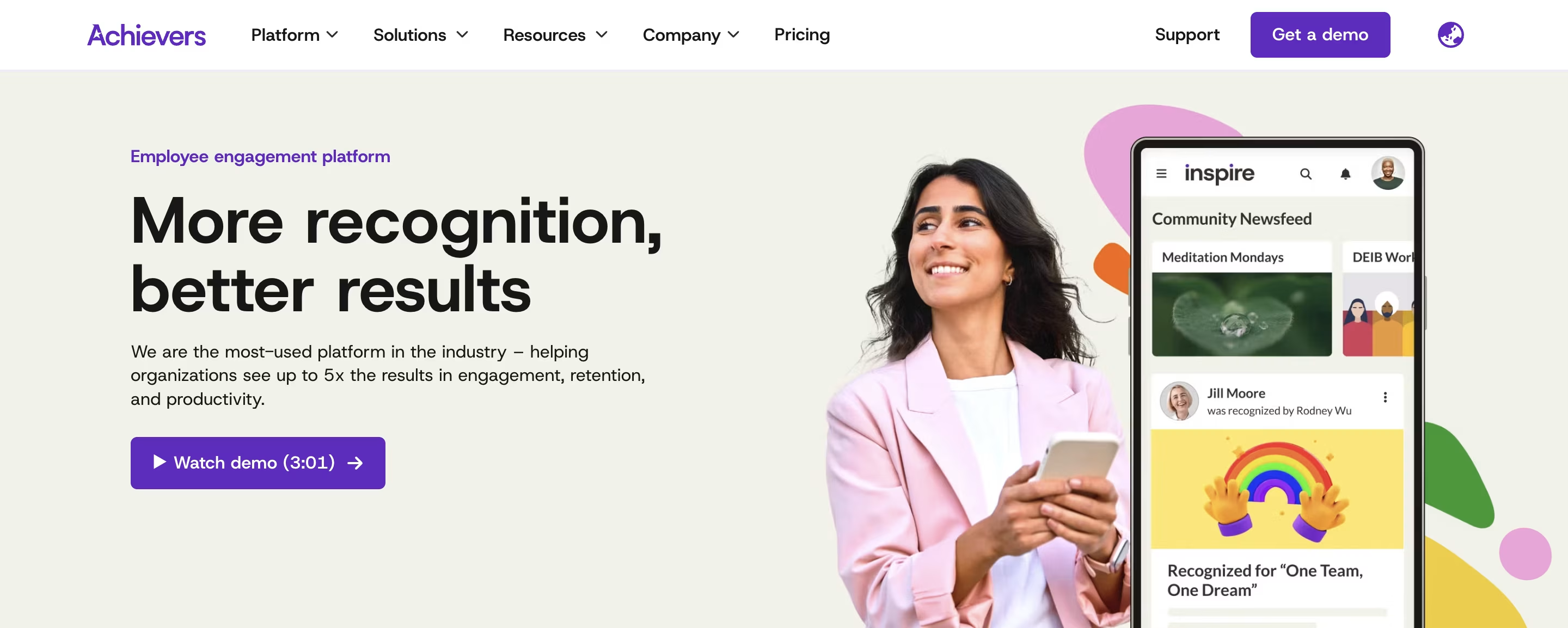
Achievers focuses on recognition and rewards at a global scale, backed by original research on recognition program design.
Best for: Enterprise and global companies standardizing recognition experiences across regions.
Starting price: Custom, typically from $25,000/year.
Free trial: Contact sales.
Best company size: Enterprise, global.
Survey capabilities: Limited — surveys integrated alongside recognition data, not a primary feature.
Feedback: Limited.
Recognition: Points-based peer and manager recognition, global rewards marketplace spanning 150+ countries.
Analytics: Redemption patterns and recognition activity tracking.
AI: None disclosed.
Integrations: HRIS, Slack, Teams.
Pros
- High platform adoption rates reported across large enterprise deployments.
- Deep recognition and rewards catalog with strong redemption options.
- An in-house research arm backs claims with data, not just marketing copy.
Cons
- Pricing model isn't published, so expect a longer sales cycle.
- Achievers' own comparison content is heavily self-promotional and worth reading critically.
- Implementation and admin setup are more involved than lightweight recognition-only tools.
Verdict: The strongest global rewards marketplace on this list, for teams that offer a rewards marketplace for employee engagement as a top priority. See our Achievers competitors comparison for lighter alternatives.
Not a fit if: you want a fast, self-serve setup rather than an enterprise sales cycle.
14. HiBob
HiBob is a core HRIS with engagement built in as a native module rather than a bolt-on tool.
Best for: Growing companies with 50–500 employees wanting HRIS and engagement from a single vendor.
Starting price: Roughly $16–$25/employee/month; setup fees typically 10–20% of annual cost.
Free trial: Contact sales.
Best company size: 50–500 employees.
Survey capabilities: Limited — anonymous feedback through "Your Voice," not a dedicated survey engine.
Feedback: "Your Voice" anonymous feedback feature.
Recognition: Public Shoutouts and Kudos.
Analytics: KPIs, reports, and attrition indicators.
AI: None disclosed.
Integrations: Core HRIS ecosystem.
Pros
- Modern, well-reviewed HRIS with engagement as a native module rather than an add-on.
- Often cited as more modern-feeling than legacy HRIS platforms.
- Good fit for consolidating HRIS and engagement under one vendor.
Cons
- Engagement-specific features are shallower than dedicated engagement platforms.
- Pricing bundles HRIS and engagement together, so you can't buy engagement alone at a lower price.
- Migrating from an existing HRIS is a bigger lift than adding a standalone survey tool.
Verdict: Best for companies choosing their core HRIS and engagement tool at the same time, not replacing an existing HRIS. See our HiBob alternatives if you already have an HRIS in place.
Not a fit if: you already have an HRIS and just want a standalone engagement tool.
15. Cooleaf
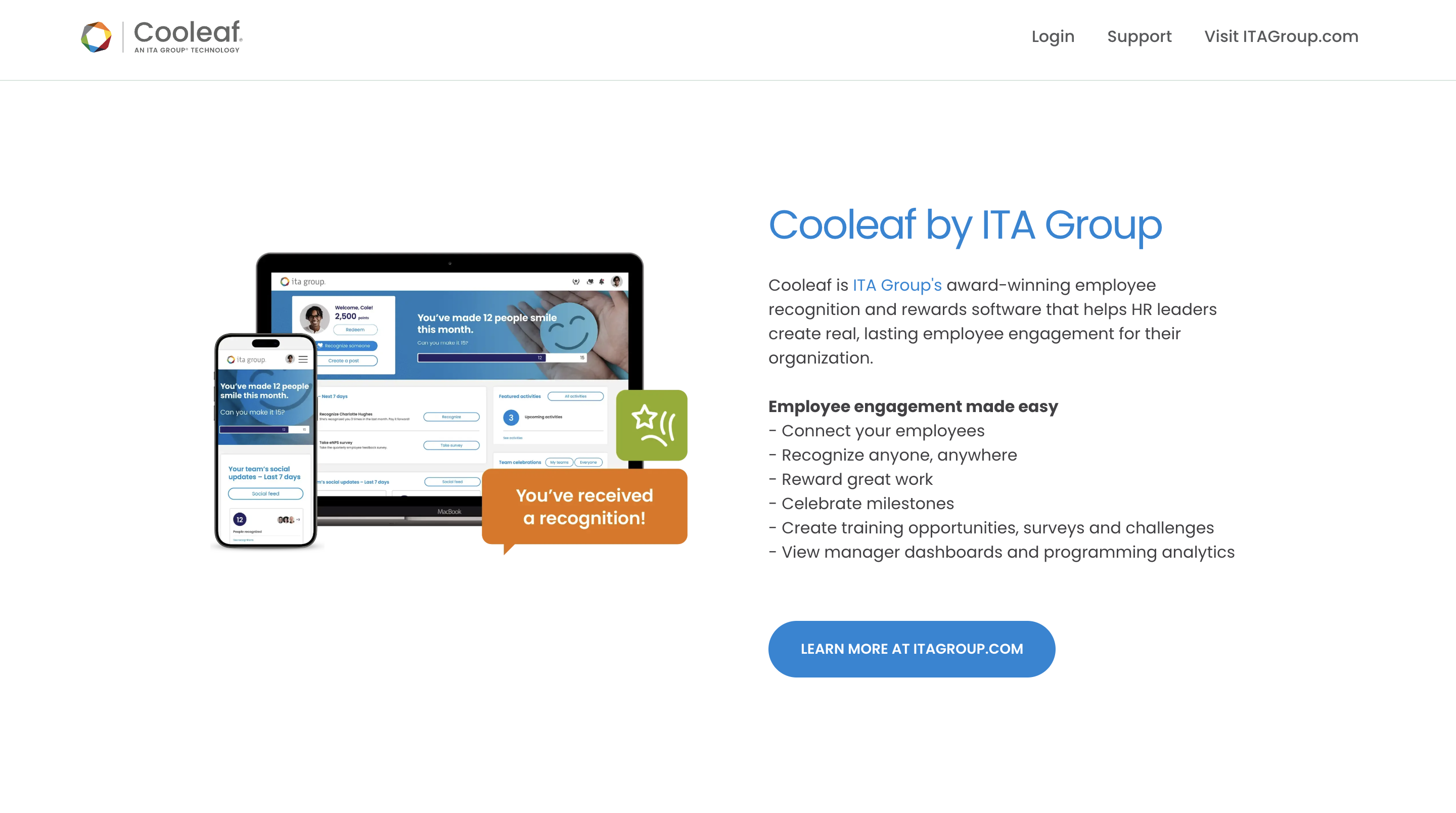
Best for: Mid-market teams wanting a culture- and wellness-forward engagement platform with the highest publicly rated support experience on this list.
Starting price: Custom.
Free trial: Demo-based.
Best company size: Mid-market.
Survey capabilities: Engagement surveys alongside wellness challenges.
Feedback: Limited, folded into survey and wellness programs.
Recognition: Points-based rewards catalog with charitable-giving options.
Analytics: Limited compared to specialist survey platforms.
AI: None disclosed.
Integrations: Standard HRIS and collaboration tools.
G2 rating: 4.9/5 (unverified in this pass — confirm before publishing)
Pros
- Highest G2 rating of any platform on this list.
- Wellness-challenge features give it a differentiated angle versus pure survey or recognition tools.
- Strong account-management reputation relative to its company size.
Cons
- Smaller vendor with fewer public enterprise case studies than Culture Amp, Lattice, or Achievers.
- No published self-serve pricing.
- Smaller integration ecosystem than larger competitors.
Verdict: Best for teams that want culture and wellness woven into engagement, not treated as a separate initiative.
Not a fit if: you need a large, mature integration ecosystem.
16. Nectar
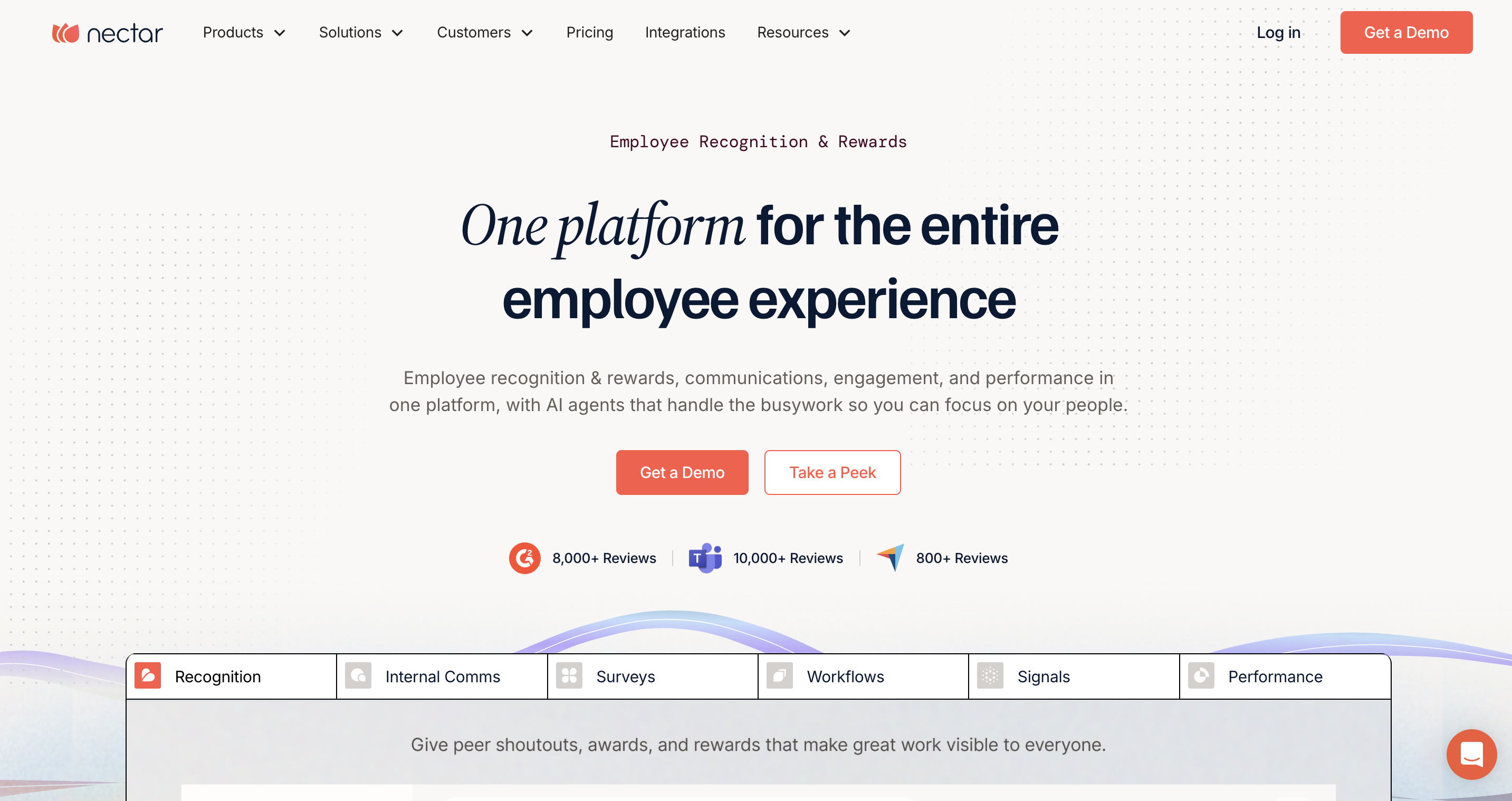
Best for: Teams wanting anonymous engagement surveys paired tightly with peer recognition and rewards.
Starting price: From ~$2.75–$4/user/month.
Free trial: Yes.
Best company size: SMB to mid-market.
Survey capabilities: Anonymous pulse surveys.
Feedback: Limited, integrated with survey responses.
Recognition: Flexible rewards catalog, including charitable-donation options.
Analytics: Limited compared to specialist platforms like Culture Amp.
AI: None disclosed.
Integrations: Standard HRIS and collaboration tools.
G2 rating: 4.7/5 (unverified in this pass — confirm before publishing)
Pros
- Pairs anonymous surveys with recognition in one affordable tool.
- Large, flexible rewards catalog.
- Well-reviewed, responsive customer support.
Cons
- Survey analytics depth trails specialist platforms like Culture Amp.
- Admin dashboard customization is more limited, per some reviewers.
- Less enterprise track record than Achievers or Workday-owned Peakon.
Verdict: A solid affordable middle ground between recognition-only and survey-only tools. See our Nectar alternatives if you want more options.
Not a fit if: you need enterprise-grade survey analytics and benchmarking.
17. Bonusly
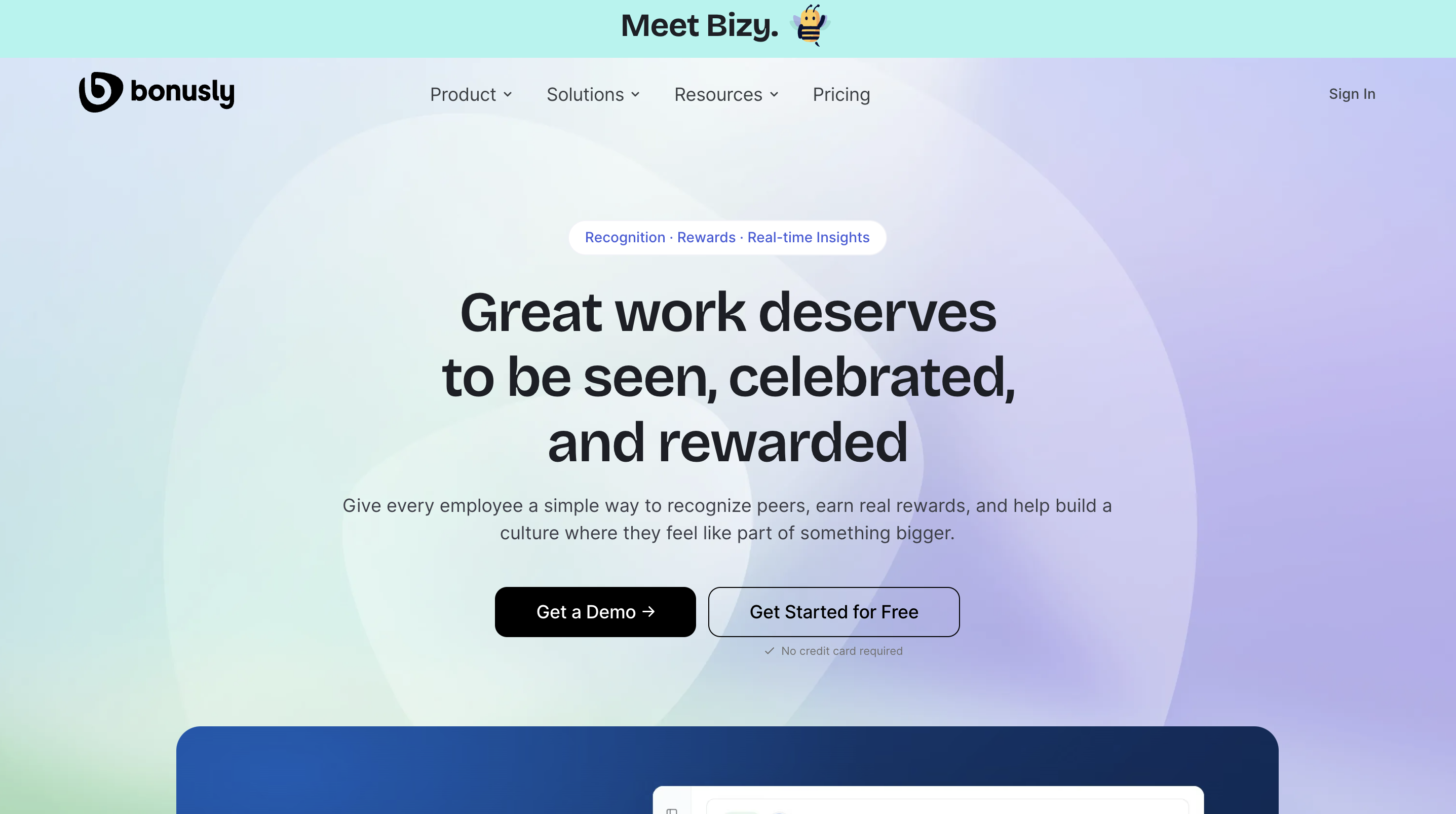
Best for: Teams wanting recognition-driven engagement with a simple points-and-rewards system.
Starting price: From ~$2.70/user/month, billed annually.
Free trial: Yes.
Best company size: SMB to mid-market.
Survey capabilities: Limited — pulse and eNPS features are lighter than dedicated survey tools.
Feedback: None dedicated.
Recognition: Peer recognition via points, redeemable for gift cards and rewards.
Analytics: Reporting on recognition trends by team and department.
AI: None disclosed.
Integrations: Native Slack and Teams experience.
G2 rating: 4.7/5 (unverified in this pass — confirm before publishing)
Pros
- Extremely simple peer-recognition flow drives high, habit-forming daily usage.
- Slack/Teams-native experience minimizes extra login friction.
- Strong reporting on recognition trends.
Cons
- Not a full engagement-survey platform.
- Rewards catalog spend is a separate ongoing budget line.
- Less useful standalone if recognition isn't your primary engagement lever.
Verdict: Pair with a dedicated survey tool if you need engagement measurement, not just recognition. See ThriveSparrow vs. Bonusly for a direct comparison.
Not a fit if: survey-based engagement measurement is your primary goal.
18. Connecteam
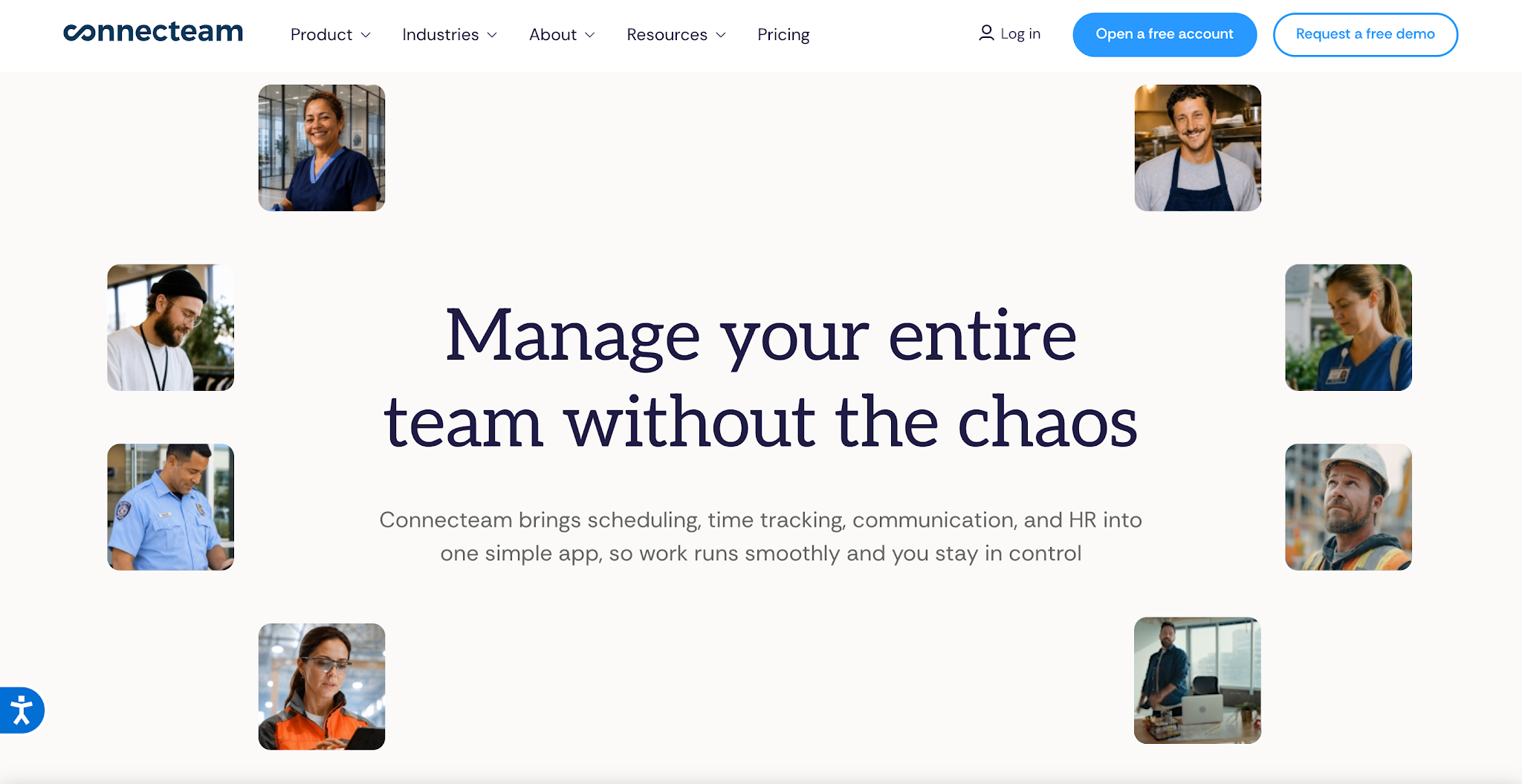
Best for: Deskless, mobile-first, and frontline-heavy teams in retail, hospitality, and field services.
Starting price: Free tier for small teams; paid plans from ~$29/month flat, then per-user at scale.
Free trial: Yes.
Best company size: SMB, frontline/deskless workforce.
Survey capabilities: Engagement surveys built into a mobile-first app.
Feedback: Limited, folded into scheduling and communication tools.
Recognition: Limited.
Analytics: Limited compared to dedicated engagement platforms.
AI: None disclosed.
Integrations: Works without a company email address, a real advantage for frontline deployment.
G2 rating: 4.7/5 (unverified in this pass — confirm before publishing)
Pros
- Purpose-built for deskless and frontline workforces.
- Usable without a company email address.
- Free tier makes it accessible for very small teams to start.
Cons
- Engagement and survey analytics are lighter than dedicated engagement platforms.
- Less relevant for knowledge-worker or desk-based organizations.
- Benchmarking against industry data isn't a core strength.
Verdict: The clearest choice on this list for frontline employee engagement software.
Not a fit if: you're a desk-based organization that needs deep engagement analytics.
19. BambooHR
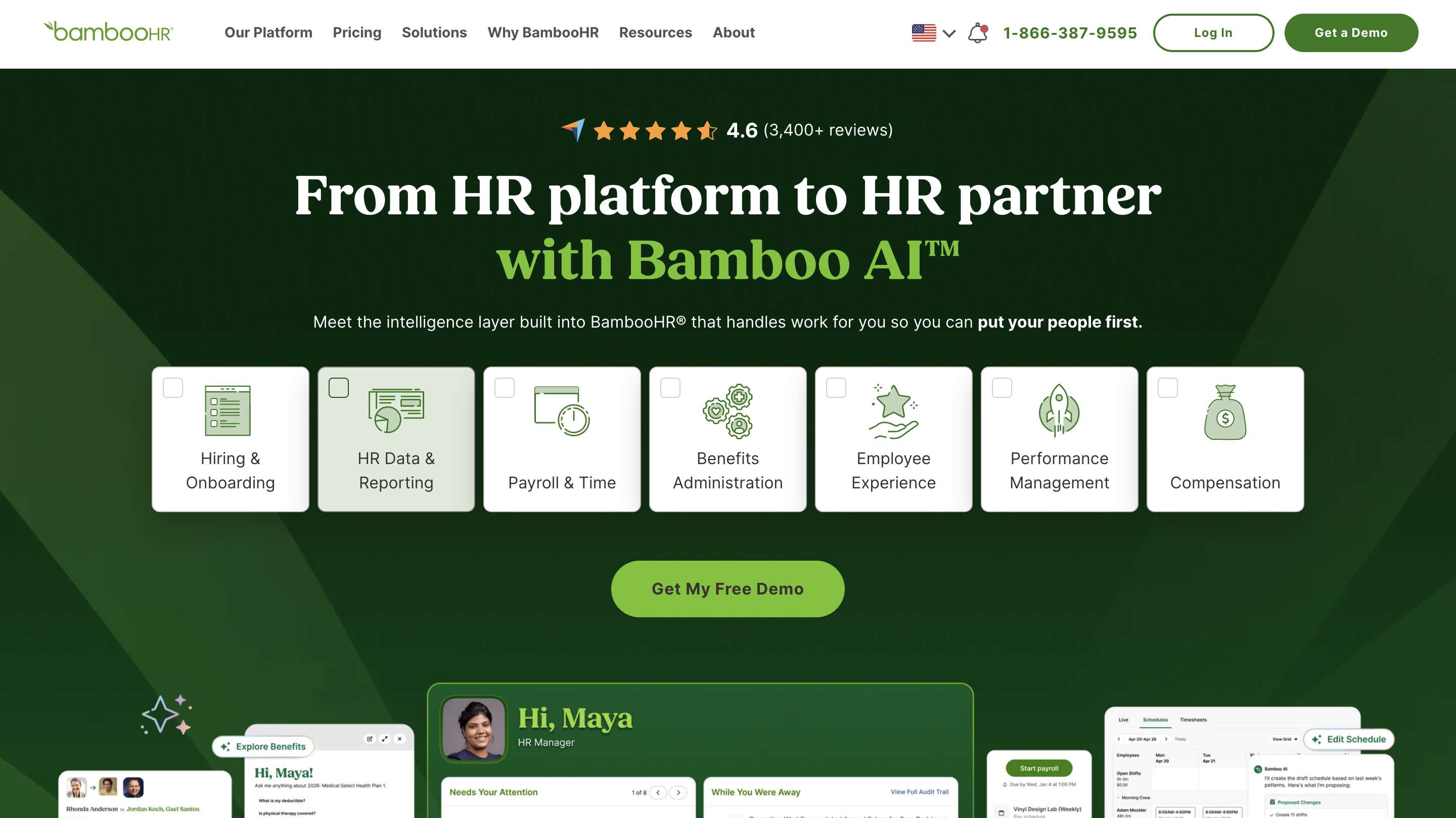
Best for: Small to mid-market teams wanting engagement (eNPS) bundled into a broader, well-known HRIS.
Starting price: From ~$6/employee/month.
Free trial: Yes.
Best company size: Small to mid-market.
Survey capabilities: Limited — eNPS and satisfaction tracking, not a full survey engine.
Feedback: Limited.
Recognition: None.
Analytics: Limited engagement-specific analytics; core strength is HRIS reporting.
AI: None disclosed.
Integrations: Bundled with payroll and core HRIS.
G2 rating: 4.4/5 (unverified in this pass — confirm before publishing)
Pros
- One of the most widely recognized HRIS brands for SMB and mid-market companies.
- eNPS features come bundled with payroll and HRIS rather than a separate purchase.
- Strong SMB customer support reputation.
Cons
- Engagement features are a bolt-on to the HRIS, not a specialist product.
- No advanced recognition or rewards catalog.
- A poor fit if you already have an HRIS and just want engagement software standalone.
Verdict: Good only if you're choosing your HRIS and engagement tracking together, not replacing an existing HRIS.
Not a fit if: you already have an HRIS and want a dedicated, specialist engagement tool instead.
20. PeopleGoal
Best for: Teams wanting performance reviews, OKRs, and lightweight engagement surveys in one affordable suite.
Starting price: Plans from ~$4/user/month.
Free trial: 7 days.
Best company size: Small to mid-size.
Survey capabilities: Lightweight engagement surveys alongside performance reviews.
Feedback: Limited.
Recognition: Limited, thin compared to dedicated platforms.
Analytics: Limited, less developed than Culture Amp or WorkTango.
AI: None disclosed.
Integrations: Standard HRIS ecosystem.
Pros
- Transparent, published entry-level pricing, unusual in this category.
- Combines performance reviews, OKRs, and engagement surveys without an enterprise sales process.
- Straightforward setup for smaller HR teams.
Cons
- Recognition and rewards features are thin to absent compared to dedicated platforms.
- Benchmarking and driver-level analytics are less developed than Culture Amp or WorkTango.
- Smaller company footprint means a narrower integration ecosystem.
Verdict: A reasonable all-in-one starter for small HR teams not ready for a full engagement platform.
Not a fit if: you need strong recognition, rewards, or deep benchmarking.
Best Employee Engagement Software by Use Case
- Best for employee engagement surveys: Culture Amp and Peakon, for their survey science and driver-level analytics.
- Best for employee feedback: WorkTango, for its NLP-based comment analysis.
- Best for recognition: Motivosity and Bonusly, for peer-recognition tools that drive daily engagement.
- Best for performance plus engagement: Lattice and Leapsome, for combining reviews, goals, and engagement.
- Best for small businesses: ThriveSparrow, 15Five, and PeopleGoal, all publishing self-serve pricing.
- Best for large enterprises: Culture Amp, Peakon, and Achievers, built for benchmarking and dedicated customer success.
- Best for remote teams: Motivosity and Workvivo, for social and community-driven engagement.
- Best for frontline or deskless workers: Connecteam, since it works without a company email address.
- Best for global organizations: Peakon and Achievers, both built for multi-country deployment.
- Best for engagement analytics: Culture Amp and WorkTango, for depth of sentiment reporting.
- Best Employee Engagement Software for Manufacturing: Manufacturing teams are mostly deskless. That rules out tools assuming employees sit at a computer all day. Prioritize mobile accessibility, multilingual survey support, and kiosk or QR-code options for shop-floor participation. Connecteam and Peakon both support this kind of deployment, with Peakon's kiosk mode built specifically for retail and manufacturing environments. For a deeper look at what this looks like in practice, see our employee engagement software for manufacturing breakdown.
Pair whichever survey tool you choose with recognition features that work through shared devices, since not every shift worker has a personal phone on the floor.
Still narrowing your options after reading through all 20? If ThriveSparrow's mix of engagement, recognition, and goals matches what you're looking for, you can start a free trial anytime — no credit card, no sales call required.
Common Mistakes to Avoid While Choosing Employee Engagement Software
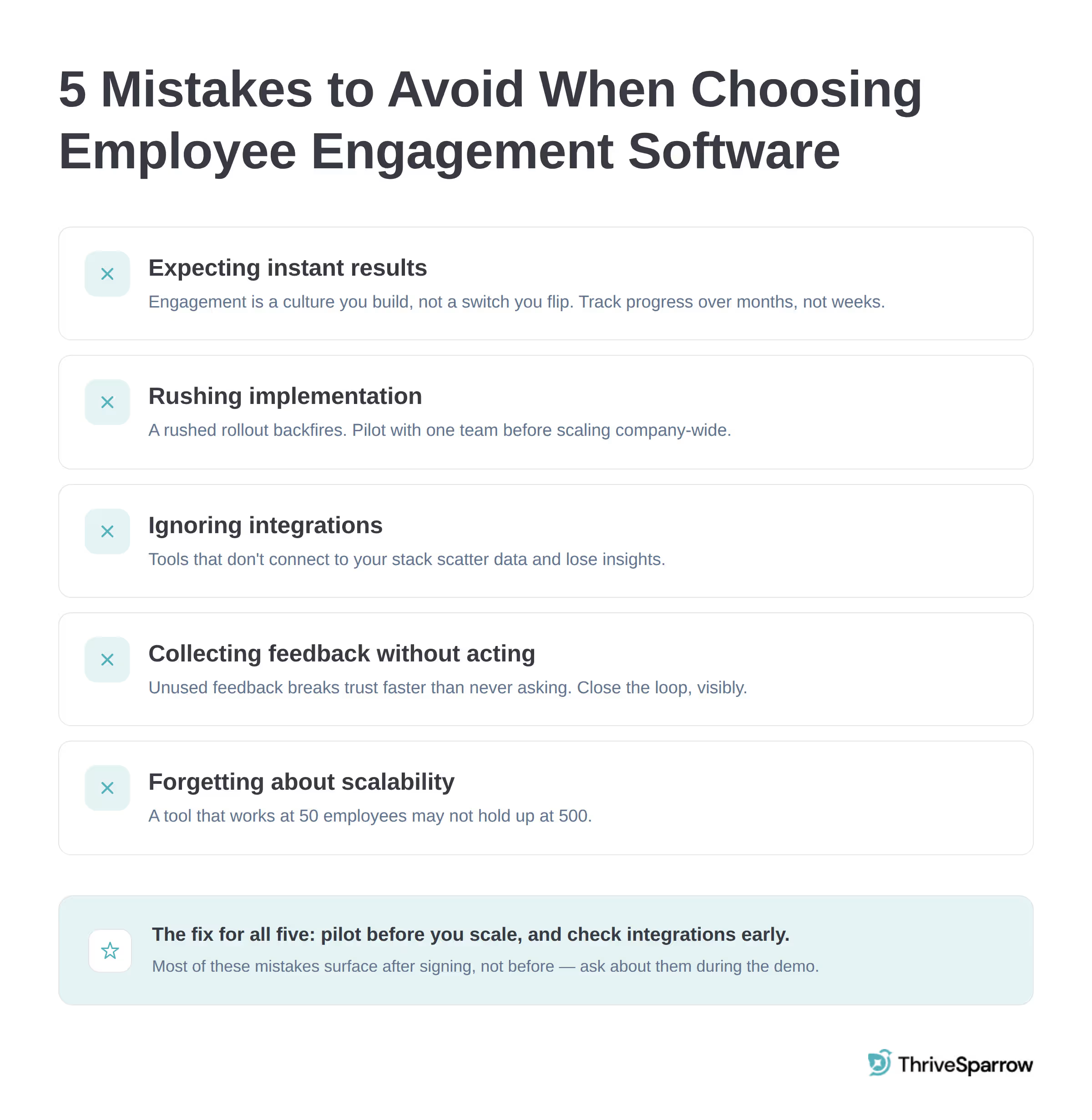
- Expecting instant results: Engagement is a culture you build, not a switch you flip. Set realistic goals and track progress over months, not weeks.
- Rushing implementation: A rushed rollout usually backfires. Pilot with one team, gather feedback, and scale up once the approach is working.
- Ignoring integrations: Tools that don't connect to your existing tech stack scatter data across systems, and insights get lost. This is one of the most preventable mistakes on this list — see the "How to Choose" checklist below for what to actually check before signing.
- Collecting feedback without acting on it: Once employees notice their input goes nowhere, participation drops fast. Close the loop by sharing what you heard and what's changing.
- Forgetting about scalability: A tool that works for 50 employees might not hold up at 500. Choose software with flexible pricing and admin controls that adapt as your team grows.
How to Choose Employee Engagement Software
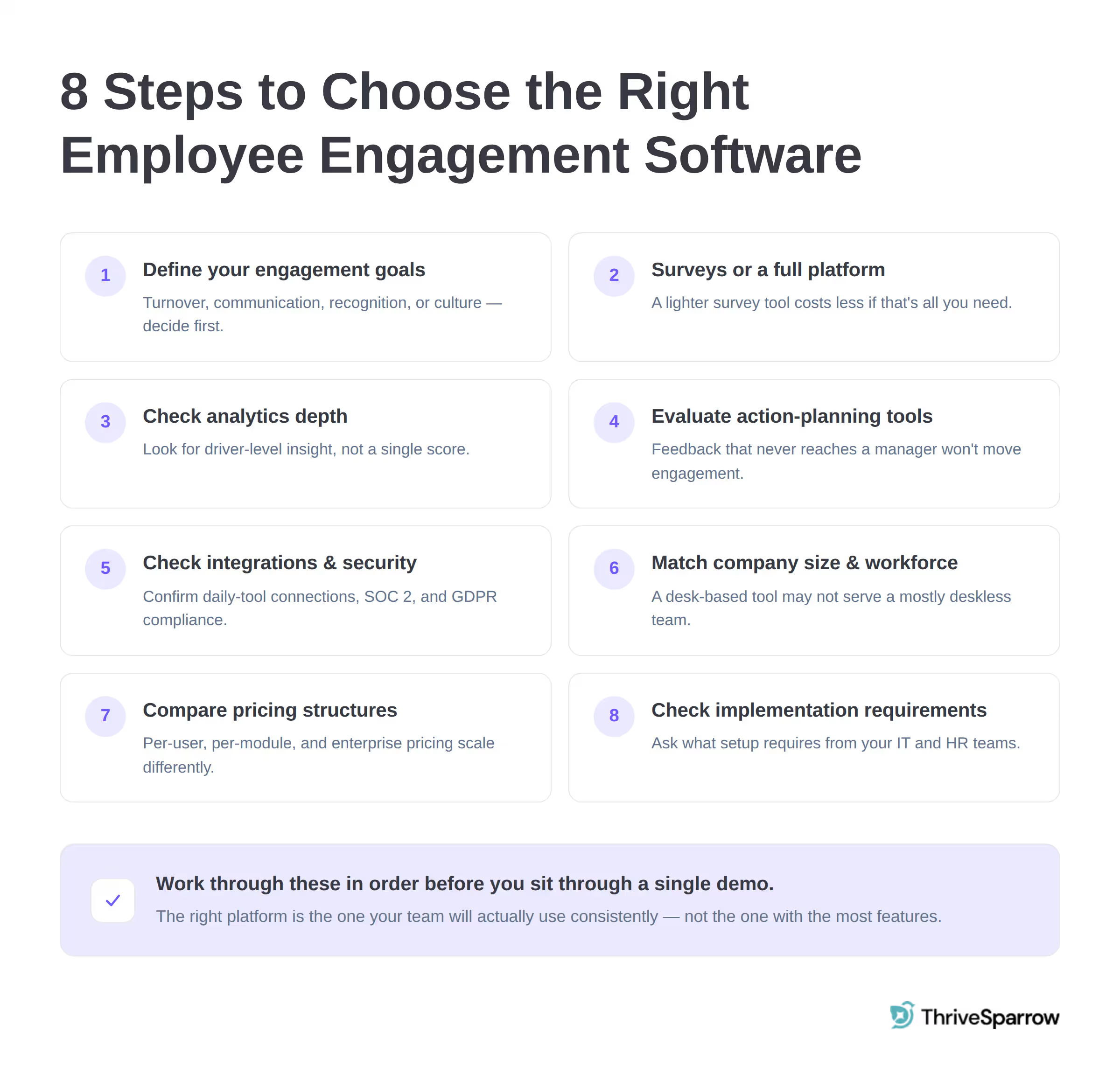
- Define your engagement goals. Decide whether you're solving for turnover, communication, recognition, or culture before comparing vendors.
- Decide between surveys and a broader platform. A lighter survey tool costs less if you only need to measure sentiment.
- Check analytics depth. Confirm the platform goes beyond a single score into driver-level insight.
- Evaluate manager and action-planning capabilities. Feedback that never reaches a manager won't move engagement.
- Check integrations, security, and compliance. Confirm the tool connects to systems your employees already use daily, and ask directly about SOC 2 and GDPR compliance if your organization requires it.
- Consider company size and workforce type. A desk-based tool may not serve a mostly deskless team well.
- Compare pricing structures. Per-user, per-module, and flat enterprise pricing affect total cost differently as you scale.
- Check implementation requirements. Ask how long setup takes and what's required from IT and HR before rollout.
How Much Does Employee Engagement Software Cost?
Pricing in this category varies more by structure than absolute cost. Most vendors fall into one of three models:
- Per-user, self-serve pricing — ThriveSparrow starts at $2/employee/month for a single module (Kudos), with a full four-module bundle running $13/employee/month before any volume discount; 15Five and PeopleGoal also publish rates starting around $2–$4 per user per month.
- Modular add-on pricing — Lattice, Leapsome, and Engagedly price each capability separately, so total cost depends on which modules you enable.
- Enterprise/custom pricing — Culture Amp, Peakon, Achievers, and Workvivo don't publish rates and typically start in the tens of thousands of dollars annually.
Beyond the base subscription, budget for recurring add-ons. Recognition budgets are usually a separate line item, minimum seat counts can apply on annual contracts, and enterprise deployments often carry setup fees of 10–20% of annual software cost.
Wrapping Up
Every platform on this list solves a different version of the same problem: understanding how your employees actually feel and giving managers a way to act on it.
The right choice depends less on which tool has the most features and more on which one your team will actually use consistently.
If you've made it this far and want to see what employee engagement actually looks like once it's not just a spreadsheet, try ThriveSparrow free for 14 days — no credit card required, and you can cancel anytime.
Frequently Asked Questions
1. What features should employee engagement software have?
At minimum: pulse and engagement surveys, anonymous feedback options, manager-level analytics, recognition tools, and integrations with Slack, Teams, or your HRIS. Action-planning matters more than most buyers expect.
2. What is the best employee engagement software?
It depends on your priorities. Culture Amp and Peakon lead on survey science, Motivosity and Bonusly lead on recognition, Lattice and Leapsome lead on combining engagement with performance, and ThriveSparrow, 15Five, and PeopleGoal lead on affordable, self-serve pricing.
3. What is the best employee engagement survey software?
Culture Amp and Peakon lead on survey science and driver-level analytics. WorkTango leads on turning open-text feedback into themes. For lighter, faster-to-launch surveys, Officevibe and ThriveSparrow are strong self-serve options.
4. What is the best employee engagement platform?
Lattice and Leapsome are the clearest "platform" plays on this list, combining performance, goals, and engagement in one system. Culture Amp and Peakon are the strongest choice if you want a platform built primarily around survey science.
5. How much does employee engagement software cost?
Self-serve tools typically start around $2–$4 per user per month. Modular platforms price each capability separately. Enterprise tools are usually custom-priced and can run into the tens of thousands annually.
6. Can employee engagement software be used for remote teams?
Yes. Community-driven tools like Motivosity and Workvivo work well for remote and hybrid teams because they replace the informal connection lost without a shared office.
7. Can employee engagement software support frontline workers?
Yes, but not every platform is built for it. Look for mobile-first tools like Connecteam, or kiosk-mode surveys like Peakon offers, since many desk-oriented platforms assume every employee has a company email and a laptop.


