












Employee engagement programs aren't just nice-to-have perks. They're business necessities in a workplace where employees are either checked out or actively working against their organization's success.
Let that sink in for a moment. Only a fraction of your team actually cares about helping your business succeed. The financial impact is brutal. Every disengaged employee costs you nearly $16,000 each year. But here's the flip side that makes this worth your attention: companies with engaged teams see 21% higher profitability.
Smart leaders have figured this out. They've moved beyond pizza parties and sporadic "employee of the month" awards to build programs that actually move the needle. The difference between surface-level perks and strategic engagement isn't just about making people happy it shows up in your company's financial performance.
If you're dealing with high turnover, low productivity, or a workplace culture that feels flat, quick fixes won't solve it. You need intentional strategies that address what people actually need at work: recognition, growth, purpose, and connection.
That's exactly what this guide delivers. We'll walk through 15 engagement programs that work for 2026— not because they sound good in theory, but because they create the kind of workplace where people want to stay and do their best work.
What is employee engagement and why it matters
Employee engagement goes deeper than job satisfaction or workplace happiness. It's the emotional connection and commitment employees have to their organization and its goals. When someone is truly engaged, they care about their work and company — not just the paycheck or next promotion.
But what does that actually look like in practice?
Engaged employees willingly give discretionary effort. They're the ones who stay late to help a teammate meet a deadline without being asked. They pick up litter in the parking lot even when no manager is watching. They consistently go above and beyond because they genuinely want the organization to succeed.
The business case for engagement is compelling. Companies with engaged workforces see 26% higher employee productivity, 13% greater returns to shareholders over five years, and substantially higher profitability. Teams with highly engaged employees also experience 78% fewer absences.
This matters more now than ever. As businesses ask employees to "do more with less," engagement becomes the difference between thriving and merely surviving. During periods of change or uncertainty, maintaining employee engagement proves critical to an organization's ability to bounce back.
Engaged employees become your best advocates. They perform better, adapt to change more easily, and stick around longer.
We see this every day, companies that prioritize genuine engagement outperform those that rely on surface-level perks. The question isn't whether engagement matters, but how quickly you can start building it.
Why employee engagement programs are essential for long-term success
Employee engagement programs are essential for long-term success because companies with high engagement see higher productivity. Highly engaged employees are twice as likely to be top performers and take 20% fewer sick days. They're also more likely to stick around during tough times and organizational changes.
Perhaps most importantly, these programs address a natural challenge: engagement tends to decline over time. Without intentional programs to counter this trend, even your best hires can become disengaged.
How to build an effective employee engagement strategy
Building an engagement strategy that actually works isn't about throwing ideas at the wall and hoping something sticks. You need a systematic approach that turns insights into action.
Here's how to build something that makes a real difference.
1. Start with employee feedback
You can't solve problems you don't understand. Before launching any engagement initiative, you need to know where your people actually stand. An employee Net Promoter Score (eNPS) survey — asking "How likely are you to recommend this company as a place to work?" — gives you a baseline number to work with.
But don't stop there. Follow up with confidential "stay interviews" to understand the story behind those numbers. These conversations reveal what keeps people motivated and what might drive them away. Regular pulse surveys help you track progress.
2. Align with company values
Your engagement strategy should reflect who you are as an organization. When people can connect their daily work to something meaningful, engagement follows naturally. Employees who understand and live your company values become genuinely invested in outcomes, not just paychecks.
Use your values as a filter for everything, goal-setting, coaching conversations, feedback sessions. Help people see how their contributions matter to the bigger picture.
3. Set measurable goals
"Improve morale" sounds nice, but it's impossible to track. Instead, create SMART goals that give you something concrete to measure:
- Specific and focused on particular metrics
- Measurable with clear tracking mechanisms
- Achievable within your resources
- Relevant to broader business priorities
- Time-bound with specific deadlines
15 employee engagement programs for 2026
Employee engagement is no longer about throwing in a few perks and hoping people stay. It’s about designing everyday experiences where employees feel valued, challenged, supported, and connected to something bigger than just tasks and deadlines. The programs below help you do exactly that.
1. Recognition and rewards programs
Recognition sits at the core of any strong engagement strategy. When people feel their work is invisible, their effort drops. When they feel genuinely seen, they naturally lean in.
Peer‑to‑peer recognition
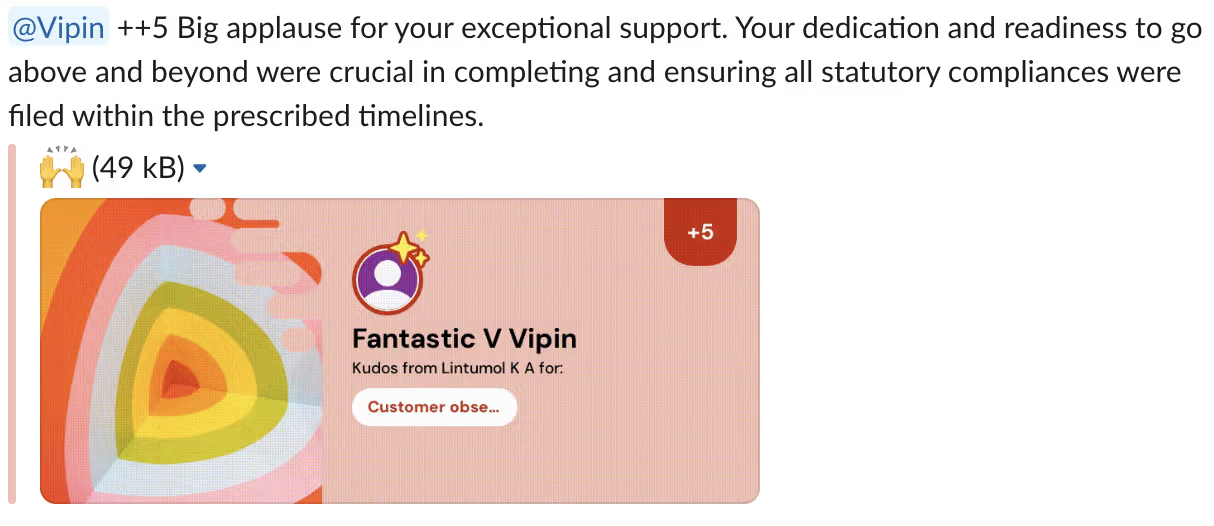
Peer recognition is powerful because coworkers see the effort that leaders often miss — the late‑night problem‑solving, the quiet help, the small wins that keep projects moving. A simple system where teammates can shout each other out in a channel, give a rotating “team trophy,” or send digital badges can quickly build a culture of appreciation instead of quiet resentment.
Try ThriveSparrow Kudos free for 14 days—no credit card needed.
.svg)
Manager‑led recognition
Recognition from managers shapes how employees see their future in the company. It doesn’t have to be a big award ceremony; it can be a quick voice note after a tough week, a specific compliment during a 1:1, or referencing someone’s contribution in a leadership meeting. The key is to be specific: “You handled that client escalation calmly and thoughtfully” lands much better than “Good job.”
Public vs private praise
Not everyone wants the spotlight. Some people love a public shout‑out in an all‑hands; others would prefer a thoughtful email or a quiet “thank you” over coffee. Strong recognition programs give managers options and encourage them to ask employees how they like to be appreciated, rather than guessing or defaulting to one style.
2. Career development and learning opportunities

People rarely leave just because of money; they leave when they feel stuck. A strong development culture reassures employees that they don’t have to change companies to change direction.
Upskilling and reskilling
Upskilling deepens skills in a current role — for example, an account manager getting better at data storytelling. Reskilling opens doors into new roles, like a customer support rep moving into product operations. Offering both tells employees, “You’re not locked into one path here. If you’re curious and willing to learn, we’ll help you move.”
Mentorship programs
Mentors help employees navigate real, messy questions: “Should I aim for management?” “How do I push back on unrealistic timelines?” “What skills actually matter for the next level?” Matching people across teams or levels helps them see different parts of the business and feel less alone in their decisions.
Personalized learning paths
A one‑size‑fits‑all training calendar usually fades into the background. Instead, work with employees to map out a learning path tied to specific goals: certifications they want, projects they’d like to lead, skills they want to try on. When people can see how today’s learning connects to tomorrow’s opportunities, they treat development as an investment, not a checkbox.
3. Wellness and mental health initiatives
You can’t talk about engagement without talking about energy. People who are constantly exhausted or overwhelmed simply don’t have much to give, no matter how motivated they are.
Physical wellness programs
The goal isn’t to turn your company into a fitness brand; it’s to remove friction from staying healthy. That might look like stipends people can use for walking pads or gym memberships, stretching or movement breaks during long meetings, or ergonomic assessments so people aren’t fighting back pain while trying to focus. When physical well‑being is supported, people can bring more of their attention and creativity to work.
Mental health support
Stress and mental health challenges show up as irritability, missed deadlines, withdrawal, or overworking — not just “big crises.” Offering access to counseling, clearly signposting available support, hosting workshops on managing stress, and training managers to have empathetic check‑ins signals that mental health isn’t a taboo topic. Employees feel safer being honest, which is a foundation for real engagement.
Work‑life balance policies
Balance doesn’t mean a perfect split; it means enough control to handle life without constant guilt. Clear policies around flexible hours, remote days, and realistic expectations for response times help. When leaders model this behavior — taking vacations fully, not sending messages at all hours — employees feel permission to protect their own boundaries too.
4. Flexible work arrangements

Flexibility sends a strong message: “We trust you to manage your work.” That trust is a powerful driver of engagement.
Remote and hybrid options
Hybrid and remote setups let people align their environment to the type of work they’re doing. Deep focus days might be at home; collaboration days might be in the office. What matters is clarity: clear expectations about availability, communication norms, and how success is measured so remote employees don’t feel like they’re constantly proving they’re working.
Flexible hours
Not everyone does their best work at the same time. Offering core collaboration hours — say 11 a.m. to 3 p.m. — and allowing flexibility outside that window lets parents manage school runs, night owls start later, or early risers finish earlier. When employees can align work to their natural rhythms and personal responsibilities, frustration drops and engagement rises.
Compressed workweeks
Four‑day workweeks or 9‑day fortnights are gaining traction for a reason. They require smart prioritization, better meeting discipline, and a focus on outcomes over hours. For teams and roles where it fits, compressed schedules can make the workweek feel more intentional and less like an endless grind.
5. Team‑building and social activities
Engagement isn’t only about the job; it’s about the people employees work with every day. Strong relationships make hard work feel lighter.
Virtual and in‑person events
Think beyond the awkward icebreaker. Good team‑building is tied to real connection: small group coffee chats, problem‑solving games, shared meals, interest‑based clubs, or “show and tell” sessions where people talk about hobbies or side projects. In distributed teams, these intentional touchpoints are often the glue that keeps people feeling part of something, not just a username on a screen.
Gamified collaboration
Light gamification — points, friendly competitions, progress boards — can inject energy into routine work. For example, a support team might celebrate “most helpful solution of the week,” or a sales and product team might co‑host a mini hackathon to improve customer experience. The game is a vehicle; the real goal is collaboration and shared wins.
Cross‑functional bonding
When departments only interact through tickets and escalation emails, misunderstandings are almost guaranteed. Cross‑functional workshops, “day in the life” sessions, or joint projects help different teams see each other’s challenges and constraints. This builds empathy and reduces the “us vs them” mindset that quietly erodes engagement.
If you want to explore more team-building ideas, check out our guide on 24 team-building activities for work—packed with practical, team-tested ideas that actually build connection.
6. Feedback and communication loops
People engage more deeply when they believe their voice actually matters. Feedback loops make that visible.
Pulse surveys
Short, focused surveys on topics like workload, clarity, or team relationships give leaders a snapshot of how people are doing. The crucial part is what happens next: sharing themes transparently and outlining concrete follow‑ups. Even if you can’t fix everything immediately, acknowledging what you heard and what you’re prioritizing builds credibility.
To go deeper, explore our guide on employee pulse survey best practices covering how to ask the right questions, share results transparently, and turn feedback into real action.
1:1 meetings
The quality of 1:1s often predicts the quality of engagement. The best ones are not just status updates; they cover wins, challenges, wellbeing, and growth. Encouraging employees to bring their own agenda items — and actually addressing them — turns 1:1s into a safe space rather than a performance check.
Anonymous suggestion boxes
Anonymous channels can surface patterns leaders might never hear directly: confusing processes, recurring culture issues, or simple improvement ideas. To keep them meaningful, group similar suggestions, respond to them in a visible place, and explain what you’re doing now, what you’re planning later, and what may not be possible (and why).
7. Purpose‑driven community impact programs
Most people want to feel that their work contributes to something beyond quarterly targets. Community impact programs help bridge that gap.
Volunteer days
Company‑supported volunteer days, especially when teams choose causes they care about, build pride and connection. They also give employees a chance to see colleagues in a different light collaborating outside usual roles and hierarchies. Planning them well (clear logistics, options for different abilities, meaningful tasks) shows the company respects both the community and employees’ time.
Donation matching
Matching donations is a simple, tangible way to support what employees care about. It doesn’t need to be huge to matter; even a modest match shows the organization is willing to stand behind its people’s values and amplify their impact.
Social responsibility campaigns
Whether it’s environmental initiatives, equity programs, or local community partnerships, employees can feel deeply engaged when they see the company living its stated values. The key is authenticity: involve employees in designing and running these efforts, and share real stories and outcomes instead of just slogans.
8. Employee resource groups (ERGs)
ERGs are more than social clubs; they’re platforms for voice, support, and change.
Diversity and inclusion focus
Groups centered around shared experiences — for example women in tech, LGBTQIA+ employees, or parents and caregivers — give people spaces where they don’t have to “explain” their context from scratch. These groups often surface issues and ideas that wouldn’t show up in a standard survey or meeting.
Peer support networks
Inside ERGs, employees can talk about how policies and decisions actually land in their day‑to‑day. This peer support can reduce isolation and burnout, and help people navigate challenges with more confidence. That sense of “I’m not the only one dealing with this” is deeply engaging.
Leadership opportunities
Running an ERG, hosting events, or presenting feedback to leadership all build skills like facilitation, communication, and influence. When companies recognize and reward this work, ERGs become a visible pathway to leadership, not just an extracurricular.
9. Onboarding and cultural immersion
First impressions stick. New hires decide quickly whether the organization is truly what it claimed to be.
Structured onboarding plans
Effective onboarding is paced. Week one might focus on relationships and context, weeks two to four on core responsibilities, and the following months on deeper integration and development. Clear checklists for both managers and new hires reduce confusion and ensure important conversations don’t get lost in the rush.
Buddy systems
A buddy’s job isn’t to replace the manager; it’s to be a relatable guide. They can explain unwritten rules, offer tips on tools and workflows, and invite new hires into social spaces. This makes the transition smoother and helps new people feel like “insiders” much faster.
Cultural alignment sessions
Sessions focused on values, decision‑making principles, and real examples of “how we do things here” connect new hires to the deeper story of the company. When leaders show up to these sessions and share honestly — including past mistakes and learnings — it signals that culture is lived, not just printed on posters.
10. Stay interviews and retention check‑ins
Stay interviews are about curiosity, not crisis. They give leaders a chance to adjust course before someone starts updating their résumé.
What they are
These are intentional conversations focused on questions like: What makes you excited to come to work? What drains your energy? What would make this a place you’d want to stay for the next few years? They’re not performance reviews and shouldn’t be treated like them.
How to conduct them
To work well, stay interviews need time, psychological safety, and honest listening. Managers should explain the purpose, ask open questions, and resist the urge to defend every criticism. Sometimes the most powerful moment is simply saying, “Thank you for being honest — I didn’t realize that.”
Using insights to improve
Not every request can be granted, but patterns should guide team‑level and company‑level changes. Even where you can’t say “yes,” explaining the constraints and brainstorming alternatives with employees keeps the relationship collaborative rather than adversarial.
11. Internal mobility and career pathing
When employees can see multiple possible futures within the organization, they’re less likely to assume they have to leave to grow.
Transparent promotion criteria
Publishing clear expectations for each level — including examples of behaviors, impact, and skills — removes a lot of guesswork and politics from progression. It also helps managers have more grounded career conversations instead of vague encouragement.
Lateral movement opportunities
Encouraging lateral moves into adjacent teams or functions gives employees fresh challenges and perspectives while preserving institutional knowledge. This can be especially engaging for high performers who feel they’ve outgrown their current scope but aren’t ready or interested in people management.
Skill gap analysis
Regularly comparing current skills with future business needs helps employees understand where to focus. When this analysis is shared transparently and paired with concrete learning opportunities and stretch assignments, development feels intentional instead of random.
12. Innovation and idea‑sharing platforms
Employees closest to daily work often see opportunities and problems first. Making it easy to share and test ideas shows that creativity is everyone’s job, not just leadership’s.
Hackathons
Hackathons or innovation sprints give people permission to step out of their normal tasks and rethink how things are done. Whether focused on internal tools, customer experience, or new offerings, they energize teams and often reveal hidden talent.
Crowdsourced innovation
Simple idea platforms where people can submit suggestions, comment, and vote help surface themes. Rotating review panels — not just the same leaders every time — broaden perspectives and increase fairness in which ideas move forward.
Recognition for ideas
Recognizing contributions to innovation means celebrating both wins and learnings. Highlighting “experiments that taught us something important” avoids the trap of only valuing ideas that immediately become big successes.
13. Leadership development programs
Leaders shape the day‑to‑day experience of work more than any policy document. Growing thoughtful, people‑centric leaders is one of the highest‑leverage engagement moves.
Coaching and mentoring
Offering coaching for managers — especially new ones — helps them navigate tricky situations like giving hard feedback, balancing empathy with accountability, or leading through change. Pairing them with senior mentors gives them a sounding board and accelerates their growth.
Shadowing opportunities
Inviting emerging leaders to shadow senior leaders in key meetings, strategy sessions, or customer calls demystifies leadership. They see the preparation, the trade‑offs, and the emotional labor involved, not just the final decisions.
Succession planning
Proactive succession planning means identifying critical roles and developing potential successors early. When employees know there’s a thoughtful plan and room for them to grow into bigger responsibilities, they’re more likely to envision a long‑term future with the company.
14. Personalized employee experiences
Employees are not a monolith. Personalization recognizes that what motivates one person might completely miss the mark for another.
Custom rewards
Instead of defaulting to the same gift card every time, offer a menu of options: learning budgets, extra time off, wellness experiences, donations to a chosen charity, or even family‑focused perks. Asking employees what actually feels meaningful to them ensures rewards land the way they’re intended.
Flexible benefits
Flexible benefits let employees dial up what matters — healthcare, family support, insurance, or savings. This approach respects that needs change over time: what’s essential for a new graduate is very different from what a caregiver or late‑career employee might prioritize.
Individualized growth plans
Individual development plans built collaboratively between employee and manager help align personal aspirations with business priorities. They transform “Where do you see yourself in five years?” from a cliché into a real roadmap with steps, support, and check‑ins.
15. Celebrating milestones and achievements
Celebrations are where culture becomes visible. They’re the moments that tell people, “This is what we value, and this is who we are together.”
Work anniversaries
Thoughtful work anniversary recognition is about more than a generic email. Sharing specific contributions, inviting peers to add notes, or having a manager reflect on growth over the years makes the moment feel personal and sincere.
Project completions
At the end of a project, taking time to review what went well, what was hard, and who stepped up helps people feel closure and pride. Turning these moments into mini‑rituals — a retrospective, a short celebration, a write‑up of lessons learned — reinforces that the effort was worth it.
Team wins
Regularly spotlighting team wins, from small process improvements to major launches, keeps momentum alive. Over time, these stories become part of the company’s narrative and give new employees something to aspire to: “This is how we win here, and we do it together.”
Employee engagement programs are no longer optional — they’re fundamental to building productive, loyal, and high‑performing teams. When you invest in recognition, growth, feedback, and well‑being, you create a culture where people actually want to contribute their best work.
ThriveSparrow helps you turn that intent into a repeatable system. With pulse surveys, eNPS, and always‑on feedback, you can understand how employees really feel and track engagement over time, not just once a year. Built‑in analytics and visual dashboards highlight where teams are thriving and where support is needed, so you’re not guessing where to act.
From there, kudos for recognition, 1:1s, and performance and goals make it easier for managers to close the loop — appreciating great work, addressing issues early, and connecting daily efforts to company priorities.
If you’re ready to move beyond perks and build engagement programs that truly shift culture and results, it’s time to turn your strategy into action with ThriveSparrow and start building the kind of workplace people never want to leave
Frequently asked questions about employee engagement programs
Q1. What are the key components of an effective employee engagement program?
An effective employee engagement program typically includes recognition and rewards, career development opportunities, wellness initiatives, flexible work arrangements, and transparent communication channels. These components address fundamental employee needs like appreciation, growth, well-being, work-life balance, and trust.
Q2. How can companies measure the success of their employee engagement initiatives?
Companies can measure engagement success through regular pulse surveys, employee Net Promoter Scores (eNPS), retention rates, productivity metrics, and analytics dashboards. Stay interviews and feedback loops also provide valuable qualitative insights into program effectiveness.
Q3. What role do managers play in fostering employee engagement?
Managers play a crucial role in engagement by conducting regular one-on-one meetings, providing timely feedback, recognizing achievements, supporting career development, and creating a positive team culture. Their day-to-day interactions significantly impact an employee's sense of belonging and motivation.
Q4. How can organizations engage remote or hybrid employees effectively?
To engage remote or hybrid employees, organizations can implement virtual team-building activities, ensure equitable access to development opportunities, utilize digital recognition platforms, maintain frequent communication through various channels, and offer flexible work arrangements that promote work-life balance.
Q5. What are some common mistakes companies make when trying to improve employee engagement?
Common mistakes include focusing on superficial perks instead of meaningful programs, failing to act on employee feedback, neglecting to measure program effectiveness, inconsistent implementation of initiatives, and not aligning engagement efforts with company values and goals. Avoiding these pitfalls is crucial for sustainable engagement improvement.