










Culture isn’t the posters on your walls or the snacks in the break room; it’s the invisible force that determines whether your team thrives or just gets by. Companies with strong workplace cultures have delivered a 1,709% cumulative return since 1998, compared to 526% for the Russell 3000 Index, showing that the right organizational culture doesn’t just feel good—it drives real business results.
Organizational culture is the shared values, beliefs, behaviors, and practices that shape how work actually gets done in your company: your workplace’s personality, the unspoken rules behind decisions, the energy people feel when they walk in, and how teams react when things get tough.
When culture is intentional, employees feel valued, connected, and motivated to do their best work, creating an environment where people are engaged and new ideas flourish. Poor culture leads to disengagement, low productivity, and constant turnover.
This guide explores what organizational culture really is, why it matters so much, and how to intentionally build one that truly works for your people and your business.
What is organizational culture and why does it matter?
Organizational culture is the “way we do things around here”—the lived experience of how people work, make decisions, and treat each other every day. It’s the pattern you notice when you walk into an office and immediately feel whether the energy is positive and focused or tense and disconnected.
Culture goes deeper than official mission statements or value posters. It shows up in:
- How the company conducts its work and treats employees and customers
- How much decision-making autonomy employees have
- How communication actually flows across teams and levels
- How committed people are to delivering quality products and services
Organizational culture matters because it quietly shapes engagement, performance, and retention. A strong organizational culture gives people clarity, consistency, and a sense of belonging; a weak one creates confusion, stress, and a revolving door of talent.
In SHRM’s 2024 global study, employees in positive cultures were almost four times more likely to say they planned to stay with their employer than those in poor cultures. In a competitive market where people have options, organizational culture often becomes the deciding factor in whether they stay, grow, and do their best work.
If you want to see how culture shows up in real numbers and outcomes, this deep dive into the impact of organizational culture on employee performance goes further into data and examples.
How culture shapes employee behavior and decisions
Culture acts like an invisible compass for your team. It sets expectations for what is acceptable, encouraged, or out of bounds, even when no one is explicitly giving instructions. In a customer-centric organizational culture, for example, employees naturally prioritize customer satisfaction, not because someone is watching, but because it’s “how things are done here.”
Organizational culture also has a direct impact on psychological safety—how comfortable people feel sharing feedback, taking risks, or suggesting new ideas. When psychological safety is high, teams:
- Communicate more openly
- Collaborate with fewer silos
- Feel a stronger sense of shared purpose
One recent analysis found that 89% of highly engaged employees describe their company culture as positive, underscoring how strongly culture and engagement reinforce each other. Culture influences behavior even when no one is watching. It shapes how employees interpret company expectations and how they interact with colleagues and customers in everyday situations.
If you’re looking to strengthen that foundation, learning how to foster psychological safety at work is a powerful place to start.
Why organizational culture is critical to business success
The connection between organizational culture and business results is not theoretical, it’s measurable. Companies with strong, aligned cultures significantly outperform those with weak or fragmented cultures on revenue, profitability, and growth. Organizations with strong cultures see up to a fourfold increase in revenue growth and as much as a 29% increase in revenue per employee compared to those with weak cultures.
A healthy organizational culture:
- Drives higher employee engagement and productivity
- Reduces voluntary turnover and related costs
- Supports better collaboration and innovation
- Improves customer experience and brand perception
When employees feel connected to their organization’s values and culture, they are more likely to go the extra mile, bring forward new ideas, and stay longer. In one 2025 report, only 15% of employees in strong cultures said they were actively looking for a new role, compared with 57% in weak or toxic cultures. Many people today will happily trade a higher salary for a healthy organizational culture where they feel respected, supported, and able to grow.
Organizational culture also shapes how well a company adapts to change. Cultures that encourage experimentation, learning, and constructive feedback are better positioned to innovate and respond quickly to shifting markets. In an era of constant disruption, a strong, adaptive culture becomes one of the most important strategic assets a company can build.
To understand how culture and engagement fuel each other, explore how employee engagement affects performance and why they’re inseparable in modern organizations.
Main types of organizational culture
Not every organizational culture looks the same and it shouldn’t. The culture that helps a startup move fast may be disastrous in a highly regulated industry, and vice versa. Understanding the main types of organizational culture gives leaders a language for what they have today and what they want to build.
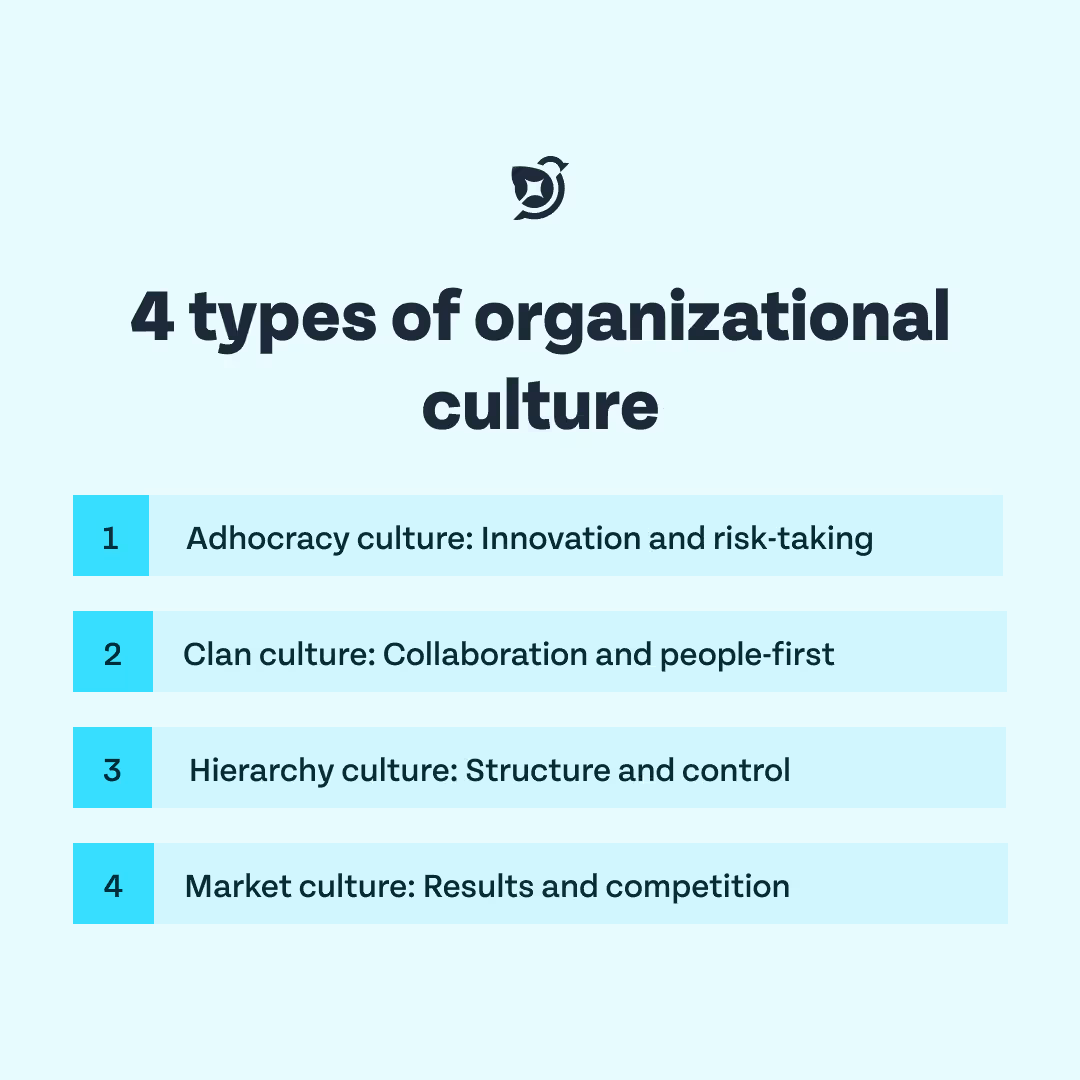
Using the Competing Values Framework as a guide, four primary types of organizational culture stand out: adhocracy, clan, hierarchy, and market.
1. Adhocracy culture: Innovation and risk-taking
Adhocracy culture thrives on creativity, flexibility, and forward thinking. These organizations value:
- Constant innovation and improvement
- Experimentation and calculated risk-taking
- Individual initiative and autonomy
- Adaptability to rapid change
Failure is treated as part of the learning process instead of something to fear. Adhocracy organizational culture is especially effective in fast-moving industries where spotting opportunities early and acting quickly is critical. Companies like Google and Tesla often reflect this culture through their emphasis on innovation and employee autonomy.
2. Clan culture: Collaboration and people-first
Clan culture feels like a supportive community. This type of organizational culture focuses on:
- Strong relationships and teamwork
- Mentorship and coaching
- Collaborative decision-making
- Employee wellbeing and engagement
In clan cultures, employees feel like valued members of a family rather than cogs in a machine. This often leads to high loyalty and strong customer service. The challenge is maintaining that close-knit feel as the organization scales and becomes more complex.
3. Hierarchy culture: Structure and control
Hierarchy culture emphasizes stability, efficiency, and clear structure. Organizations with this type of organizational culture prioritize:
- Formal processes and procedures
- Defined roles and responsibilities
- Multiple layers of authority
- Consistency and risk management
Industries such as finance, healthcare, and government frequently lean toward hierarchy culture because predictability and control are essential. The downside is that these organizations can be slower to adapt or innovate if decision-making is heavily centralized.
4. Market culture: Results and competition
Market culture is driven by performance, competition, and outcomes. This organizational culture is characterized by:
- Strong external focus on customers and competitors
- Aggressive goals and performance metrics
- High-pressure, results-oriented environments
- Rewards tied closely to outcomes
Leaders in market cultures often push hard for excellence and market dominance. This can generate impressive results but may also lead to burnout or high turnover if not balanced with support, recognition, and sustainable practices.
Most organizations aren’t purely one culture type—they blend elements of several. The key is to understand which type dominates, whether it matches your strategy, and where intentional adjustments are needed.
Other organizational culture patterns to know
Beyond the four core types, other culture patterns frequently shape how companies operate and feel from the inside.
1. Purpose-driven culture
Purpose-driven organizational culture centers on a mission that goes beyond profit. Employees feel deeply connected to the company’s reason for existing and see their work as contributing to something meaningful in the world. These cultures often attract and retain people who want their work to matter, not just pay the bills.
2. Learning culture
In a learning culture, continuous skill-building and knowledge-sharing are built into the way work gets done. These organizations encourage curiosity, experimentation, and constructive feedback, which helps them adapt faster and perform better over time. Employees are expected to grow—and supported to do it.
3. Enjoyment and caring cultures
Enjoyment cultures emphasize fun, playfulness, and spontaneity, creating a relaxed environment where creativity can flourish. Caring cultures focus on mutual support, trust, and wellbeing, with leaders investing in strong relationships and psychological safety. Both culture types help people bring their authentic selves to work, which strengthens engagement and loyalty.
4. Authority and order cultures
Authority cultures value confident leadership, clear direction, and strong control. Order cultures prioritize structure, rules, and cooperation through disciplined processes. These organizational cultures can create stability and predictability, which is valuable in certain contexts, but may need to be balanced with flexibility to support innovation.
None of these organizational culture types are inherently good or bad. The real question is whether your current culture supports your strategy, your people, and your long-term goals.
What makes a strong organizational work culture?
Strong organizational culture doesn’t happen by accident. It’s built through intentional choices and consistent behaviors that reinforce what the organization stands for. While each culture is unique, high-performing cultures tend to share several core ingredients.
1. Clear values and mission
In a strong organizational culture, values are not just words on a website—they are used as filters for decisions, trade-offs, and priorities. Employees know what the company stands for and how their work connects to its mission. This clarity provides direction, especially in moments of pressure or ambiguity.
2. Trust and transparency
Trust is one of the most powerful drivers of a healthy organizational culture. It grows when leaders communicate honestly about decisions, changes, and challenges, even when the news is difficult. Transparency helps employees feel respected and informed, which strengthens commitment and reduces anxiety.
3. Employee recognition and belonging
Recognition shapes organizational culture by signaling what behaviors are valued. When employees feel seen and appreciated for their contributions, their sense of belonging increases—and so do motivation, performance, and loyalty. Employees who feel recognized are 45% less likely to say they are looking for a new job, and 69% say they would work harder if they felt their efforts were better appreciated. Belonging is a key part of organizational culture that directly influences engagement.
For practical ideas, you can explore employee recognition programs and examples that show how consistent appreciation reinforces culture on a daily basis.
4. Leadership alignment and role modeling
Leaders are culture carriers. Organizational culture is reinforced through what leaders consistently do, not just what they say. When leaders model transparency, fairness, and respect, those behaviors spread. When leaders act against stated values, cynicism spreads just as quickly.
5. Innovation and adaptability
Strong organizational culture supports experimentation, learning, and adaptation. Employees feel safe suggesting improvements, trying new approaches, and learning from failures. In fast-changing environments, this adaptability becomes a crucial competitive advantage.
Across all these elements, the common thread is intentionality. Strong organizational culture is built on clear expectations, consistent follow-through, and genuine care for people’s growth and success.
How to improve company culture in practical steps
Improving organizational culture doesn’t require a complete reset. It requires focused, consistent action in the right places. Here are the practical steps that actually move the needle.
1. Start with leadership behavior
Leaders set the cultural temperature every single day. If you want a culture of trust, executives need to demonstrate it. If you want innovation, managers need to embrace it.
That means:
- Owning mistakes instead of blaming
- Sharing context behind decisions
- Asking for feedback and acting on it
- Treating people with fairness and respect, especially under pressure
Employees copy what they see at the top. Culture change that doesn’t involve leadership behavior change rarely sticks.
2. Use employee feedback and surveys
You can’t fix what you don’t know is broken. Regular feedback and culture surveys help you understand where your organizational culture is strong and where it’s slipping. Anonymous channels make it safer for employees to speak honestly, especially about sensitive topics like trust, fairness, or leadership behavior.
The key is to:
- Ask clear, relevant questions
- Include open-ended questions for context
- Share high-level results transparently
- Follow up with visible action
Toxic work cultures are a major flight risk—61% of employees say they have left a job because of a toxic culture, which shows how high the stakes really are.
If you’re designing or refreshing your listening strategy, guides on employee engagement surveys and employee feedback loops can help you structure questions and cadence that people actually respond to.
3. Align hiring and onboarding with values
Every new hire either strengthens your organizational culture or pushes it in a different direction. There’s no neutral.
To protect and grow the culture you want:
- Hire for values and behaviors, not just skills
- Use values-based interview questions
- Show candidates the culture honestly—don’t oversell
- Use onboarding to teach “how we do things here,” not just tools and policies
Employees who experience culture clearly from day one are more likely to stay and contribute in ways that align with your mission.
4. Encourage open communication
Psychological safety isn’t a buzzword—it’s a requirement for a healthy organizational culture. Teams with strong psychological safety see higher engagement and better performance because people aren’t wasting energy on fear.
To build this:
- Make it safe to ask questions and challenge ideas
- Train managers to respond constructively, not defensively
- Provide multiple channels for feedback, especially for remote teams
- Close the loop by responding to what people share
Open communication backed by transparent leadership builds the trust necessary for an engaging employee experience.
5. Celebrate wins and recognize efforts
Recognition isn’t about handing out trophies—it’s about reinforcing the behaviors that make your organizational culture stronger. When employees are recognized regularly and specifically, they are far more likely to repeat those behaviors.
Make recognition part of daily work by:
- Calling out examples of values in action
- Encouraging peer-to-peer recognition, not just top-down
- Celebrating both big wins and small, meaningful efforts
- Tying recognition to the impact on team, customers, or culture
If you need inspiration, explore employee recognition programs and ideas that are full of real-world examples you can adapt to your own culture.
Your culture is already shaping results—now choose to shape it on purpose. ThriveSparrow gives you everything you need to listen, recognize, and act in one place, so culture change actually sticks. You can get started with a 14-day free trial, no credit card needed, and launch your first feedback or recognition initiative in minutes to start shifting your culture, one action at a time.
FAQs about organizational culture
Q1. What is organizational culture and why is it important?
Organizational culture refers to the shared values, beliefs, and behaviors that shape how work is done within a company. It's important because it directly impacts employee engagement, productivity, and overall business success. Companies with strong cultures have been shown to significantly outperform their competitors financially and experience lower turnover rates.
Q2. What are the main types of organizational culture?
There are four primary types of organizational culture: adhocracy (focused on innovation and risk-taking), clan (emphasizing collaboration and people-first approaches), hierarchy (prioritizing structure and control), and market (centered on results and competition). Each type has distinct characteristics that influence how companies operate and make decisions.
Q3. How can a company improve its organizational culture?
Improving organizational culture involves several practical steps: starting with leadership behavior modeling desired values, using employee feedback and surveys to identify areas for improvement, aligning hiring and onboarding processes with company values, encouraging open communication, and consistently celebrating wins and recognizing employee efforts.
Q4. What characteristics define a strong organizational culture?
A strong organizational culture is characterized by clear values and mission, high levels of trust and transparency, consistent employee recognition, leadership alignment with cultural values, and a capacity for innovation and adaptability. These elements create an environment where employees feel valued and motivated to contribute their best work.
Q5. How does organizational culture affect employee performance?
Organizational culture significantly impacts employee performance by shaping behavior, decision-making, and overall engagement. A positive culture can lead to increased productivity, innovation, and job satisfaction. Employees who feel connected to their organization's culture are less likely to experience burnout and more likely to stay with the company long-term, contributing to better overall performance and business outcomes.