












If you've ever timed a tough update for when your manager was less stressed, rewritten a message because you know they only read the first two lines, or flagged a risk before anyone asked — you're already managing up. Most people do a version of it without ever naming it.
Managing up means treating your relationship with your manager as something you can actively shape, instead of something that just happens to you. Done well, it gets you clearer priorities, fewer last-minute surprises, and more say in your own work. Done badly, or not at all, you spend a lot of energy guessing what your manager wants and reacting to problems after they've already grown.
This guide covers what managing up actually means, why it's worth the effort, and nine specific ways to practice it without it feeling like flattery.
What Is Managing Up?
Managing up is the practice of working intentionally with your manager — understanding their priorities, communication style, and pressures — so you both get better outcomes from the relationship. The term comes from a classic Harvard Business Review article by John Gabarro and John Kotter, who described it as consciously working with your supervisor to get the best possible results for you, your manager, and the organization.
The relationship runs in both directions. Your manager depends on you for honest updates and reliable work. You depend on them for context, priorities, and access to resources you can't get on your own. Managing up is the deliberate effort to make that exchange work instead of leaving it to chance.
What Managing Up Is Not
Managing up is not flattery, and it's not telling your manager what they want to hear. A few things it's often confused with:
- It isn't hiding problems to look good. Withholding bad news is the opposite of what makes the relationship work — your manager needs accurate information to do their job.
- It isn't doing your manager's job for them. You're not taking over their decisions; you're making it easier for them to make good ones.
- It isn't a personality trait. Some people pick it up naturally, but it's a set of habits anyone can build with practice.
Why Managing Up Matters
Managing up matters because your manager almost certainly has less time and less visibility into your day-to-day work than you assume. Gallup's research on management has found that managers report higher stress and burnout than the people who report to them, not less. When you make it easier for your manager to stay informed and make decisions, you generally get more clarity, more trust, and more room to make your own calls in return.
In practice, managing up well tends to produce four concrete outcomes:
- Clearer priorities — you're not guessing what matters most this week.
- Fewer last-minute surprises — for both of you, because problems surface early.
- Faster decisions — your manager already trusts your judgment, so they don't need to double-check everything.
- More visibility for your work — your manager understands what you're doing and why it matters, which shapes how your contributions get seen.
Understand Your Manager Before You Try to Manage Up
You can't adapt to a communication style or priority list you haven't identified. Before changing how you work, get specific answers to a few questions, either by observing or by asking directly:
- What are their top two or three priorities this quarter?
- Do they want the headline first, or the full context first?
- Do they prefer a written update, a quick call, or a scheduled check-in?
- Which decisions do they need to be involved in, and which can you make without them?
- What's currently taking up most of their time or attention?
If you're not sure, ask. A direct question — "When you're getting new information from me, do you want the bottom line first or the background first?" — gets you a clear answer that guessing never will.
Know Your Own Work Style, Too
Managing up isn't one-directional adaptation. You also need to understand your own patterns: whether you tend to sit on updates until someone asks, whether you think out loud or need time to process before responding, and where you get defensive about feedback. A manager who seems unpredictable is sometimes just reacting to inconsistent updates from you. Fixing your half of the pattern is usually faster than waiting for them to change theirs.
9 Practical Ways to Manage Up
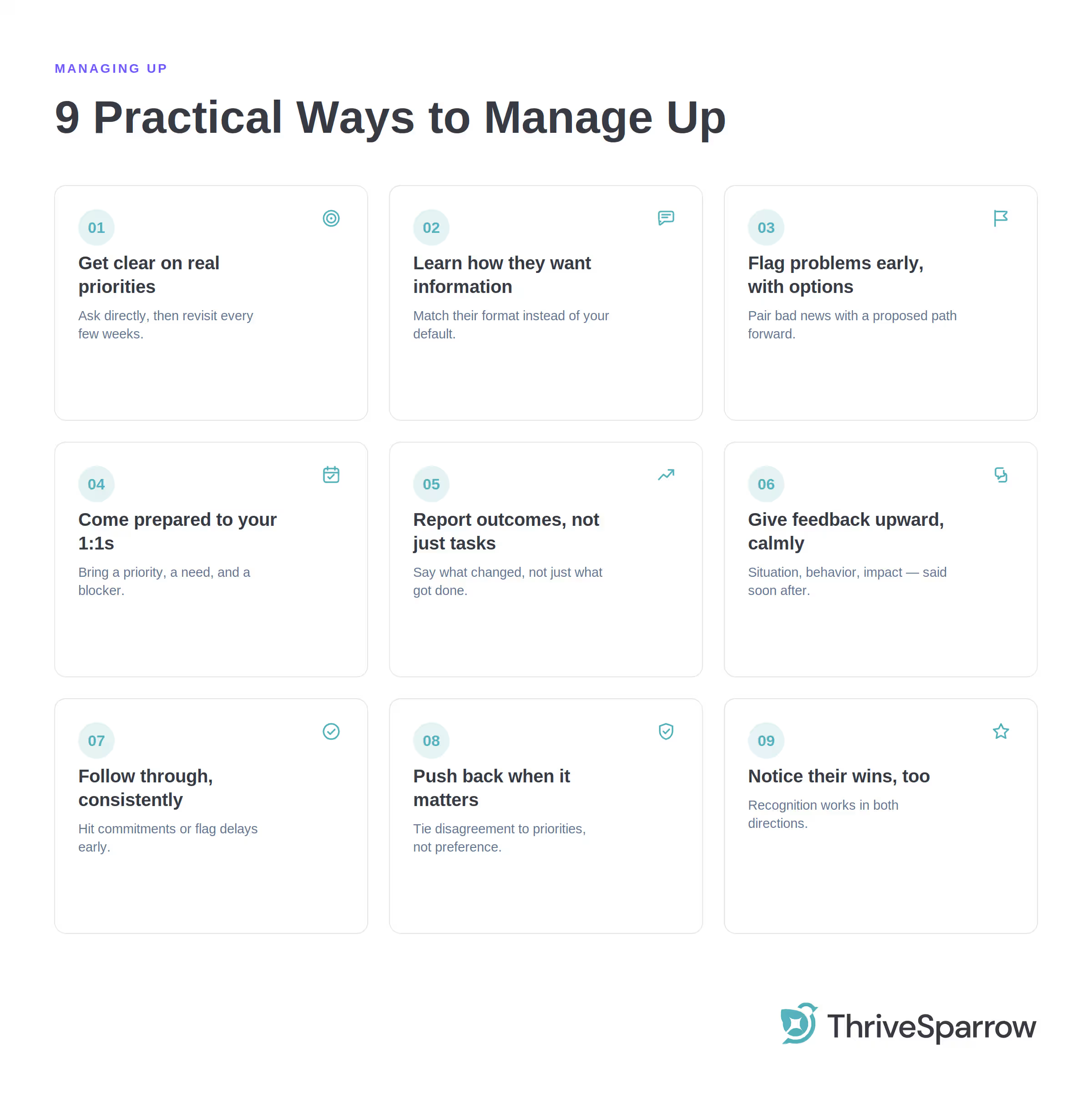
Infographic showing 9 practical ways to manage up, from clarifying priorities to giving upward feedback
1. Get clear on your manager's real priorities
Ask directly rather than assume. Priorities shift, especially on fast-moving teams, so revisit this every few weeks rather than treating it as a one-time conversation. Once you know what matters most, let it visibly shape how you sequence your own work.
2. Learn how they actually want information
Some managers want a two-line summary with the option to ask questions. Others want full context before they'll trust a recommendation. Match their format instead of defaulting to yours — this alone removes a surprising amount of friction from routine updates.
3. Flag problems early, and bring options
The instinct to wait until you have a full solution before saying anything usually makes things worse. Instead of "we're going to miss this deadline," try "we're behind because of a vendor delay, and here's what would get us back on track by Friday." Early warning plus a proposed path forward reads as ownership, not as a complaint.
4. Come prepared to your 1:1s
An unprepared 1:1 tends to drift into a status readout instead of a real conversation. Show up with your top priority for the coming week, one thing you need from your manager, and any blockers worth naming out loud. A short list of one-on-one meeting questions can help if you're not sure what's worth bringing up.
If your 1:1s tend to lose their thread between meetings, a dedicated tool can help. ThriveSparrow's One-on-Ones module carries unfinished topics forward automatically and flags when a 1:1 hasn't happened in a while, so staying prepared doesn't depend on remembering what you talked about three weeks ago.
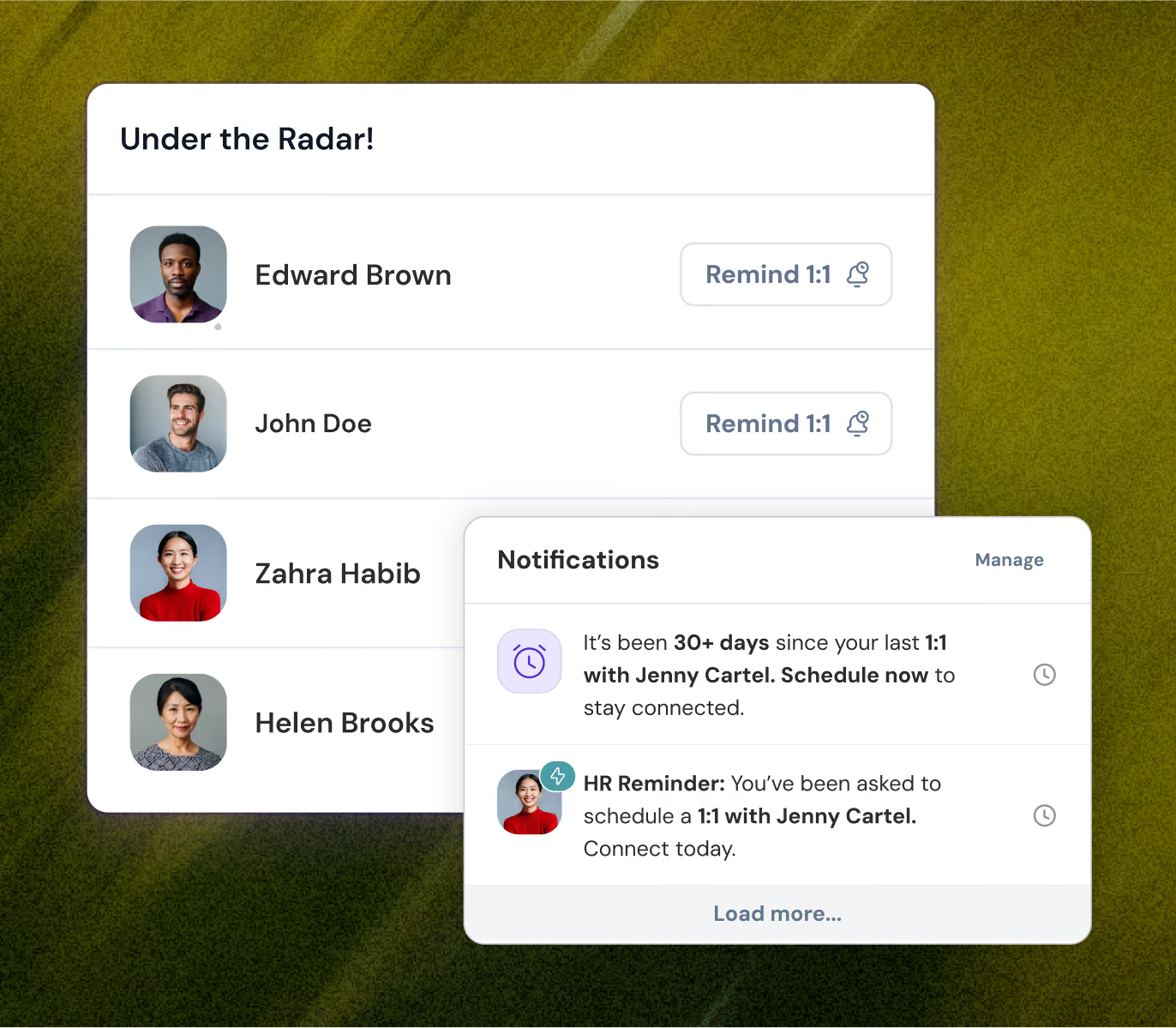
Try ThriveSparrow One-on-Ones free for 14 days!
.svg)
5. Report outcomes, not just tasks
"I finished the migration" tells your manager you did the work. "I finished the migration, and support tickets related to login errors dropped by a third this week" tells them why it mattered. The second version gives your manager something concrete to relay upward, which is often the difference between your work being visible and it being invisible.
6. Give feedback upward without making it a big moment
Upward feedback feels riskier than it usually is, mostly because people wait too long and then deliver it as a formal, heavy conversation. A simple situation-behavior-impact structure keeps it factual: describe what happened, what your manager did, and what effect it had — then suggest what might work better next time. Delivered soon after the moment, in a normal conversation, it rarely lands as confrontational. For more on framing this kind of conversation, see how to give your manager feedback.
7. Follow through on what you say you'll do
Consistency is what earns you more autonomy over time. If you commit to a deadline, hit it or flag the delay early. If you make a mistake, own it before someone else finds it. None of this is dramatic, but it's what makes a manager comfortable giving you more latitude and fewer check-ins.
8. Push back when it matters, and say why
Managing up doesn't mean agreeing with everything. When you disagree with a decision that affects your work, say so, and tie your pushback to priorities rather than personal preference. "This deprioritizes the client deliverable we agreed was most urgent last week — can we talk through the tradeoff?" lands differently than a flat "I don't think that's a good idea."
9. Notice your manager's wins, too
Recognition tends to flow one direction, from manager to employee. If your manager removes a blocker, advocates for your team in a meeting you weren't in, or handles a difficult stakeholder well, say so. It costs nothing, and it's one of the simplest ways to build a relationship that feels like a partnership rather than a one-way evaluation.
What Managing Up Looks Like in Practice
A marketing coordinator notices her manager always asks the same three questions in review meetings — reach, cost, and timeline — so she starts leading every project update with those three numbers before anyone asks. Meetings get shorter, and her manager stops feeling like he has to interrogate her for basics.
A software engineer knows his team's roadmap is about to slip because a dependency from another team is late. Instead of waiting for the sprint review to explain it, he sends his manager a short message the day he notices it: what's blocked, why, and two options for adjusting scope. His manager has time to renegotiate the deadline before it becomes a surprise to leadership.
A new hire isn't sure yet how her manager likes to communicate, so instead of guessing, she asks directly in her first 1:1: "Do you prefer I message you as things come up, or save non-urgent things for our weekly check-in?" One question saves weeks of misreading the signal.
For Managers: How to Make It Easier for Your Team to Manage Up
Managing up works best when managers make room for it. That mostly means being explicit about priorities instead of expecting people to infer them, responding well when someone flags a problem early instead of only reacting when things go wrong, and treating 1:1s as a two-way conversation rather than a status check. A manager who's approachable and consistent makes it far easier for a direct report to bring up a concern before it turns into a bigger issue.
Can managing up backfire?
It can, if it tips into over-communicating on things your manager doesn't need, or if it starts to look like you're managing them rather than working with them. The distinction is usually clear from tone: managing up supports your manager's goals and decisions, while overstepping tries to control them.
Managing up isn't a script you follow once and check off. It's a handful of habits — clarifying priorities, adapting your communication, flagging problems early, following through — that compound over time into a working relationship with less friction and more trust on both sides.
Want your 1:1s to actually support this? ThriveSparrow's One-on-Ones module keeps agendas, notes, and action items in one place, carries open topics into the next meeting automatically, and nudges you when a 1:1 has slipped — so the groundwork for managing up doesn't depend on anyone's memory.
Try ThriveSparrow One-on-Ones free for 14 days and see how it works with your team’s setup.
FAQs About Managing Up
1. Is managing up the same as brown-nosing?
No. Brown-nosing is about flattery and telling your manager what they want to hear, regardless of whether it's true or useful. Managing up is about accurate communication, reliable follow-through, and understanding your manager's priorities well enough to support them — including telling them things they might not want to hear.
2. Does managing up work with a difficult or defensive manager?
It helps, but it won't fix every relationship on its own. Managing up can reduce friction caused by mismatched communication styles or unclear priorities, since a lot of "difficult" behavior is really a reaction to surprises or inconsistent updates. If a manager is dismissive of reasonable feedback or unresponsive regardless of approach, that's a separate problem managing up alone won't solve.
3. How do I start managing up with a brand-new manager?
Ask directly in your first few 1:1s, rather than waiting to observe over months. Useful early questions: how they prefer to receive updates, what they'll be measured on this quarter, and what a good working relationship looked like with someone they've managed well before.


